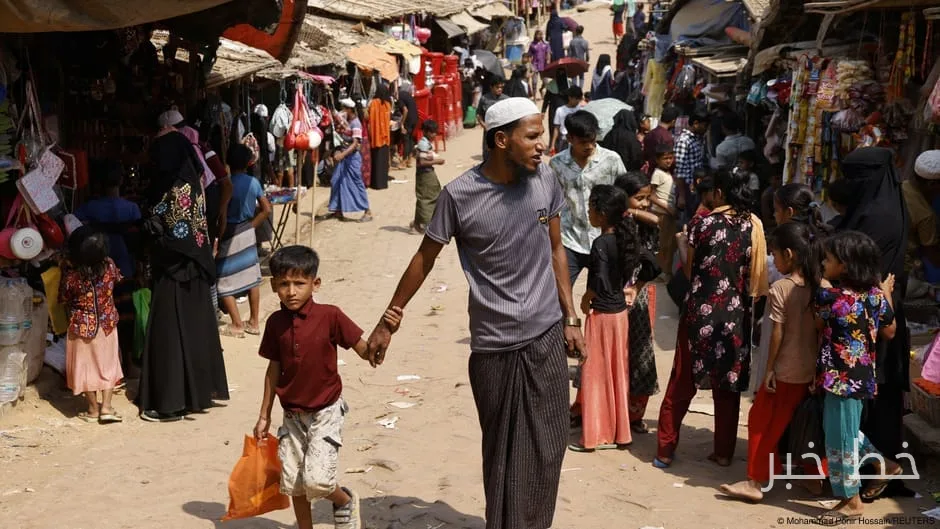
The International Court of Justice (ICJ) issued a historic ruling on Thursday, stating that Myanmar committed genocide against the Rohingya community a decade ago. This ruling was welcomed by this long-persecuted minority as well as human rights groups.
Details of the ICJ Ruling
The court mandated the Myanmar government to prevent the recurrence of these crimes, implement legal reforms to protect the Rohingya, and provide reparations to the victims. This ruling came after Gambia filed a complaint against Myanmar in 2019, accusing the country of conducting a deliberate campaign of arson, rape, and murder against the Rohingya Muslim community in 2016 and 2017.
This is the first time the International Court of Justice has convicted a country of genocide and also the first ruling issued in any of the cases brought against Myanmar or its leaders in various courts around the world.
Experiences of Rohingya Victims and Activists
Lucky Karim, a prominent Rohingya activist who was forced to flee her village in Rakhine State at the age of 14 with her family, personally heard the ruling in The Hague. She said, "This day is very personal for me, as I am someone who survived the genocide in 2017. It took nearly a decade for the world to finally hear our voices."
Wai Wai Nu, another Rohingya activist and former political prisoner, stated, "For generations, the Myanmar military took our identity and citizenship away and tried to erase us from our land. Now, the years of our persecution have been validated and the truth has come to light."
Ten Kin, another Rohingya activist and plaintiff in a case in Argentina, called the ruling a "historic moment" and said, "This is a great day for the Rohingya."
Implications of the Ruling and Challenges Ahead
The International Court of Justice announced that Myanmar is now obligated to facilitate the safe, voluntary, and dignified return of those who have fled, investigate the crimes, and prosecute those identified as responsible. Additionally, Myanmar must return all stolen property or demonstrate that it is compensating the victims if unable to do so.
However, those responsible for the genocide, including Min Aung Hlaing, the current president and former army chief, have remained in power since the ousting of Myanmar's democratically elected government in 2021. Much of the country, particularly Rakhine State, is still in the midst of a violent civil war between the military and armed resistance groups.
The enforcement of the court's orders will ultimately fall to the United Nations Security Council. However, China and Russia, which support the Myanmar government, are likely to veto any Security Council resolution that seeks to punish Myanmar.
Immediately following the court's ruling, Britain announced that it would expel Myanmar's defense attaché from London and called for a meeting of the UN Security Council to discuss this decision. Many Western governments have imposed multiple sanctions on Myanmar over the past decade, but these sanctions have had little effect.
Read more: Emmanuel Macron hosts Kamala Harris at the Elysee · Russia must be held accountable for its crimes