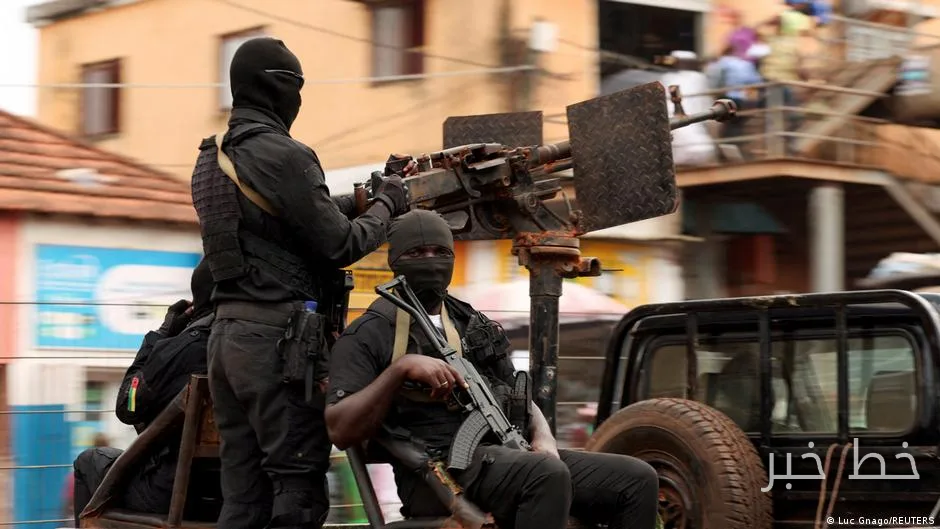
The parliamentary and presidential elections that were supposed to take place on December 6, 2026, in Guinea-Bissau have been postponed due to insufficient readiness. Ali Silva, spokesperson for the interim Prime Minister, Ilídio Vieira, confirmed that a new date for the elections has not yet been set.
No New Election Date Set
The interim government intends to discuss this matter in a cabinet meeting first and then publicly announce the new election date. It is still unclear whether the elections will take place in 2027 or be postponed until 2028.
Read more: North Korean leader Kim Jong-un arrives in border city of China
The political crisis in Guinea-Bissau dates back to November 26, 2025. On this date, voters elected a new parliament and president, but before the official results were announced, the military seized power and halted the electoral process. Both candidates, Umaro Sissoco Embaló and his rival, Fernando Dias da Costa, declared victory. The military leadership also promised a return to constitutional order.
Experts' Analysis of the Situation
Kabi Sanha, a lawyer and political analyst, does not find this postponement unexpected, stating that since the coup, no specific actions have been taken to create the necessary conditions for holding credible elections. He emphasizes: "The postponement of the elections was predictable. While December 6 was set as the new date, no measures were taken to ensure the actual holding of these elections."
The interim government has cited a lack of organizational and political conditions necessary for holding elections as the reason for the postponement, noting that the deadline for submitting candidates expired on October 6. Political parties and potential candidates have also not submitted their requests. According to the Prime Minister, parties have been unable to hold congresses to select their candidates.
Sanha views this issue as more than just an organizational problem, pointing to the restrictions on political activities and the lack of dialogue with key players in the electoral process. He states that political parties and civil society have not sufficiently participated in this process, and mediation efforts by the Economic Community of West African States (ECOWAS) and Senegal have so far yielded no results.
Sanha stresses: "Holding free, transparent, and inclusive elections is only possible if the necessary conditions are established in advance." Therefore, he considers the parties' inability to nominate candidates a result of the current political environment. He continues: "How can parties nominate their candidates when political activities in the country are restricted? They cannot hold party congresses or organize gatherings."
Prominent opposition figures have also remained abroad. Domingos Simões Pereira, the leader of the main opposition party, the African Party for the Independence of Guinea and Cape Verde (PAIGC), traveled to Portugal for medical treatment in July 2026. He had previously been in pre-trial detention due to investigations into a coup attempt. His defense team has denied the charges and described the proceedings as political.
The absence of key opposition figures and the restrictions on political organization have made it more difficult to conduct an electoral process that would lead to a return to civilian government. What the future holds remains unclear. Ali Silva states that the interim government must first discuss this issue in the cabinet, and only after that will the new election date be publicly announced.
As a result, it is also unclear when political parties will be able to complete their internal election processes and introduce their candidates and start campaigning. Sanha views this situation as another sign of insufficient political will to restore constitutional order.
He says: "I do not believe that logistical problems are the main issue. Rather, it seems that there is a lack of political will to advance the electoral process." The political crisis has also been exacerbated by a controversial legal reform. In a referendum on August 30, 2026, voters approved constitutional amendments that increase the powers of the president and reduce the size of parliament from 102 to 65 seats. Critics question the legitimacy of this process as these reforms were prepared under military rule and without a regularly elected parliament.
Fernando Vaz, spokesperson for the National Transitional Council, defends these changes, stating that this process was not a comprehensive rewriting of the constitution but a targeted reform. He emphasizes that these reforms should help overcome the country's political instability.
However, critics do not see it this way and argue that the new legal framework strengthens presidential power. As a result, the president will have the authority to appoint and dismiss the prime minister and the government and, under certain conditions, dissolve parliament. At the same time, the number of parliamentary seats will decrease. It remains unclear whether these reforms will actually lead to stability.
The interim government has also announced plans to hold local elections in 2027. Sanha generally welcomes this proposal, stating that Guinea-Bissau has never held such elections since independence. However, he emphasizes that these elections should not replace the remaining national elections.