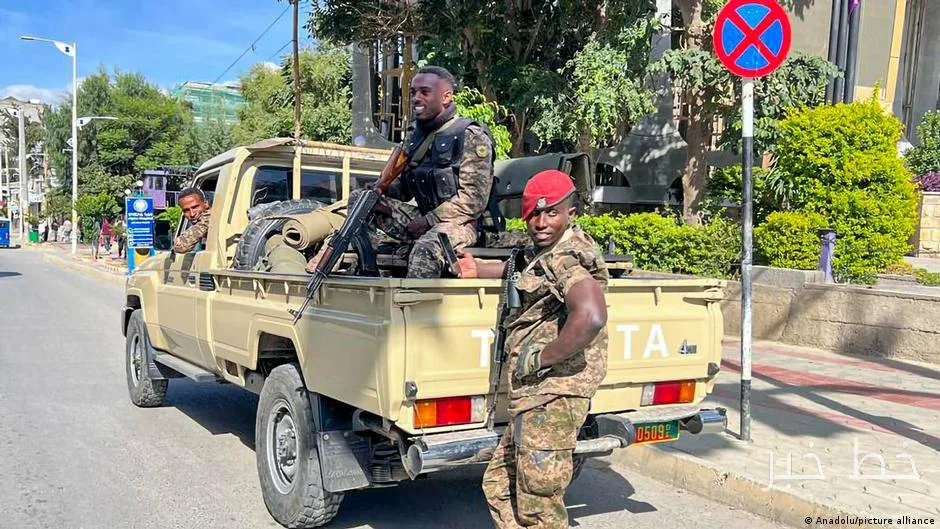
Abiy Ahmed, the Prime Minister of Ethiopia, announced on Friday that an interim government has been formed in the northern Tigray region and has been given six months to prepare for regional elections and restore stability.
Military and Political Background
This announcement follows a military attack in September by the Tigray People's Liberation Front (TPLF) and six other armed groups, which ultimately led to their retreat and loss of control over the region. Abiy Ahmed stated, "To achieve the peace that has long eluded them, the people of Tigray must free themselves from this cycle of conflict and reclaim their right to self-governance."
Commitments of the Interim Government
Shishay Amare, the new mayor of the regional capital Mekelle, stated, "Our role is to create the right conditions for holding elections while ensuring peace and stability across Tigray." He also highlighted the priorities of the interim government, which include restoring peace, assisting displaced residents to return home, reopening markets, and ensuring humanitarian aid reaches those in need.
These conflicts have raised concerns about the potential return to the devastating Tigray war of 2020-2022. According to estimates from the African Union, this war resulted in approximately 600,000 deaths, including due to conflict, famine, and the collapse of the healthcare system.
International Challenges and Ethiopia-Eritrea Relations
The new government faces unresolved disputes over political powers and territory, including Western Tigray, which both Tigray and the neighboring Amhara region claim. Ethiopia and Eritrea, once fierce enemies, signed a peace agreement in 2018. However, relations between the two countries have deteriorated since then.
Addis Ababa accuses Asmara of supporting Tigray forces and violating Ethiopia's sovereignty, while Eritrea denies these allegations. Reports of Eritrean forces moving close to the border have heightened concerns, although the scale of any current deployment remains disputed.
Tesfaye Lemma, a journalist and publisher of the magazine "Addis Standard," stated that the danger arises from years of unresolved tensions and the failure to implement the Puerto Rico agreement in November 2022, which ended the previous Tigray war. He also warned that the international community is not taking the threat seriously enough.
Security and Economic Implications
These conflicts occur amid instability across the Horn of Africa, including war in Sudan and tensions between Ethiopia and Egypt over the Grand Ethiopian Renaissance Dam project. Last year, Ethiopia inaugurated the Grand Ethiopian Renaissance Dam, an action that received negative reactions from neighboring countries, including Egypt and Sudan.
Competition for access to the Red Sea adds another dimension to this issue, as Ethiopia has been landlocked since Eritrea's independence in 1993. Martin Plaut, a journalist specializing in the Horn of Africa, has warned of the potential confrontation between Ethiopian forces and Eritrea, but this action is still presented as a scenario rather than a definitive decision by the Ethiopian government.
Any broader conflict could harm regional trade and maritime security. The Red Sea and the Bab el-Mandeb Strait connect shipping routes between Europe and Asia, making this region strategically important beyond Africa.
The United States and the United Kingdom have urged Ethiopia and Eritrea to exercise caution and return to dialogue under the 2018 peace framework. British officials stated on October 15: "We strongly call for a de-escalation of tensions and a return to dialogue."
Currently, the recapture of cities in Tigray has shifted the military balance but has not resolved the tensions related to this region. Whether international pressure can prevent the outbreak of a wider war depends on the choices of the involved governments to engage in dialogue rather than further escalation.
Read more: Egyptian defense officials commit to supporting Saudi Arabia against the Houthis