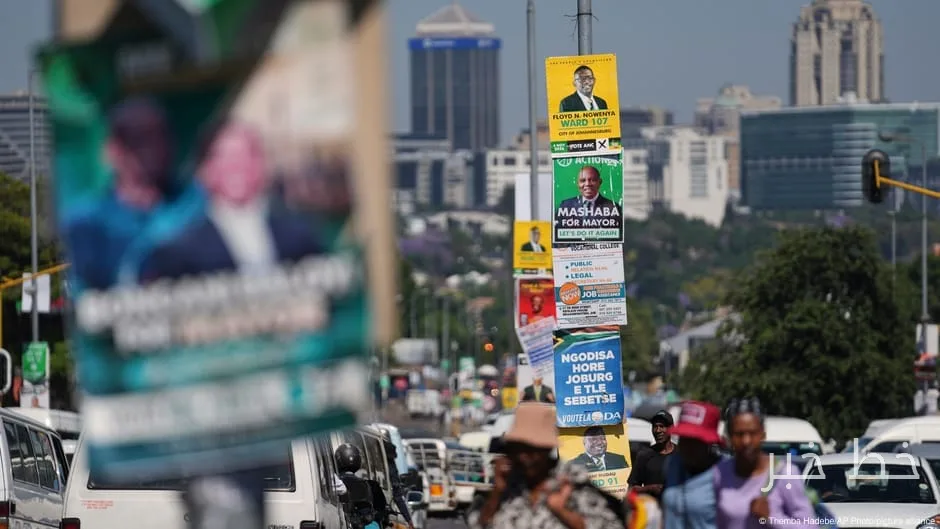
The African National Congress (ANC) has faced its worst electoral results after securing less than 31% of the votes in the recent local elections. Leaders of the party have described this result as "catastrophic."
Severe Decline in ANC's Popularity
This result signifies a severe decline for a party that once led the struggle for South Africa's freedom and has dominated the political landscape since the end of apartheid in 1994. It reflects growing public dissatisfaction with the ANC's performance in areas such as rising unemployment, inadequate public services, and corruption.
Read more: John Kennedy warned Republicans not to ignore midterm election results
Challenges Facing the ANC
Tshepo Sefala, a researcher at the Labour and Policy Institute at the University of the Witwatersrand in Johannesburg, says this is a suitable time for the party to conduct a serious internal review. He believes the ANC must confront a long list of difficult questions regarding governance, leadership, and accountability.
He points out that key issues such as water, electricity, and housing at the local level are among the topics that have driven people to vote and choose other parties. According to him, research indicates that unemployment is also a significant part of the reasons for changing voter preferences.
Mokhira Foko, a resident of Cape Town, states that "people are losing hope" and complains about the rising unemployment rates in recent years. He adds that the ANC has not fulfilled its promises regarding job creation.
The ANC has announced that the party's National Executive Committee will hold a special meeting to address its "serious political responsibility" and has emphasized the need to listen to the people.
The recent elections indicate broader changes in South African politics, as voter support is gradually being distributed among several parties and is no longer concentrated in a single dominant force.
While the ANC remains the largest political party in the country, the recent election results show that the loyalty and unchallenged dominance of this party have come to an end, and voters are increasingly inclined to support alternative parties and punish those that have failed to deliver services.



