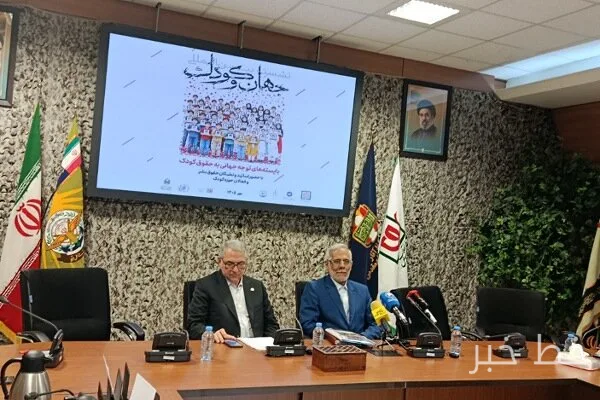
The international meeting 'World and Child' on the topic of 'Necessities of Attention to Children's Rights' was held today, October 7, coinciding with World Children's Day, with the presence of Askar Jalalian, Deputy for Human Rights and International Affairs of the Minister of Justice, and a group of activists in the field of children and human rights.
The Gap Between Documents and Reality
Ali-Asghar Jafari, Deputy President of the Foundation for Preservation of Sacred Defense Values and CEO of the National Museum of the Islamic Revolution and Sacred Defense, referred to the adoption of the Convention on the Rights of the Child in 1989, stating: The gap between what is written in international documents about children's rights and what happens to children in the world is still profound.
He posed the question that if the child is the most defenseless member of society, why do they remain at the top of the victims in many of the world's crises and wars, adding: The Convention on the Rights of the Child is one of the most important human rights documents in the world, aimed at transforming the child from a 'subject of protection' to a 'holder of rights'.
Children's Rights and Challenges
Jafari pointed out the rights enshrined in this convention, stating: The right to life and survival, protection against violence, access to health, education, an adequate standard of living, recreation, play, and cultural and artistic activities, as well as protection for children against the consequences of war, are among the rights recognized in this document.
He continued: When we talk about children's rights, it does not merely mean that children should not be killed; rather, children must survive, be healthy, receive education, be protected from violence, have psychological security, play, and have the opportunity for growth and a worthy future.
The Deputy President of the Foundation for Preservation of Sacred Defense Values stated that the greatest test of children's rights manifests itself in wartime, saying: In times of war, governments are obliged to adhere to international humanitarian law concerning children and to take practical measures to support children affected by war.
Jafari criticized the double standards in dealing with children's rights, emphasizing: The international community should not discriminate in supporting children's rights among children of different societies. Children's rights only make sense when they are not selective and are not governed by double standards.
He concluded by emphasizing the necessity of transforming the provisions of the Convention on the Rights of the Child from the text of documents to the text of children's lives, stating: A society that does not defend its children today has, in fact, not defended its own future.