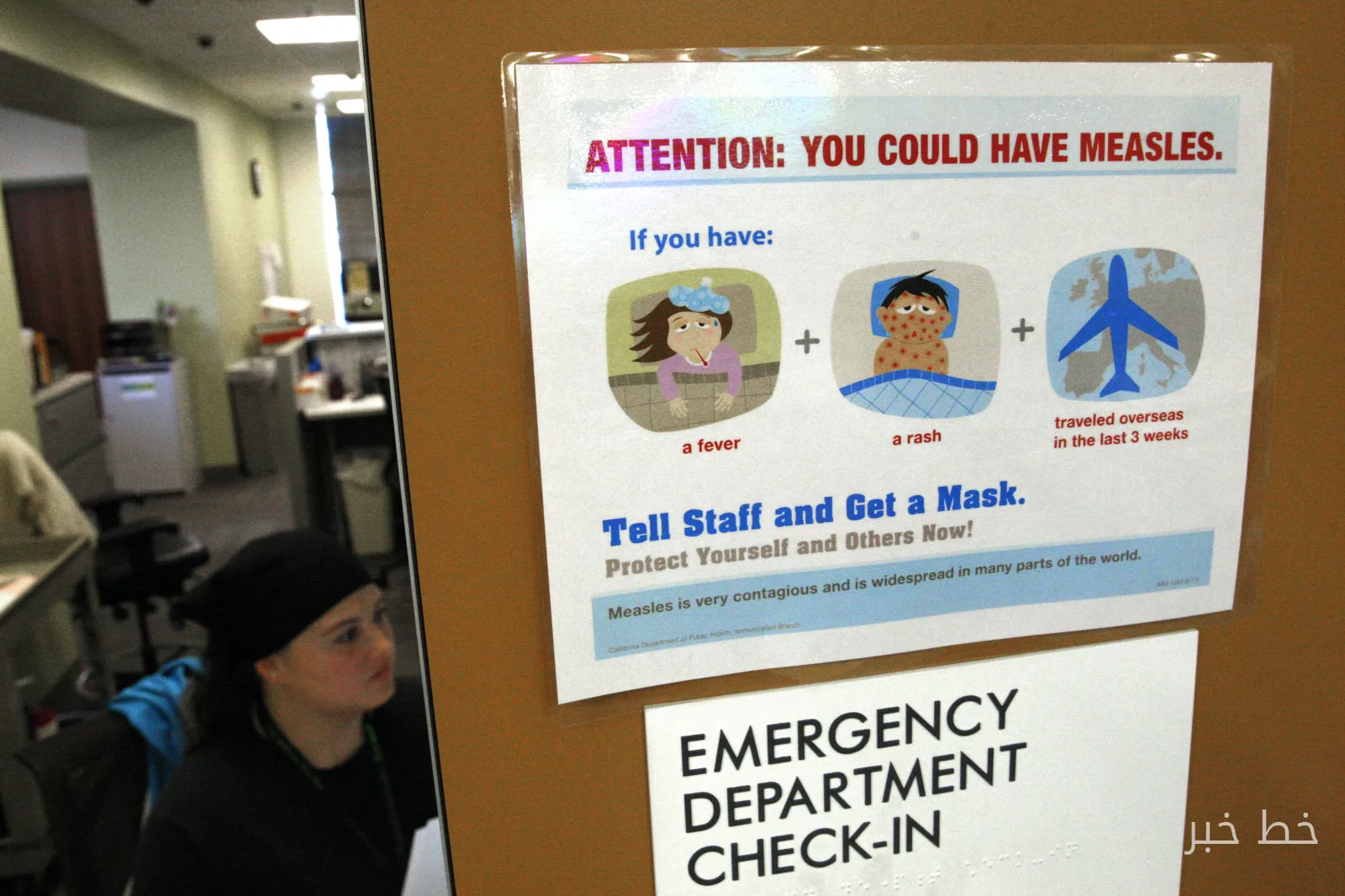
America has lost its measles elimination status after more than 26 years, meaning that the virus was no longer spreading continuously in the country. Before the introduction of the first measles vaccine in 1963, nearly all American children contracted the disease before the age of 15, leading to 4 million infections, 400 to 500 deaths, and 48,000 hospitalizations annually. However, a strong vaccination campaign changed everything, and measles was eliminated in the U.S. in 2000.
New Measles Outbreak Status in America
On November 17, the Pan American Health Organization (PAHO) announced that America lost this status after at least 12 months of continuous virus transmission. The decline in vaccination rates, partly due to misinformation about vaccines and activities by individuals like Robert F. Kennedy Jr., the Secretary of Health and Human Services (HHS), has allowed the virus, which had been controlled for over a generation, to spread widely. As of November 12, the Centers for Disease Control and Prevention (CDC) reported 5,412 cases of measles in 2026, with 5,394 cases reported from 47 jurisdictions and 18 cases related to international visitors. This number is more than double the 2,289 cases reported in 2025, which included three deaths and the highest figures since 1991.
Read more: Bill Cassidy Calls for the Dismissal of Robert F. Kennedy Jr.
Vaccination Challenges and Consequences
Dr. Paul Offit, a physician at the Children's Hospital of Philadelphia, says, "This is a major step backward for public health in the United States. But in some ways, this ruling is irrelevant. Measles is now endemic in this country and exists locally." The standards that must be met to gain or lose measles elimination status are not entirely clear. For example, elimination does not mean zero cases. Measles can still be imported into the country by travelers and spread among unprotected individuals.
Even cases that appear to have domestic origins are not necessarily sufficient for a country to lose its elimination status. PAHO considers measles transmission to be re-established when the same genotype and strain of the virus has been circulating continuously in a country for at least 12 months. In the United States, the outbreak began on January 20, 2025, and reached this threshold a year later. Genomic sequencing helps scientists identify the genotype and strain of the virus and determine whether these cases are linked to an ongoing transmission chain.
Vaccination rates must drop low enough for outbreaks to begin, especially in communities with low coverage. PAHO states that communities should aim for at least 95 percent of individuals to receive both doses of the measles vaccine to prevent transmission. In recent years, MMR vaccination coverage among American preschool children has decreased from 95.2 percent in the 2019-2020 school year to 92.4 percent in the 2025-2026 school year.
Dr. Peter Hotez, a fellow at the Texas Children's Hospital Vaccine Development Center, says, "It is truly sad that we allowed measles to return to America." He predicts that, given the seasonal pattern of measles, we will see an increase in outbreaks of this disease in the coming years.
Measles is one of the most contagious diseases in the world and can have serious and sometimes deadly consequences. Dr. Jarbas Barbosa, director of PAHO, said at a press conference on November 17, "Measles can lead to pneumonia, encephalitis, blindness, and even death."
America is not alone and is facing the return of measles across the Americas. In November 2025, Canada lost its elimination status after an outbreak that began in October 2024. Mexico and Bolivia also lost their elimination status on November 17. In these countries, as in America, a lack of vaccination coverage has contributed to the spread of outbreaks.
Regaining measles elimination status in America will not be easy. Continued skepticism from Kennedy towards public health officials could complicate efforts to rebuild trust in vaccination.
Read more: Bill Cassidy Questions Trump's FDA Appointment · Meeting of Leaders of China, America, and Russia on the Sidelines of the APEC Summit