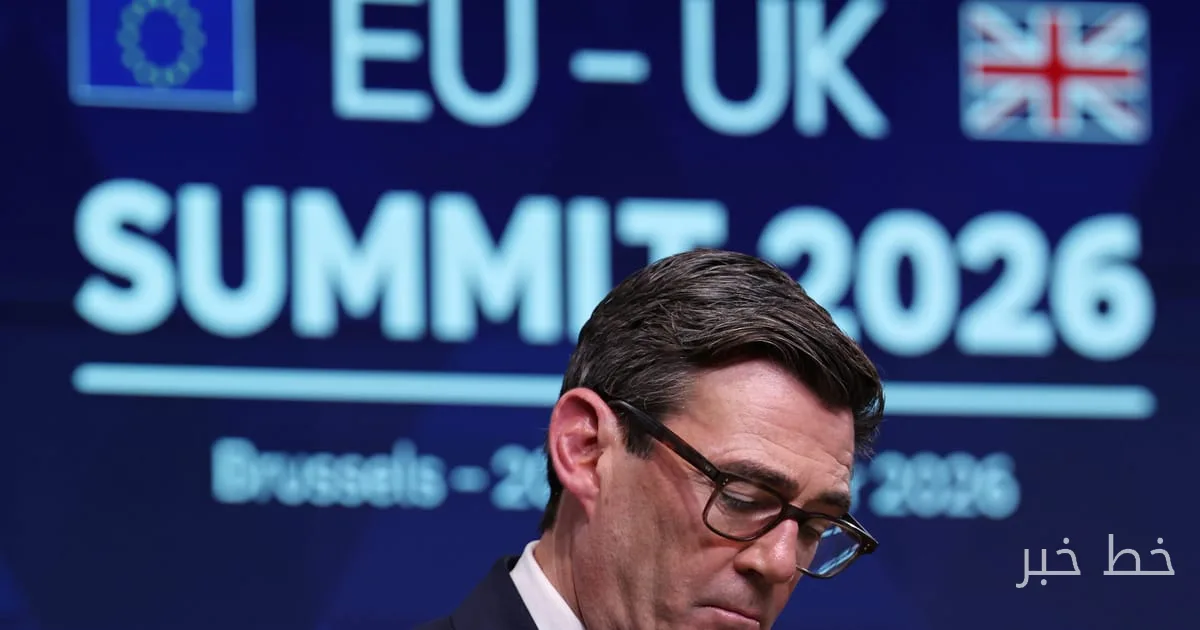
On Monday, Andy Burnham assured Britain that he does not intend to talk much about Europe, but discussions regarding Britain's future relationship with the European Union are very much ongoing.
Brexit Discussions in Parliament
Questions about the future of Britain's relations with the European Union dominated a statement to Parliament by Burnham, who officially released updates on three technical agreements regarding food standards, youth mobility, and trade. This statement followed a meeting on Friday between Britain and the European Union.
These questions also cast a shadow over a business conference 300 meters from Parliament, where Burnham and four other main party leaders were present. Ed Davey, leader of the pro-European Liberal Democrats, stated at this conference that he could reach a new agreement for entry into the single market and customs union within a year.
Reactions to the Brexit Discussion
Two hours later, Nigel Farage, leader of the anti-European Union party, told traders that Brexit might be a topic that helps reduce his party's polling numbers. In the media, five former prime ministers warned against reopening old wounds.
In the House, Burnham faced pressure from representatives on both sides of the Brexit wars. Kemi Badenoch, leader of the Conservative Party, told Burnham that he is "opening Pandora's box" and added, "The last thing this country needs is another five years of division and marginalization over Brexit."
Two months ago, Burnham intentionally initiated an endless conversation about Britain's future relationship with Europe. The Prime Minister has promised to present options for the future relationship in mid-December.
However, this process is progressing slowly, and Burnham has only promised to address the issue in the next Labour Party election program. He told Parliament members, "There will be no talk about Europe from this side, and only a calm and constructive review of what is in Britain's long-term interest will be conducted."
At the CBI conference, which Burnham attended with 40 executives, a large part of the discussions was about his 10-year plan for Britain. However, fundamental questions about Britain's future in Europe were everywhere, and everyone had their own answers.



