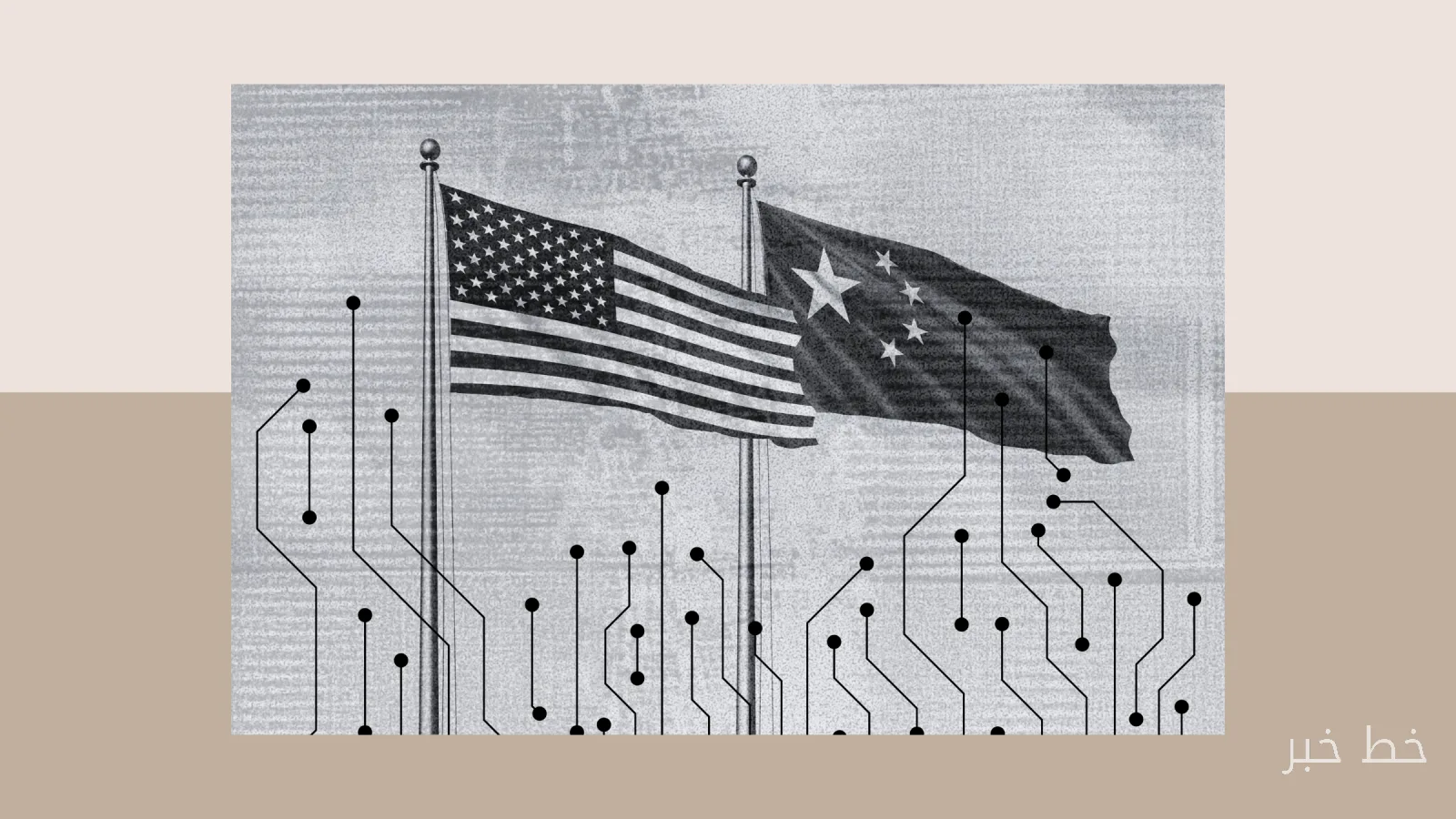
The competition in artificial intelligence has become a bipolar field, with the United States and China recognized as the two main powers in this arena. These two countries are shaping the future of artificial intelligence technology, while other countries are facing serious challenges.
Geographical Dominance and Technological Gaps
The dominance of the United States and China over artificial intelligence technology has created a deep geographical gap. According to estimates, the United States has accounted for about 72 percent of new artificial intelligence computing capacity in recent years, while China has only obtained 10 percent, leaving 18 percent for other countries.
This concentration also relates to energy consumption. It is predicted that the United States and China will account for nearly 70 percent of the electricity consumed by data centers worldwide by 2024. This gap is also evident in research and development infrastructures, with three-quarters of researchers attending prestigious artificial intelligence conferences being somehow connected to these two countries.
Language Challenges and Data-Centricity
There are numerous issues regarding training data and language support for artificial intelligence models. For example, most languages in the world are not well supported by these technologies. While about 3.4 billion people speak languages other than English, only 0.2 percent of training data is allocated to the Hindi language.
The use of public data for training artificial intelligence models tends to replicate biases and harmful content. Research shows that users in India tend to change their writing style towards American norms when using AI assistants, thereby diminishing their cultural aspects.
Even the costs of using artificial intelligence depend on the language used, as AI companies typically charge based on a unit called a token. This leads to implications for developers working in languages like Hindi or Odia, which can become a sort of language tax for them.
Ultimately, access to American and Chinese artificial intelligence models is dependent on political decisions. For example, in June, the U.S. government ordered restrictions on access to certain models due to national security concerns, highlighting the vulnerability of other countries to the decisions of these two major powers.
As a result, efforts are underway by middle countries to develop their independent models. Countries like India, Canada, France, and the United Arab Emirates are investing in their technologies to better meet local and linguistic needs.