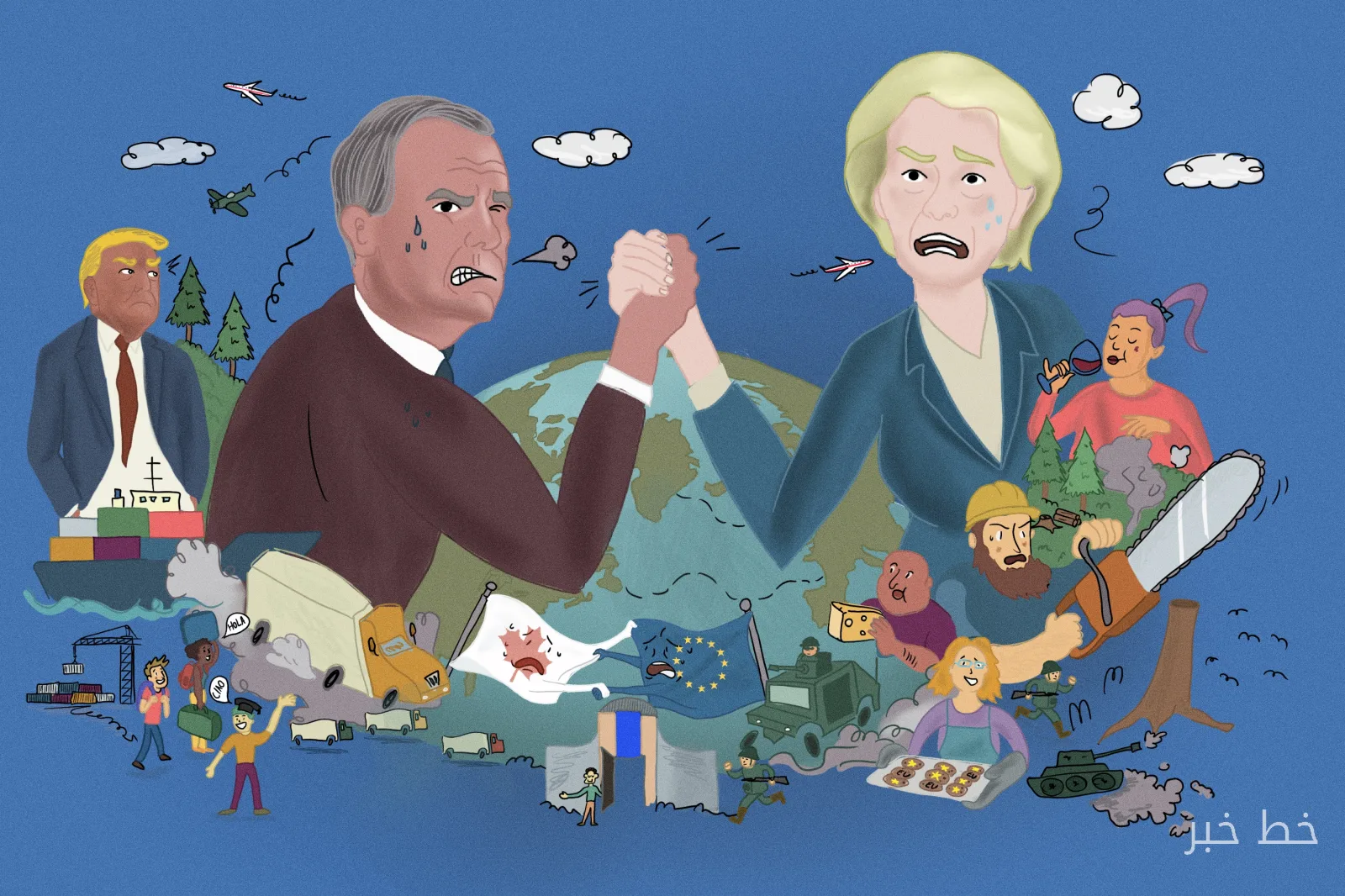
The Prime Minister of Canada is striving to create a new global order that can balance the power of the United States and China. However, this vision depends on a new relationship with Europe, which does not see itself as a middle power.
Divergent Visions of Carney and von der Leyen
The President of the European Commission, Ursula von der Leyen, has a different perspective and is seeking to establish a centralized bloc in Brussels to expand the economic and geopolitical influence of the European Union, starting with Canada. According to Siegfried Mureșan, a senior European representative, the goal is for the EU to become the "center of gravity for global liberal democracies."
Read more: Saudi Arabia reopened Riyadh airport despite Houthi threats
These conflicting views will be tested this week when Carney and von der Leyen meet in Montreal for a summit. Both want to demonstrate that they can thrive in a world transformed by U.S. President Donald Trump. However, they have different ideas about this new cooperation and face political obstacles that could limit the progress of this partnership.
Challenges Ahead and Development Plans
Von der Leyen's proposal for "associated membership" in the European Union surprised officials on both sides of the Atlantic. Four diplomats stated that there was no consultation before this idea was raised in the State of the Union address. They also added that the meaning of this term is still unclear, and Germany has strongly criticized this plan.
Carney and von der Leyen are under pressure to emerge from Montreal with more than just a liberal democratic photo op. They need to decide what "associated membership" means and mitigate resistance in the EU capitals that have been taken aback by von der Leyen's proposal.
The Canadian ambassador to the EU, Jonathan Wilkinson, told reporters last month that people should not pay too much attention to a label that was put forth prematurely. Carney referred to this relationship as a "partnership for the future" and added that this project shows other democratic countries how they can deepen their cooperation.
The leaders gathered in Montreal this week will celebrate the tenth anniversary of the Canada-EU trade agreement, known as CETA. However, no EU member country has yet ratified this agreement, highlighting the challenges of turning slogans into reality.
Canada's Minister of International Trade, Mary Ng, told reporters that the usage rates of CETA in EU member countries vary between 60 to 80 percent, indicating both potential for improvement and ongoing challenges. She added, "We know there is room for growth."
Von der Leyen's associated membership plan has been "coldly received by accepted member countries," according to a senior EU official. He added, "This summit is more about what we do and how we leverage the real potential of the CETA agreement."
Trade discussions between Canada and the EU resemble a long list of complaints from both sides of the Atlantic. In a meeting held between Brussels and Ottawa last October, the EU complained about Canadian taxes that they say disproportionately affect European automakers.
Meanwhile, Canada also warned about the EU's deforestation regulations that may pressure Canadian exporters and questioned the impact of Brussels' carbon border tax.
Despite these challenges, both sides hope to forge deeper economic and security cooperation. However, the industrial policies pursued by both sides may hinder the achievement of lucrative public contracts.
Read more: A 21-year-old was extradited to Germany · Discussions between EU officials and China about new trade sectors