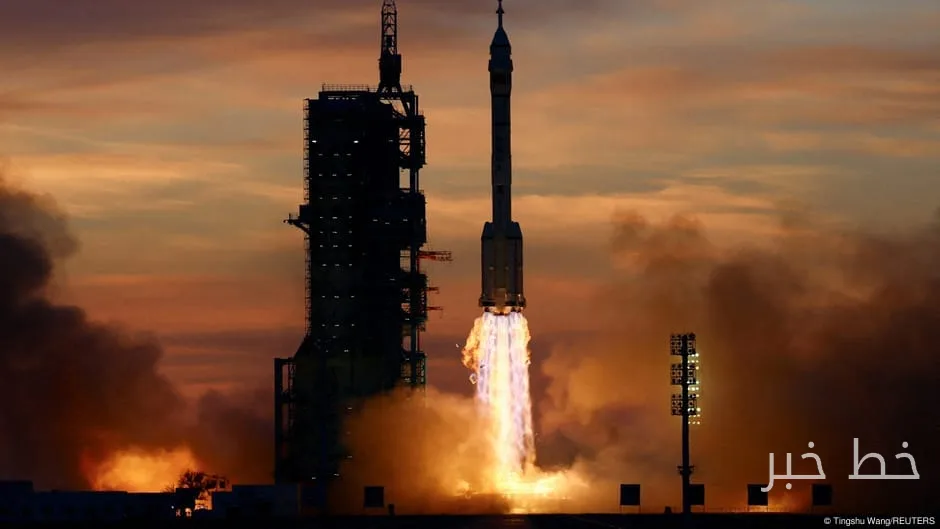
The Shenzhou-24 spacecraft was launched into space this morning at 8:18 local time (0018 UTC) from the Jiuquan launch center located in the Gobi Desert. The launch was conducted by a Long March-2F rocket, and according to the China Manned Space Agency, the capsule separated and entered orbit about 10 minutes after launch. This mission has been declared a complete success.
Good Condition of Astronauts and Future Missions
China's state television, CCTV, released a report on the crew's status, stating that the three astronauts are reviewing a manual after the launch and their health is good. Tang Hongbo, who is experiencing his third trip to space, will be recognized as the first astronaut to visit the Tiangong station three times. Wu Yi is also making his first flight on this mission, and Mohammad Zeeshan Ali, the Pakistani pilot, is the first foreigner to participate in a crewed Chinese mission.
Read more: Greg Stanton helped Jensen Huang's return
Messages from the Pakistani Astronaut and Future Plans
Mohammad Zeeshan Ali said at a press conference: "I carry the name of Pakistan on my shoulders and bear the dreams of 250 million Pakistanis." Speaking in Urdu, Mandarin, and English, he expressed hope that this mission would serve as a model for international cooperation in space.
In this mission, Zhou Yangzhu, commander of Shenzhou-23, will remain at the Tiangong station for a year, while other crew members, Li Kaiying, the first astronaut from Hong Kong, and Zhang Ziyuan, will return to Earth with Ali. This year-long stay is considered the first complete stay of a Chinese astronaut in space and is described as a test for future missions to the Moon and possibly Mars.
During this mission, the crew will conduct over 90 experiments and technology tests. Tang mentioned the challenges in international cooperation during his press conference, stating that language, cultural, and psychological differences have made teamwork difficult, but the efforts of both sides are proving fruitful.
Ali also spoke about his daily Mandarin practice, saying: "This is like my daily training. Day by day, we reach new heights." China remains committed to its goal of landing astronauts on the Moon by 2030, despite delays in the Chang'e-7 lunar mission. The United States is also planning a landing in 2028.
Read more: Huawei convicted of violating sanctions and stealing trade secrets · Trump says he doesn't need help from Russia and China to end the Iran war