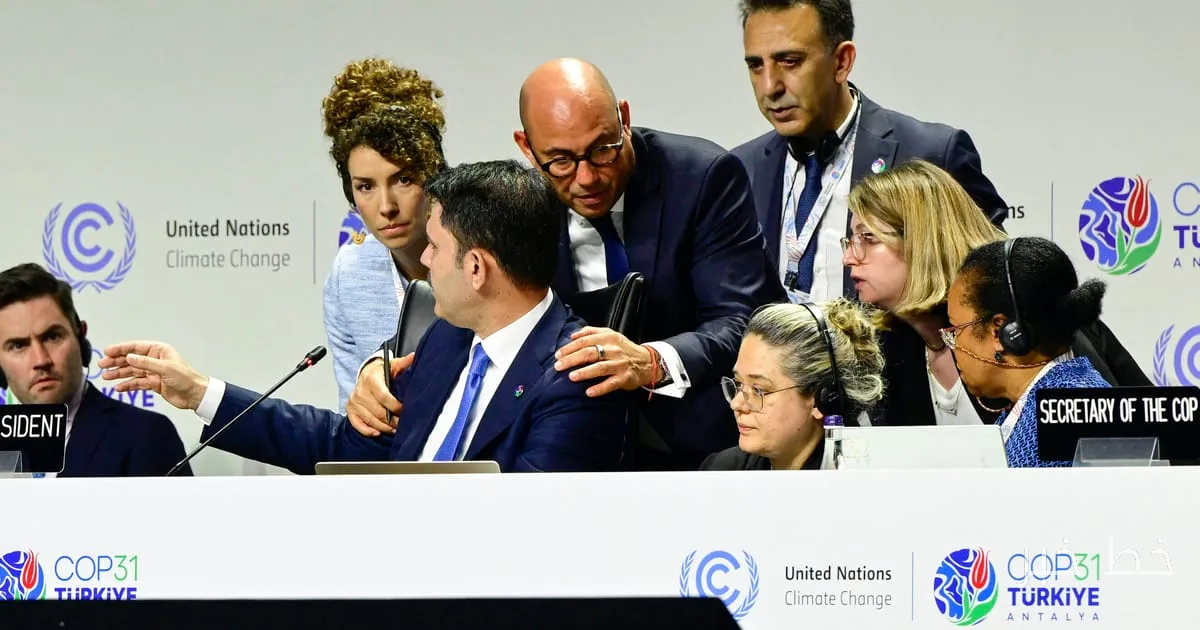
The countries present at the COP31 negotiations in Antalya, Turkey, failed to reach a final agreement after two weeks of heated discussions. Leaders from various countries rejected a draft decision that made no mention of fossil fuels and only provided an incomplete response to rising temperatures.
Protests Against the Proposed Text
The European Union, Panama, and several other countries, including small island nations, criticized the proposed agreement. Some representatives expressed their concerns about assisting countries that are most vulnerable to the climate crisis and also raised alarms about certain sections of the text that emphasized the need for carbon capture and storage.
Murat Kurum, the COP31 president from Turkey, stated: "It seems that some parties have objections to this text. I understand that there is no agreement on this text, and that is why these decisions were not adopted."
Debacle in Negotiations
Nearly 200 countries discussed various aspects of energy transition and particularly emphasized the inability to limit global warming to 1.5 degrees Celsius above pre-industrial levels. As the negotiations drew to a close, the parties could not resolve their differences. This is the first time in 17 years that COP negotiations have not reached an agreement.
Dara O'Brien, Ireland's Climate Minister, representing the European Union, stated: "It is unacceptable that we have a decision that makes no mention of fossil fuels. For this reason, the European Union strongly opposes this text."
Panama described the agreement as a "setback," and the Marshall Islands declared that accepting this agreement would mean betrayal. Kathy Jetnil-Kijiner, the negotiator for the Marshall Islands, said: "We will not accept an outcome that jeopardizes our security."
The UK Energy Minister, Myata Fahnbul, also expressed disappointment at the failure to reach an agreement, stating: "The situation required high ambition, and we worked hard to reach a consensus. It is extremely disappointing that we could not achieve this goal."
This failure to reach an agreement reflects the increasing tensions in the negotiations, as global climate goals become more elusive and crises stemming from energy prices, war, and inflation pressure governments' willingness to make new commitments.



