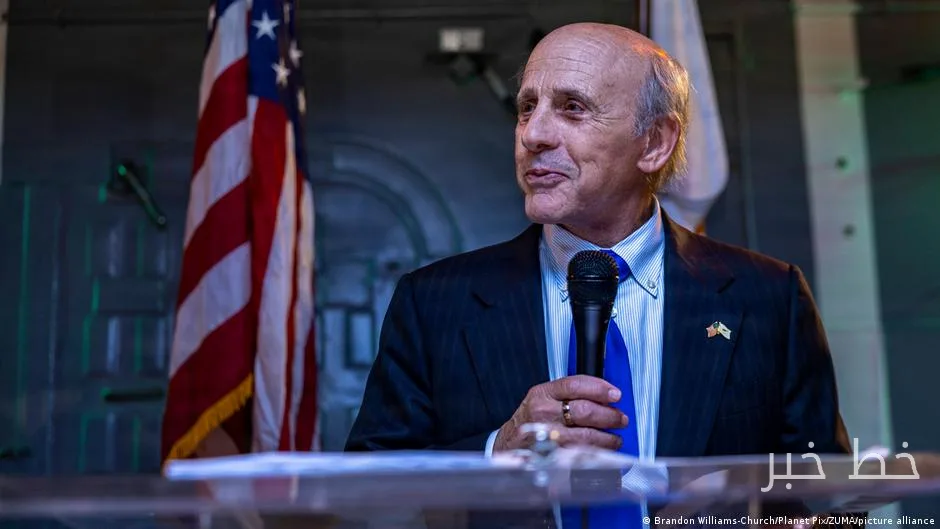
Cyprus, under the leadership of John Brzozowski, the new U.S. ambassador, announced its plans to upgrade the Andreas Papandreou Air Base in Paphos. This base is set to be equipped to accommodate large U.S. military aircraft. Brzozowski, expressing confidence that "the United States will protect Cyprus in the future," clearly indicated that the cooperation between the two countries is expanding.
Geopolitical Changes in Cyprus
These changes represent a significant geopolitical shift for a country that has had close ties with Moscow for decades and has viewed U.S. foreign policy with skepticism. Cyprus, which is not a NATO member, is now moving towards an expanded American military presence. These changes clearly indicate a gradual reduction in Cyprus's relations with Russia and a closer alignment with Washington.
Read more: The Role of National Guard Members in the U.S. Midterm Elections
The political history of Cyprus in this context is noteworthy. After gaining independence from Britain in 1960, the Republic of Cyprus sought to balance its relations between East and West. Under the leadership of Makarios III, the first president of independent Cyprus, the country was recognized in 1961 as one of the founding members of the Non-Aligned Movement. This approach allowed Nicosia to maintain close ties with the Soviet Union without severing its connections with the West.
Complex History of Relations with the U.S.
Cyprus's relations with the United States were affected by Turkey's invasion of the island in 1974 and Washington's lack of decisive action against it. At that time, the U.S. prioritized maintaining its strategic relationship with Turkey, a key NATO ally. This U.S. position fueled anti-American sentiments in Cyprus and led to a violent protest outside the U.S. embassy in Nicosia.
In 1987, Washington imposed an arms embargo on the Republic of Cyprus, which seemed aimed at preventing an arms race on the island. This embargo made the Cypriot National Guard more reliant on Russian-made weapon systems, strengthening Moscow's position as a key military partner.
Cyprus's response to Russia's annexation of Crimea in 2014 demonstrated the strength of these relations. The Cypriot government expressed concern over tougher European sanctions against Moscow, and then-Foreign Minister Ioannis Kasoulides warned that such actions could have devastating consequences for the Cypriot economy.
Relations with Moscow were also strengthened in 2015 with President Nicos Anastasiades's visit to Moscow and the signing of cooperation agreements. These agreements included a maritime cooperation memorandum that allowed Russian warships to visit Cypriot ports. Close cooperation continued until 2021, when then-Foreign Minister and current President Nikos Christodoulides signed a strategic cooperation framework for 2022-2024 in Moscow.
A significant turning point in these changes was Russia's full-scale invasion of Ukraine in February 2022. This invasion accelerated the geopolitical shifts in Cyprus towards the West. For the first time, the Republic of Cyprus publicly and unequivocally decided to support the West, despite the economic and political costs of severing ties with Moscow.
Nicosia aligned itself with the European Union's sanctions against Russia, marking a significant departure from Cyprus's traditional foreign policy approach, which sought to maintain a balance between Russia and the West. This change in position helped Cyprus establish a closer relationship with the United States, particularly in the area of security.
Nicosia was able to convince Washington that it could act as a reliable partner in the Eastern Mediterranean. This closeness had already found an institutional basis prior to the war, with a bilateral statement on security cooperation signed in 2018.
Since then, further initiatives have been pursued, including the establishment of the Cyprus Maritime, Land, and Port Security Center (CYCLOPS), which was recently inaugurated in Larnaca in April 2022. This center provides training for security personnel from Cyprus and other regional countries in areas such as port security, counter-terrorism, and preventing the trafficking of hazardous materials.
Another significant development for the Cypriot National Guard occurred in September 2022 when Washington announced that the arms embargo imposed in 1987 was fully lifted. This decision allows for the export of lethal military equipment to Cyprus and is subject to necessary U.S. approvals. This suspension, which is not permanent and requires periodic renewal, has been extended until September 2027.
The strategic changes in Cyprus are also significant because the country is not a NATO member. Additionally, the strategic changes in Cyprus are evident in the modernization of its armed forces. After decades of reliance on Russian military equipment, the country is striving to gradually reduce its dependence on Russian-made T-80 tanks and Tor-M1 and Buk air defense systems.