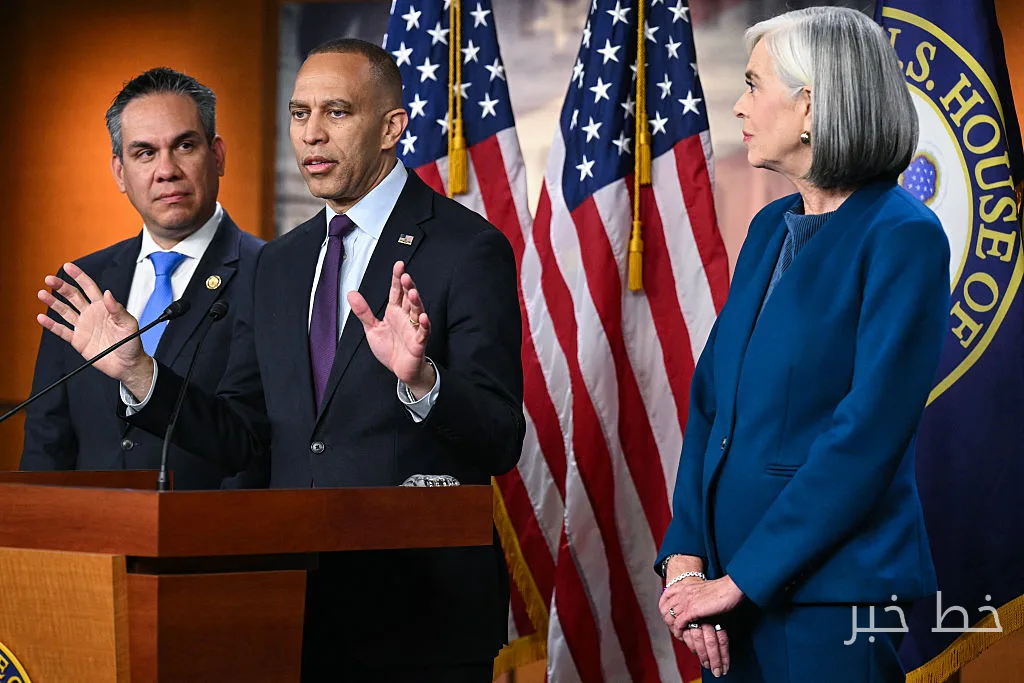
Democrats are entering the House of Representatives with a significant majority, joined by new members representing every corner of this "big tent" party.
The new Democratic members include several democratic socialists and a number of moderates who have won in competitive, Republican-leaning districts. Many of them have promised in their campaigns to reduce costs, improve healthcare, and provide a practical alternative to President Donald Trump. Some have also committed to fighting for broader changes in the country’s economic and political systems.
Ideological Challenges
Conflicting priorities will be one of the biggest challenges for incoming representative Jeff Kim from New York, the elected president, who must maintain unity in a party whose leaders frequently celebrate their ideological diversity.
A significant portion of this debate will take place within the main ideological and governing factions of the House of Representatives, which is preparing to welcome dozens of new members when Congress convenes in January. The two largest factions include the New Democratic Coalition - the largest faction - and the Congressional Progressive Caucus, but the Blue Dog Coalition and the Bipartisan Problem Solvers Caucus may also influence the Democrats' performance constraints while Trump is in the White House.
Composition of Members and Policy Priorities
The new members are not necessarily divided along ideological lines, and membership in these groups can overlap. However, their growing ranks are an early indication of where lawmakers may seek allies and how the internal power balance of the party may shift.
The New Democratic Coalition, with over 140 members, is not only the largest Democratic faction but is also poised to represent more than half of the Democrats in the House. Members of this coalition, who are centrist within the party, generally support practical economic policies, private sector growth, and bipartisan agreements. The expansion of this coalition reflects the importance of moderate candidates for the electoral success of Democrats in November.
Additionally, the policy agenda of this group includes five main household expenses, including healthcare, housing, energy, family care, and everyday essentials. These proposals include extending the tax credits of the Affordable Care Act, strengthening Medicare and Medicaid, limiting unexpected medical bills, and expanding support for prescription drug pricing.
The coalition also emphasizes the need to reverse Trump’s tariffs, which its members argue have increased costs for consumers and businesses. Their agenda also calls for restoring congressional authority over trade policy and making it easier to build new energy infrastructure.
The influence of this coalition may be particularly evident in discussions regarding healthcare, where some moderates are seeking to expand existing programs rather than pursuing Medicare for All, and in negotiations about which legislative sections have a real chance of becoming law.
Read more: Conservative students seeking job opportunities in Washington



