The European Union is seeking a larger role in Indo-Pacific security while India is looking for new partners. India's growing economy and global ambitions have directed the country towards a new era of cooperation and defense partners.
Security Agreements and Cooperation Challenges
In January of this year, India and the European Union signed an agreement titled "Security and Defense Partnership," and the first official security and defense dialogue was held in March. Additionally, multiple negotiations are ongoing throughout the year, including the fifth maritime security dialogue in Brussels last month.
However, while both sides are keen to strengthen their cooperation in maritime security, collaboration in the Indo-Pacific remains challenging. India and European countries have different defense priorities.
The Role of France and Security Challenges
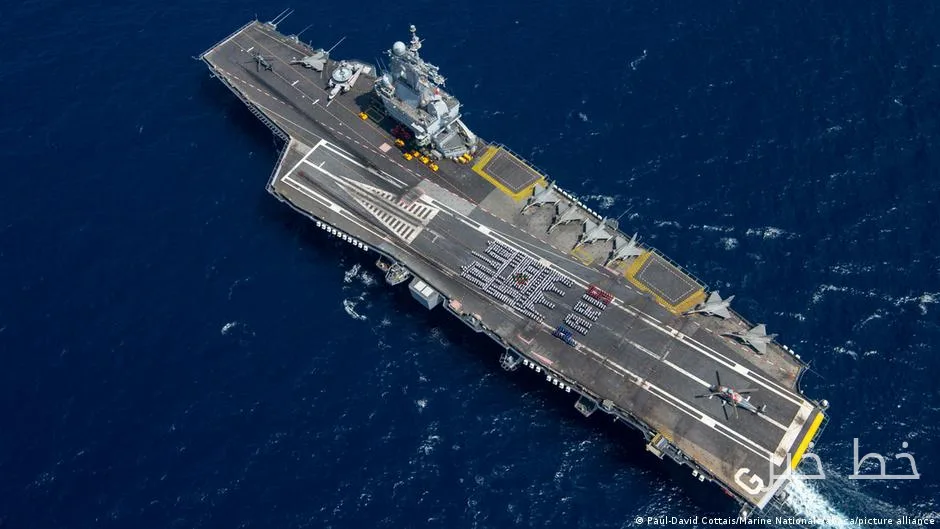
France, as a notable exception, has close cooperation with India due to its military presence in the Indian Ocean. Mohan Kumar, former Indian ambassador to France, stated that "Europe can be a credible defense partner for India, especially in the maritime theater and Indo-Pacific."
However, Europe's capacity to increase its role is limited due to other security crises. For example, the crisis in Ukraine, which is of vital importance to Europe, may impact this goal.
Moreover, progress in defense cooperation between India and European countries such as Germany, Spain, Italy, and Poland indicates strengthening bilateral relations.
Jawad Ashraf, an Indian diplomat, noted that France is recognized as a strong and reliable security partner in all areas of defense cooperation. He also pointed out that "France does not have defense cooperation with Pakistan or China compared to other European countries."
While France is the only nuclear power in the European Union and has the strongest military force, cooperation between Paris and New Delhi does not automatically translate into a unified security role for Europe in the Indo-Pacific.
Tara Karta, a former member of India's National Security Council, emphasized that "Europe has a very minimal role as an entity in Indo-Pacific security, despite announcing a strategy in 2025."
She pointed to political disagreements among EU members as a barrier to a unified security vision. These disagreements were clearly evident at the EU summit on October 15-16 in Brussels, where leaders reaffirmed their support for Ukraine but also showed signs of disagreement over funding and national priorities.
This may explain why, despite the expansion of India's defense relations with Europe, much of this cooperation is still conducted individually between New Delhi and European countries.
Ultimately, Ashraf emphasized that Brussels could announce broader support for its member states' partnerships with India and facilitate access to EU funding programs.
India has also become an important source of defense equipment for Europe, aiding in the rearmament of the continent.