The Parthenon, a 2500-year-old temple of ancient Greece, is considered one of the most important artistic works of the classical period. This temple, dedicated to Athena, the goddess of the city of Athens, is a symbolic structure of the city's significance atop the Acropolis.
The Impact of the Parthenon on Western Art
The Parthenon has had a profound influence on human and artistic ideas in the West. The sculptures on its ceiling, created under the supervision of the famous sculptor, Phidias, are recognized as unparalleled examples of proportion and beauty. These sculptures have influenced artists from ancient Rome to the Neoclassical period and the modern era.
Read more: Decrease in LGBTQ Presence on Television in the 2025-2026 Season
Uncovering the Secrets of the Parthenon
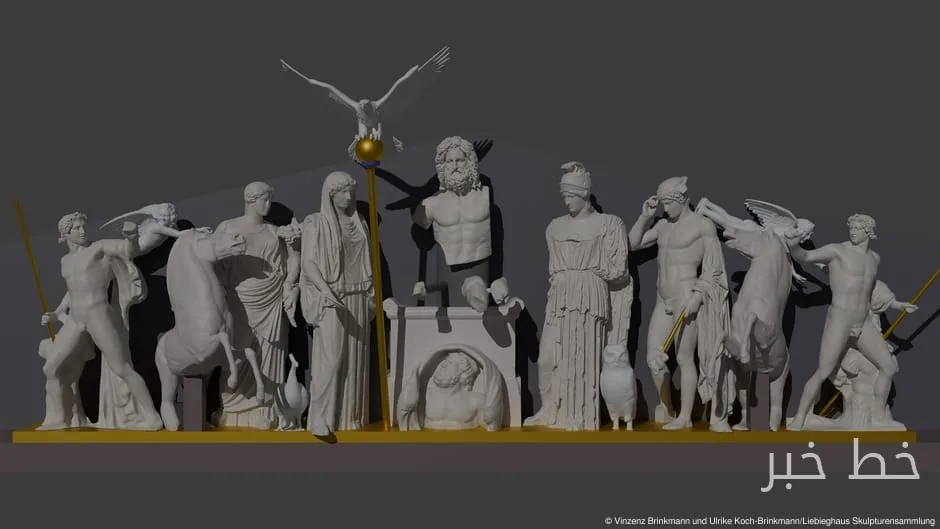
The emergence of the eastern pediment of the Parthenon, depicting the birth of Athena, has always attracted the attention of scholars. This artwork, which originally featured 39 sculptures, was completely destroyed. Archaeologist Winzens Brinkmann and his team, after years of research and utilizing modern technologies, succeeded in gathering the remaining pieces from the eastern pediment of the Parthenon.
Brinkmann, who heads the Department of Antiquities and Asia at the Liebighaus Museum in Frankfurt, announced that the team is clearly close to solving this mystery. The results of this research are showcased in an exhibition titled "Athena, the Scene is in Your Hands: The Mystery of the Parthenon."
Only about 20 percent of the original volume of these marble sculptures remains, and their pieces have been distributed across various European museums. Brinkmann and his wife, Ulrike Koch-Brinkmann, have been working for over 40 years to solve this mystery.
21st-century technologies, including scanners and 3D printers, have helped this team achieve new discoveries. By scanning around 60 original pieces, they have reassembled the sculptures and achieved astonishing results.
This exhibition will be held until July 25, 2027, at the Liebighaus Museum and will include loaned works from other museums. However, after learning that the British Museum is also set to send pieces to the exhibition, Greece withdrew from participating in this event. Greek officials are seeking the return of the Parthenon artifacts to their country.
Read more: The Philippines Becomes the First Winner of the Asian Eurovision Contest · Illegal Immigration from Eastern Libya to Greece has Increased