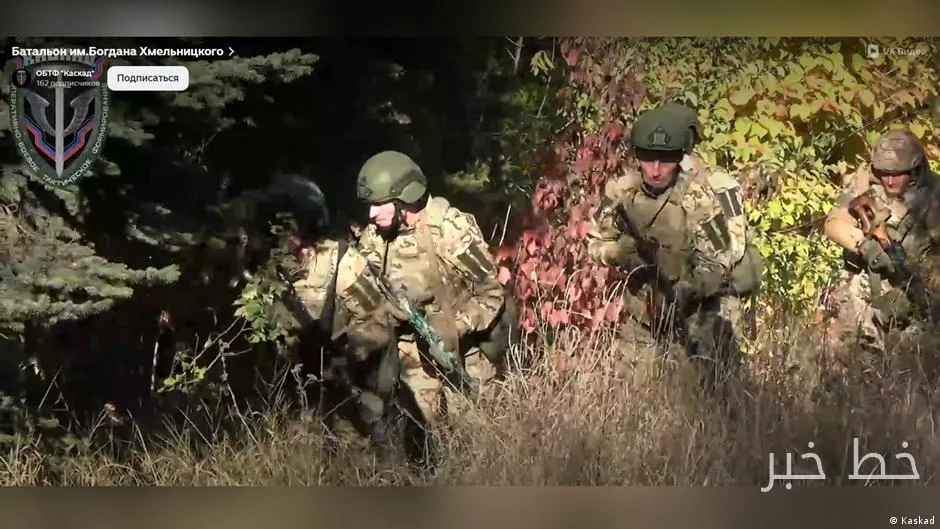
A battalion of Ukrainian prisoners and former members of the Ukrainian Armed Forces has been formed to confront Ukrainian forces. This battalion consists of individuals who have been captured in recent years and merged with several initial units in 2026, being referred to as the "Ukrainian Volunteer Special Battalion."
Number and Status of the Battalions
The "Maksima Kryvanis" battalion has attracted significant public attention. The actual size of this battalion is unclear, but reports from Russian media have stated that its membership is around 200, while available images show only a few dozen. A research team from the Ukrainian public media, "Suspilne," has identified over 30 members of this battalion and confirmed that all of them are former members of the Ukrainian Armed Forces who were captured by Russian forces between 2023 and 2024.
Read more: Kambri Gilfoyle and the Controversial Request for Personal Debt Payment
Analysis of the Situation and Human Aspects
Paul Luzin, a foreign policy and defense expert at the European Policy Analysis Center, considers these units to be a "replication" of the "Russian Volunteer Corps" and the "Russian Freedom Legion." According to him, these units are attempting to distract from the presence of Russian volunteers within the ranks of Ukraine. Yevhen Sheibalov, a writer and veteran of the Ukraine war, also notes that the fact that Russians are fighting within Ukrainian ranks is concerning for Russian officials.
In 2025, the Office of the United Nations High Commissioner for Human Rights (OHCHR) reported that 95 percent of released Ukrainian prisoners indicated they had experienced torture and mistreatment during their captivity. Bill Wylie, executive director of the NGO International Justice and Accountability Commission, states that the physical and psychological condition of returning fighters raises serious doubts about the voluntary nature of their recruitment.
Maxim Butkovich, a veteran and human rights activist, describes the conditions of captivity in Russia as harsh, stating that the distinction between voluntary and involuntary recruitment is not easy in such circumstances. Psychological pressure and harsh conditions in captivity can lead some prisoners to join the enemy ranks due to ideological proximity.
Similar testimonies from Sheibalov exist. He speaks of efforts to coerce prisoners into confessing to war crimes and also recruiting members for Russian intelligence services. According to him, all prisoners are initially interrogated and then pressured with offers.
He states that he did not sign official papers from the Ministry of Defense but only signed a private contract with an individual providing military services. After that, he was taken to a room where he listened to speeches and videos that he was later asked to recount.
Additionally, in a video that appears to be related to a court in Ukraine, he states that former Ukrainian prisoners in this unit are under the supervision of mercenaries from the private military company "Redut." He also speaks of beatings, torture, and receiving monthly wages in envelopes distributed by a member of Russian military intelligence.
He also mentions that he was given a phone, but due to fear of constant surveillance, he was unable to contact anyone in Ukraine. He claims that he escaped in March 2025 before his first deployment to the Donetsk region and spent two days hiding in basements and houses to contact Ukrainian fighters.
Now, Olionik has been in custody in Ukraine for nearly two years, and authorities are investigating the possibility of his treason. He has not yet been formally charged.
Read more: Damage to 81 Military Aircraft and Drones of the U.S. in the War with Iran