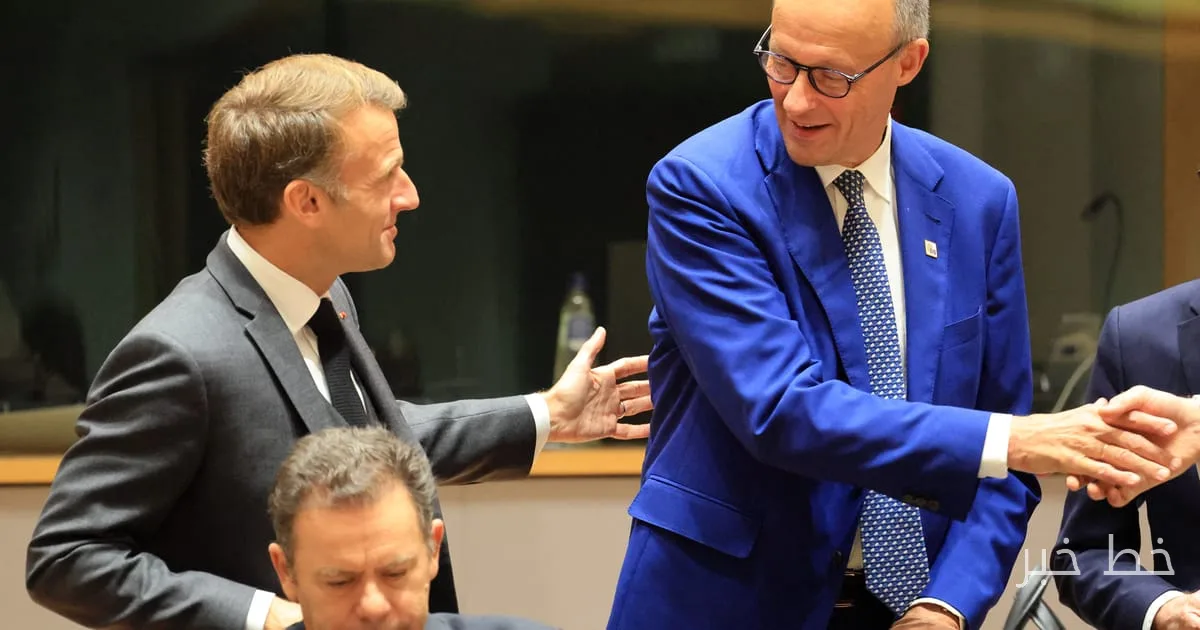
France and Germany agreed on Friday to support European-made cars against the reduction of greenhouse gas emission targets by 2035 under a historic EU industrial bill. This agreement was reached after months of negotiation between the two major economies of the EU.
Details of the Agreement
According to this agreement, Germany will accept stricter requirements for "made in Europe" or local content in the automotive industry under the proposed "industrial performance" bill, which has been a long-standing request from the French. In return, France will support Berlin's efforts to reduce the EU's plan to phase out new combustion engine cars.
The current EU goal is for companies to reduce greenhouse gas emissions from new cars by 100 percent compared to 2021 levels by 2035. It is possible that 10 percent of this target could be offset through initiatives such as investment and compensation.
Reduction of Emission Targets
France and Germany are now seeking to reduce the 2035 target to 90 percent and offer an additional 10 percent allowance in exchange for investment in alternative fuels, effectively reducing the emission reduction requirements to 80 percent.
This agreement, first reported in July, was supposed to be announced on Thursday at a meeting of EU leaders in Brussels, but was postponed at the last minute due to disputes within Germany's ruling coalition.
Emmanuel Macron, the President of France, said in a social media post: "We hope this Franco-German dynamic can quickly lead to an agreement with our partners, for our businesses and industry."
An Élysée official emphasized on Friday that under this agreement, the scope of "made in Europe" for the automotive industry could be extended to the UK and Switzerland under certain conditions, addressing the main concerns of Prime Minister Andy Burnham's government ahead of the UK-EU meeting on November 20 in Brussels.
This agreement was reached after the German Social Democratic Party, the smaller partner in Chancellor Friedrich Merz's coalition government, set aside its opposition.
Carsten Schneider, Germany's Environment Minister and a member of the Social Democratic Party, said: "This is a modern revision of Germany's industrial policy that places greater emphasis on preserving jobs and production sites."
He added: "The clear expectation from German companies is to take advantage of these new opportunities for investment and job security in Germany."
Read more: Germany and France agree to support the European automotive industry