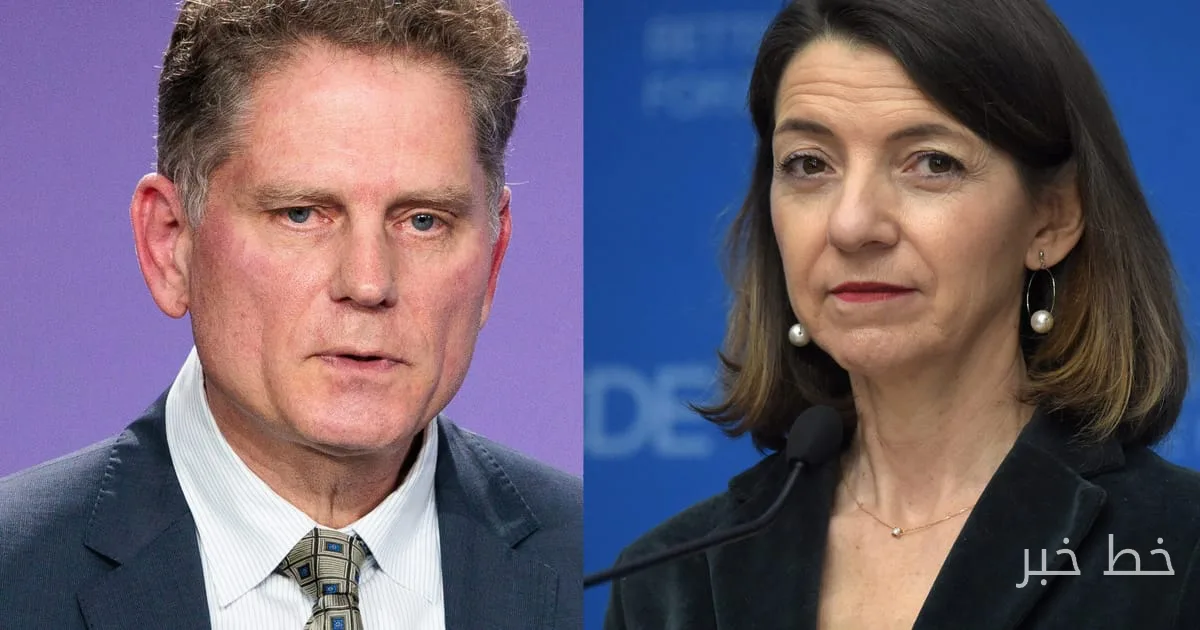
On Friday, France and Germany introduced their candidates to fill two vacant positions on the Executive Board of the European Central Bank (ECB), a move that helps complete a political package that will determine the leadership of this institution for the coming years.
Introduction of Candidates
Berlin has nominated Markus Brunnermeier, a professor at Princeton University, as the future chief economist of the ECB. He will be appointed to this position on May 31, after the eight-year term of the current economist, Philip Lane, ends.
Paris has nominated Laurence Boone, a former European minister and political ally of Emmanuel Macron, for the position related to markets at the ECB. This position will be available from January 4, when Isabel Schnabel moves to a new job at the International Monetary Fund.
Implications of New Leadership
These changes pave the way for Pablo Hernández de Cos, the former governor of the Bank of Spain, to be appointed as the ECB president after Christine Lagarde's resignation on February 7. The Netherlands had hoped to secure this position, but the presence of two economic officials from the Netherlands and Germany in two influential ECB positions seemed unacceptable to southern countries that favor softer economic policies.
If Boone is confirmed, she will be in a key position at the bank, especially if tensions in the debt markets of France and other European countries rise. New forecasts from the European Commission indicate that the budget deficits of many eurozone members will increase next year.
In an interview in October, Peter Praet, former chief economist of the ECB, stated that the role of markets becomes more important when market tensions put more pressure on the ECB to intervene in debt markets.
Stefan Gerlach, chief economist at EFG, described this combination as "a very strong board" that includes deep economic expertise, extensive experience in policymaking, and strong international networks. These features are particularly important at a time when the ECB faces significant economic and political uncertainties.
This new board composition represents a shift from the previous composition, where former politicians like Lagarde and Luis de Guindos held both the presidency and vice-presidency. De Cos and Boris Vujčić, the vice president, are experienced central bankers, as is Piero Cipollone, who heads the payments division. Boone was the chief economist at the Organisation for Economic Co-operation and Development (OECD) before entering politics.
While these changes make the six-member board seem less political, the game of changes at the ECB has been anything but simple. Carsten Brzeski, head of macro at ING, described these developments as "another masterpiece of French diplomacy and strategic personnel policies." According to him, by selecting the position related to markets, France created the impression that it has entrusted the more important chief economist position to Germany.
However, Brzeski warned that despite a Spanish president and the market position being held by France, the risk of the ECB becoming a softer institution has clearly increased.



