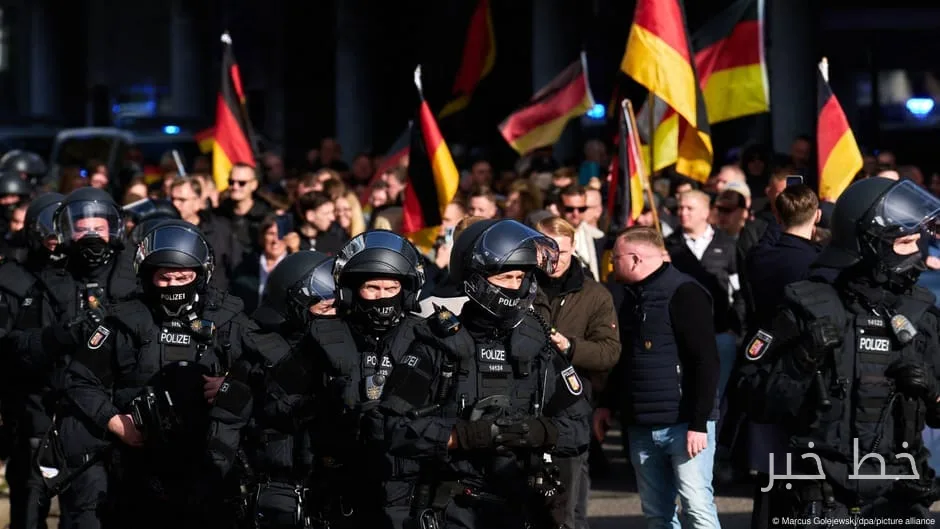
The far-right party Alternative for Germany (AfD), led by Alice Weidel, is increasingly drawing closer to neo-Nazi networks with the aim of securing the chancellorship in the 2029 elections. Since its founding in 2013, this party has radicalized significantly and has been identified as a suspect organization of right-wing extremism by Germany's domestic intelligence agency, and in some states, it is recognized as an established far-right organization.
Intra-Party Developments and Neo-Nazi Allegations
Some political experts believe that the AfD has transformed into a far-right party that also exhibits tendencies associated with fascist movements. Fabian Virchow, a researcher on right-wing extremism, points out that some factors and strategic tendencies within the party are in conflict with one another. For example, Alice Weidel is known as a proponent of a free-market approach, while others like Björn Höcke, the influential leader of the AfD in Thuringia, call for a strong and ethnically defined state.
Read more: The UN and IOM warn that the humanitarian crisis in Sudan is worsening
Recent research also indicates a rise in far-right extremist views within German society. According to the results of a study on authoritarian behaviors in Leipzig, nearly two-thirds of individuals with far-right extremist views would vote for the AfD. This party has managed to attract large segments of voters with anti-democratic attitudes.
Historical Role and Credibility Challenges
Questions regarding the AfD's connections to Nazism have been raised since the party's founding in 2013. From the early years of its establishment, Bernard Lucke, one of the founders and the party's first leader, has stirred controversy with provocative statements about democracy and parliamentary politics in Germany. In Germany, references to Nazi dictatorship remain a taboo due to the country's responsibility in World War II and the Holocaust.
Although AfD members and staff typically try to distance themselves from ethnic and neo-Nazi backgrounds, the credibility of these efforts has always been questioned. Laura Neumann, who works with individuals seeking to leave the far-right scene, states that the process of exiting this movement is very challenging and requires a professionally guided process.
Based on the experiences of exit consultants, the deeper and more immersed an individual is in these circles, the harder it becomes to distance oneself from those beliefs and attachments. This issue also applies to AfD members who are under scrutiny due to past connections with ethnic and neo-Nazi organizations.
Read more: Nathalie Paulik assessed the progress of immigrant integration in Germany positively · Eils Ainger received support from parties as a presidential candidate in Germany