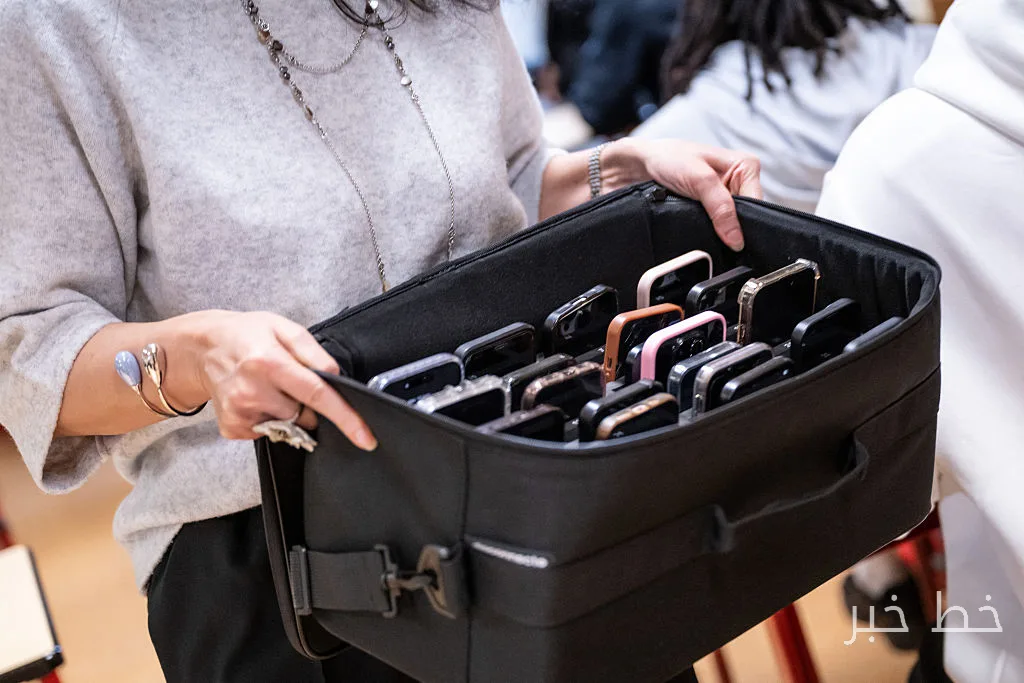
A new study from Harvard University indicates that the ban on smartphones in schools has led to a slight but meaningful improvement in students' academic growth. However, the existing literature on the effectiveness of these bans is limited, raising the question of whether these small improvements are worth the cost and effort involved in implementing them.
Slight Academic Improvements
Harvard researchers, by examining standardized test scores, found that students in schools with phone bans progress on average about 0.01 standard deviations per year, which they estimate is equivalent to one to two weeks of additional learning.
Read more: 20% of Trump supporters believe Republicans will lose the White House
This study, published on Tuesday, analyzed data from approximately 3.3 million students across 4,600 schools from 2021 to 2026. Researchers concluded that the academic improvements associated with the phone ban could offset part of the annual academic decline that students have experienced since smartphones became common.
Conflicting Reports on Effects
Tom Kane, director of the Harvard University Education Policy Research Center and one of the lead researchers of this study, states that smartphones act like a "leak" in the education system, and comprehensive bans in schools are one of the most cost-effective ways to "plug" this leak. He believes that the costs associated with hiring a teacher for an additional week of work far exceed the costs of implementing phone bans.
Kane explains that the one to two weeks gained through these bans could help compensate for a significant portion of the decline in students' academic achievements and believes that these benefits are likely to accumulate and yield better results over time.
The study also showed that the positive effect of phone bans on academic achievements consistently exists not only in elementary grades but also in middle and high school levels.
Attention to Implementation Practices
Supporters of phone bans, such as Kim Witman, one of the founders of the No Distractions in Schools policy project, believe that the implementation burden should shift from individual teachers to school-wide policies and state-level legislation. She also states that the Harvard study supports this approach.
Witman is pleased to see evidence of academic improvements for comprehensive bans and, as a mother, emphasizes that phones affect the multiple experiences children should have during childhood.
She says, "Schools should be a sanctuary where children can learn without the constant pressure of phones and social media and provide an environment where they can develop the self-discipline and executive skills necessary for success in adulthood."
Creating a phone-free school does not necessarily require the use of Yandra bags. Some schools collect phones in central bins, while others ask students to place them in their lockers. Researchers believe that other methods could also produce similar effects if implemented carefully.
Conclusion and Future Research
At least 40 states and D.C. have asked educational institutions to ban or limit students' use of smartphones. However, this widespread acceptance has outpaced research on the effects of these bans. Recent studies have also provided varying estimates of the academic benefits of these bans.
Researchers from both studies believe that their estimates, despite differences in methods and interpretations, are generally consistent. They also believe that further research on the impact of social media use on students' academic achievements is essential.
Read more: The White House told Democrats that investigations should start anew · Bomb threats disrupted schools in Italy, Britain, and Ireland