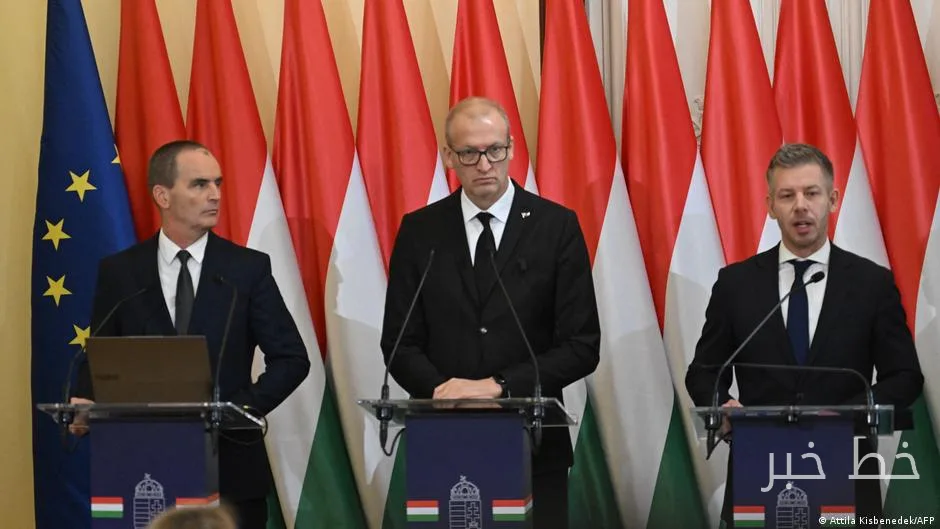
On Wednesday, Hungary took a significant step towards acknowledging its repressive past by releasing thousands of documents from the archives of the secret police from the communist era to the public. This archive has now become a searchable online database and includes the names of thousands of former informants who worked for the security apparatus during four decades of single-party rule.
Efforts for Transparency
Although communism in Hungary ended in 1989, efforts to disclose these documents have repeatedly faced delays. Some critics attribute this delay to the reluctance of successive governments to involve public figures.
Read more: Arrest of Ukrainian Man on Charges of Spying for Russia in Germany
Péter Márki-Zay, the centrist Prime Minister of Hungary who came to power last April, promised to provide unlimited access to these documents for the public. Márki-Zay stated at a press conference in the state security archives: "After 36 years, we are finally realizing one of the key promises of the regime change in 1990 — a promise that was later ignored."
Contents of the Archive
Márki-Zay said that about 60,000 names have been published in the new online database, and a second batch of documents is expected to be available by next February. He urged everyone to examine these documents with respect and humanity, as many families may face difficult information about their deceased members.
Hungary was under a single-party communist regime from 1949 to 1989. Like many Eastern European countries during the Cold War, the secret police in Hungary relied on a vast network of informants to monitor citizens. Many of these informants were coerced into reporting on their colleagues, friends, and even relatives.
According to estimates, officials hired about 150,000 informants, although records for about two-thirds of them are not available. Many of these documents were destroyed in 1956 during the anti-Soviet uprising in Hungary or were hidden during the transition to democracy.
Historian László Vörös from the 1956 Institute told AFP that this move to release documents is "better late than never." He predicted that these revelations could lead to public and private transparency and said, "This issue may create excitement in the coming months."
Before the release of the documents, there were rumors about whether former Prime Minister Viktor Orbán had also been an informant, but his name was not found in the digital database released on Wednesday. Orbán had stated that the communist secret services had attempted to recruit him during his military service, but he rejected the offer.
Read more: Federal Agents Seized 17 Items from Ilhan Omar's Home · Bipartisan Senators Call for Transparency in Election Prediction Markets