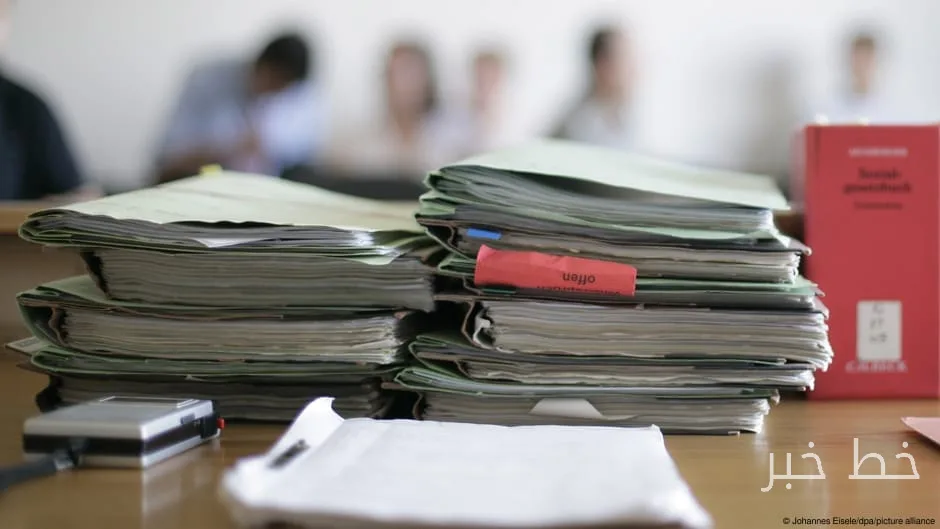
German courts are facing a sharp increase in complaints and lawsuits attributed to the use of artificial intelligence models. This issue is especially observed in social courts, where citizens can register their complaints without legal representation. In many of these cases, individuals are protesting sanctions or reductions in unemployment benefits and sometimes responding to requests from authorities to return benefits. Complaints may also relate to sudden increases in health insurance premiums or other benefits.
Increase in Cases in Social Courts
Markus Hau, spokesperson for the social court in the state of Berlin and a judge at this court, announced that this court has faced a 28% increase in cases this year. He said, "This increase is clearly significant and part of it relates to the use of artificial intelligence." Hau also added that the tightening of sanctions on unemployment benefits introduced by the federal government this year may also contribute to this increase.
Read more: Final review of the 2027 budget in the German Bundestag
Problems Arising from AI Complaints
Other states have also reported a similar increase. Reports of urgent lawsuits have emerged from eight social courts in North Rhine-Westphalia, Germany's most populous state. The number of these lawsuits increased from about 1,400 in the first quarter of 2025 to 3,600 in the same period in 2026. Hau stated that in most cases, judges can easily determine whether a complaint was generated by artificial intelligence or not.
He said, "You can usually tell at first glance. The font and format are different. In the worst cases, the complaints are very lengthy and full of content that has little relevance to the subject." Hau has also noticed that complaints generated by artificial intelligence are less personal, making his job more difficult. He added, "You really can't understand what kind of people are behind these cases, and identifying the real problem becomes challenging."
Friedrich-Johannes Graf von Pfeil, head of the social court in Potsdam, Brandenburg, received a complaint that reached 800 pages. He said, "You can quickly tell whether a complaint was created by artificial intelligence because it usually uses specialized legal terminology that no ordinary citizen would use."
The problem for judges is that they are required to review all this material, which often includes references to other legal rulings that are either of little relevance to the subject or generated by artificial intelligence tools.
At a regular conference this month, the justice ministers of the state and federal governments of Germany agreed to form a working group to address this issue. Some conservative ministers have called for a fee for filing urgent lawsuits. Christian Heinz, the justice minister of the Christian Democratic Party in Hesse, suggested a fee of 15 euros.
The Social Welfare Association (VdK), which provides legal advice to individuals against German welfare authorities, strongly opposes these ideas. Holger Lange, head of the federal legal department of VdK, believes that access to social courts for individuals, especially the most vulnerable, should be provided without fear of costs.
He added that the solution to this problem should not be "building walls around the courts," but rather improving digital access and facilitating the submission of clear and concise complaints.
Hau is also skeptical about the idea of fees, stating that this issue has been discussed for years. However, he emphasized that social courts should have easy access for entry. Holger Lange believes that the recent increase in complaints, whether generated by artificial intelligence or not, is not necessarily a bad sign and may reflect a legal demand that has remained hidden due to fear of asserting one's rights.
Read more: Mani Charnoff's participation in the Thanksgiving celebration during the cost of living crisis · Friedrich defended Germany's support for Ukraine against criticisms



