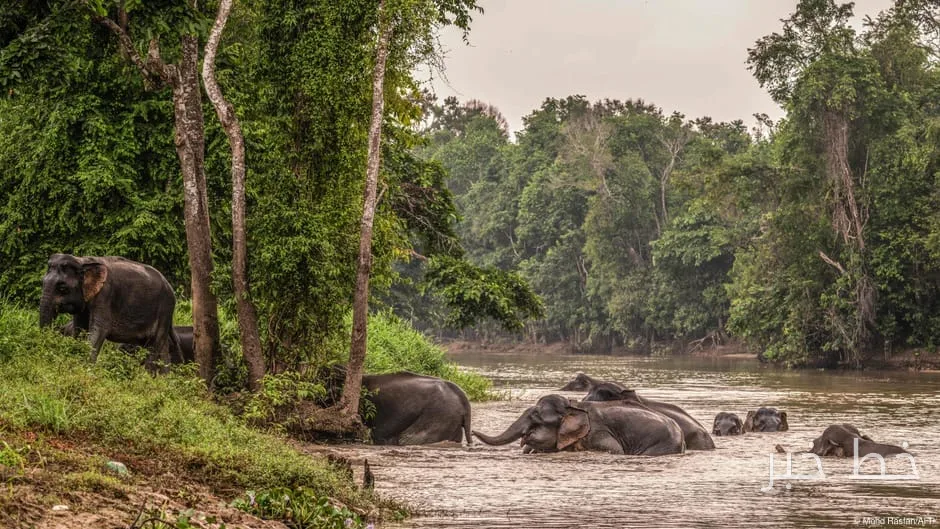
The Tropical Forest Fund (TFFF) was established to support the conservation of tropical forests at the COP30 climate conference in Brazil. This fund provides financial assistance to the host countries of these forests so they can preserve these vital ecosystems. However, reports indicate that this fund is facing serious challenges due to a lack of funding.
State of Forests and Challenges Ahead
Tropical forests play a crucial role in carbon dioxide storage and biodiversity preservation. However, despite an agreement by 140 countries to halt deforestation by the end of the decade, this trend continues. In 2024, over 8 million hectares of forest were lost, an area 30 times larger than the country of Luxembourg. Since 1990, nearly 490 million hectares of forest have been destroyed.
Role of the Tropical Forest Fund
The TFFF hopes to secure the necessary financial resources for the protection of tropical forests by 2027. This fund aims to raise $10 billion through government donations and issuing bonds for private investors. It is expected that this year, $10 billion will be deposited into the fund in the form of low-interest loans.
Financial institutions and investors who purchase TFFF bonds can earn a 5% annual return. This plan also includes allocating 2.7% of the fund's profits to countries with tropical forests. For every hectare of forest preserved, these countries will receive $4 per year. At least 20% of this amount must be allocated to indigenous peoples and local communities.
According to calculations, the Democratic Republic of the Congo could receive approximately $333 million for its forests in 2024. However, these funds are only paid for healthy ecosystems and not for timber plantations. Additionally, satellite technologies will be employed to monitor the state of forests and prevent their destruction.
This fund incentivizes governments to protect forests instead of destroying them. If a government fails to utilize TFFF assistance for forest protection, its payments may be suspended for several years. This measure is designed to prevent misuse of financial resources.
Future Outlook for the TFFF
The TFFF must secure a total of $10 billion in initial capital by the end of 2026. Currently, the total approved contributions from various countries and foundations only amount to $7.9 billion. Eight countries, including Brazil, Indonesia, France, and the United Kingdom, have expressed their willingness to contribute to this fund. Norway, with a commitment of $3 billion, is recognized as the largest donor, but this country will only fulfill its commitment if the total pledges are made by the end of this year.
This fund is also politically protected, so that even if governments change, the donated budgets will remain in the fund for 40 years. This mechanism helps recipient countries to take steps toward forest conservation instead of reducing environmental support.



