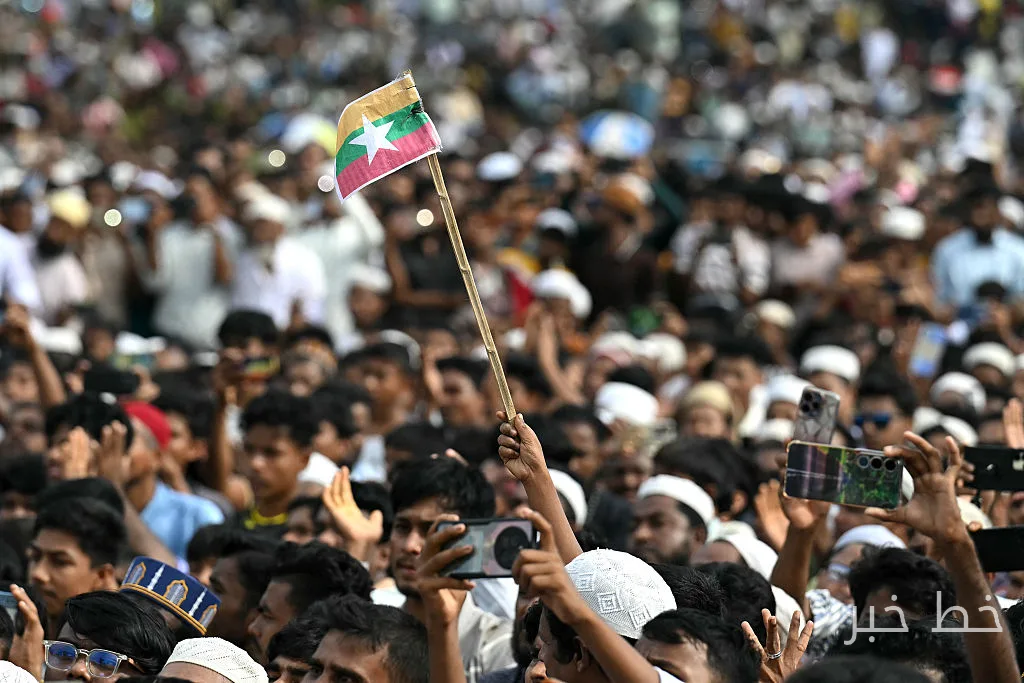
The International Court issued a historic ruling on November 23, 2023, condemning Myanmar for genocide against the Rohingya Muslim minority. This ruling came after a military campaign in 2017 during which over 700,000 Rohingya fled from the northern Rakhine state of the country.
Details of the Court's Ruling
This ruling is the first time in the history of the International Court that a country has been convicted of genocide. In this military operation, Myanmar claims that 10,000 people were killed, including 2,109 children under the age of five. This ruling could have significant legal implications for other similar cases in the future, especially for cases brought under the 1948 Genocide Convention.
Read more: Trump Raises Possibility of Continued War with Iran Until 2027
Reactions to the Court's Ruling
The Myanmar government, led by Min Aung Hlaing, the former army commander, called the ruling unjust. A spokesperson for the government stated that the decision was not made unanimously, with six out of 15 judges voting against it. Meanwhile, the Myanmar government has denied the genocide allegations throughout the trial.
In contrast, the National Unity Government of Myanmar, formed after the military coup in 2021, has stated that it respects this ruling. According to Melissa O'Brien, an international law professor at the University of Western Australia, this ruling signifies a global acknowledgment of the genocide against the Rohingya.
Rohingya community leaders also referred to this ruling as a historic recognition of their ethnic group. Syed Ullah, one of the leaders of the Rohingya community in a refugee camp in Bangladesh, stated that the court recognized the existence of the Rohingya, which is very important for them.
International Implications
This historic ruling could have widespread effects on Myanmar's behavior in the future. The court has asked Myanmar to ensure the safe and voluntary return of the Rohingya to their country and to prosecute individuals suspected of committing genocide. The country has two years to submit reports to the court regarding the implementation of these rulings.
If Myanmar fails to implement these rulings, the court has emphasized that it must pay reparations to the Rohingya, the amount of which will be determined at later stages. However, it is unclear whether Myanmar will comply with this ruling.
In response to this ruling, some countries, including the United Kingdom, have taken steps to expel Myanmar diplomats and called for an emergency meeting of the United Nations Security Council to discuss this ruling. Additionally, other countries may exert pressure on Myanmar to enforce this ruling.
Overall, this ruling could lead to new movements for accountability regarding genocide and initiate further investigations in this area, particularly in Argentina and Indonesia.
Read more: Russia Damaged Three Bridges in Kyiv in Major Attack · Rwanda Responds to Criticism Regarding the Return of Refugees