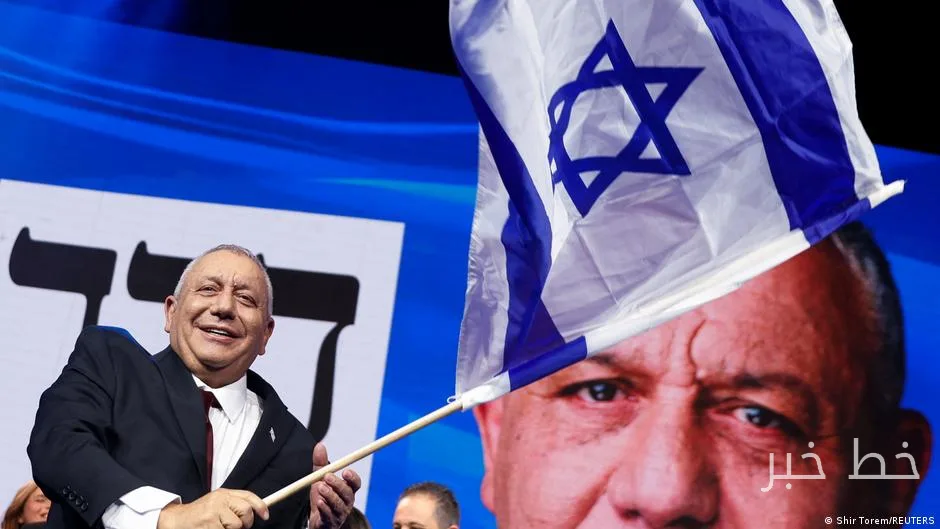
Israel has elected Gadi Eisenkot as the first option to form a new government. This news was announced in a statement from President Isaac Herzog's office.
Details of Eisenkot's Selection
The released statement mentioned that Eisenkot has been informed of Herzog's intention to task him with forming a government and is set to be invited to the President's residence on Sunday for his official inauguration ceremony.
Read more: Steve Toth wins in the Crenshaw district in Texas
This decision comes after a close competition with current Prime Minister Benjamin Netanyahu in the late October elections. Eisenkot, as the leader of the Yashar party and head of the anti-Netanyahu coalition, managed to secure 48 seats out of 120 in the recent Israeli parliament elections. While Netanyahu and his coalition won 53 seats, neither coalition was able to achieve the necessary majority to form a government.
Challenges in Forming a New Government
Eisenkot, as a former military commander, now faces significant challenges in forming a new government. Although both his coalition and Netanyahu's have failed to secure the majority of 61 seats, Arab parties have recently announced their support for Eisenkot as the next prime minister. In fact, Netanyahu has even rejected cooperation with Arab parties to gain a majority.
These developments reflect the complex process that Eisenkot must navigate to form a new government. According to forecasts, coalition negotiations are expected to begin soon, and the various parties' shares in the future government need to be clarified. If Eisenkot succeeds in forming a government, he will replace Netanyahu, who is recognized as Israel's longest-serving prime minister.
The formation of a new government in Israel will not only impact the country's domestic policies but also its foreign relations and the regional security situation. Eisenkot is expected to face even greater challenges in economic and social areas, which require precise policymaking and convergence among various parties.
Read more: US military attacks Iran's air defense systems · Trump speaks about new technologies at Kennedy Space Center