Jean-Luc Mélenchon, the 75-year-old candidate for the French presidential election, has asked his young supporters to speak with their parents on Facebook in order to appeal to older voters. This effort comes as Mélenchon enjoys particular popularity among young voters due to his progressive platform and calls for civil revolution.
Digital Strategy to Attract Older Voters
Antoine Léomont, the communications operations manager for Mélenchon's campaign, stated: "We are strong on other social media platforms, but Facebook is one of the places where the digital battle can be decisive." According to a recent poll, over 40 percent of voters under 35 intend to vote for Mélenchon, while this figure drops to 14 percent or less for those over 50.
According to Médiamétrie reports, platforms like Instagram and Snapchat have 35 percent more daily users than Facebook among those aged 15 to 24. However, Mélenchon has nearly double the followers on TikTok, which is more popular among young people, compared to other presidential candidates.
Challenges and Facebook Rivalries
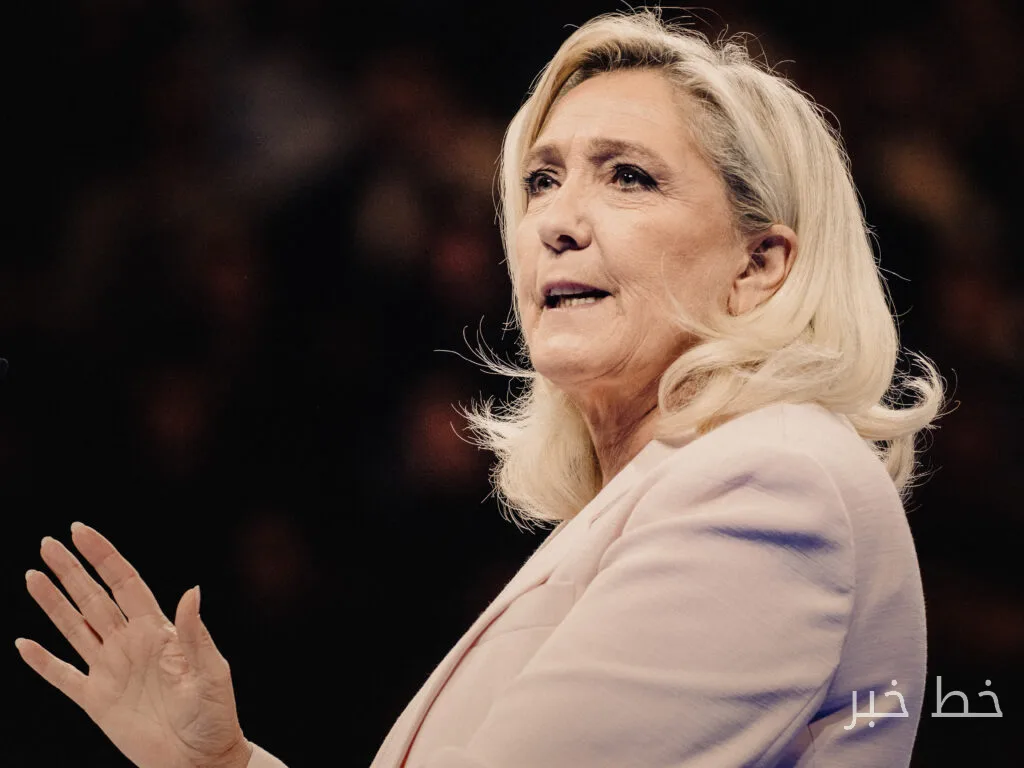
However, Facebook remains dominated by Marine Le Pen's National Rally. Since June, National Rally posts have garnered over 2 million reactions, more than any other political party in France. This indicates a high concentration of interactions on this platform around the National Rally.
Recent polls suggest that Mélenchon's core base of young voters positions him well for a second-place finish in the first round of the election. This success could bring him to the second round, potentially competing against Le Pen, who has maintained a double-digit lead in recent months.
At the same time, Mélenchon needs to attract larger segments of voters to defeat Le Pen. While researchers and political scientists are cautious about predicting second-round outcomes early in the campaign, recent polls indicate that Mélenchon would face a heavy defeat if he were to confront Le Pen in the second round.
Léomont has encouraged activists from the "France Unbowed" party to collectively share content on Facebook. These activities are conducted through an open WhatsApp channel with over 170,000 members, where calls to action and promotional clips are shared.
He told activists: "We must re-engage with Facebook at all costs! We cannot cede any ground to the far right." This approach is somewhat inspired by the strategy of André Janones, a Brazilian representative who mobilized supporters of President Luiz Inácio Lula da Silva using messaging apps before his recent re-election.
However, this strategy also has its specific limitations. Political parties do not control social media algorithms. In Brazil, Lula's campaign claimed that Meta, the parent company of Facebook, WhatsApp, and Instagram, was suppressing their content, a claim that Meta denied.
Hadrien Clout, a representative of "France Unbowed" who closely follows South American politics, acknowledged that these experiences should be utilized in Mélenchon's campaign to safeguard against the influence of American social networks.
The fundamental idea is that the younger generation must convince their parents. At a party event last summer, Mathilde Panot, a senior member of the National Assembly from "France Unbowed," referenced research by Vincent Tiberj, a French political scientist, which examines the "reverse socialization" phenomenon. She pointed out how children can challenge and change their parents' views and policies.
Panot said: "Children must convince their parents. We need to do grassroots work and persuade individuals one by one, starting from our inner circle: parents, siblings, uncles, and aunts."