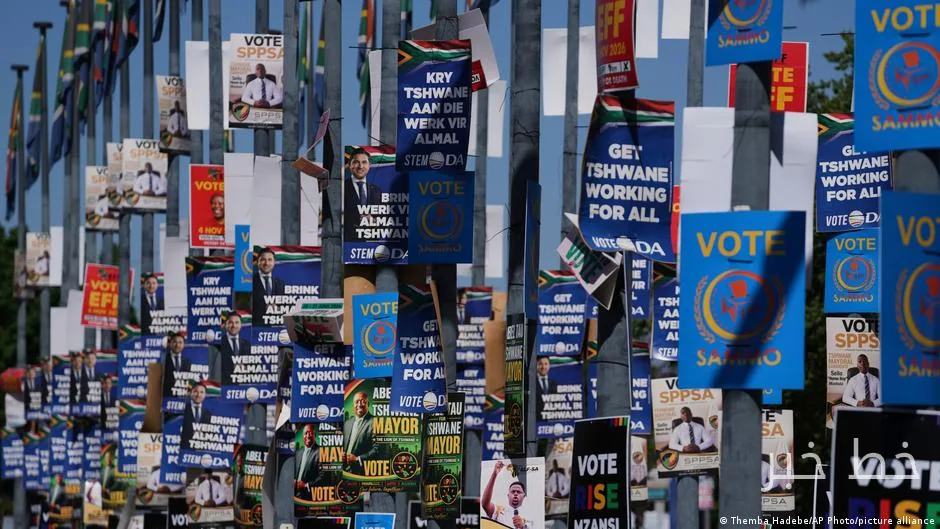
Local elections in South Africa will be held on November 4, 2023, and are expected to reflect the state of public discontent in the country. Dissatisfaction with infrastructure and public services has always been a hot topic among voters.
Public Discontent and Voting Motivation
Watisa Zoya, a resident of Tembisa, South Africa, has announced her decision not to vote, stating: "What’s the point? We will still go to bed hungry." She clearly expresses this discontent. In contrast, Lindokuhle Mbanda Zayo, 22, despite not having a final decision about voting, emphasizes the importance of her vote, saying: "When we vote for the city council, we ask them to solve the problems in the area."
She mentions power outages and sewage issues in the streets, stating that many problems require immediate attention. Both women live in Tembisa, located in the suburbs of Johannesburg, and feel deep dissatisfaction with their living conditions.
Water and Infrastructure Challenges
In this election, the state of water and infrastructure is also considered a key issue. Farriel Adam, executive director of the water rights NGO WaterCAN, states: "Half of the drinking water systems in South Africa are not suitable for consumption," and nearly 70 percent of wastewater treatment facilities are in a critical state. These issues have raised serious concerns for voters.
In major cities like Johannesburg, many neighborhoods face water cuts and restrictions, which have arisen due to outdated and inefficient infrastructure. Public frustration with urban services has significantly increased, prompting voters to seek change.
The African National Congress (ANC), which previously held an absolute majority in most municipalities, is now facing declining popularity. In 2016, the party garnered 53.91 percent of the votes, but this figure dropped to 45.59 percent in the 2021 elections. Predictions suggest that this percentage may fall to 30 percent, which could lead to an increase in municipalities controlled by coalitions.
Political and Social Impacts
Politicians must respond to the expectations of voters, especially the younger and newer generations. Naidoo, an analyst at the Global Dialogue Institute, states: "By voting, you put pressure on some of these political parties, but this discontent has arisen due to the failure to meet expectations promptly."
Many voters view the ANC as the main culprit behind municipal problems. In this election, there are also claims of exploiting immigrants as voters. These issues could impact the election results and raise concerns about misinformation and rumors.
With over 136,000 candidates participating in this election and 75 parties competing in Johannesburg, 70 parties in Tshwane, and 69 parties in Ekurhuleni (including surrounding areas), every vote carries significant weight. This election seems poised to act as a turning point in South African local politics and indicate major changes in the future.