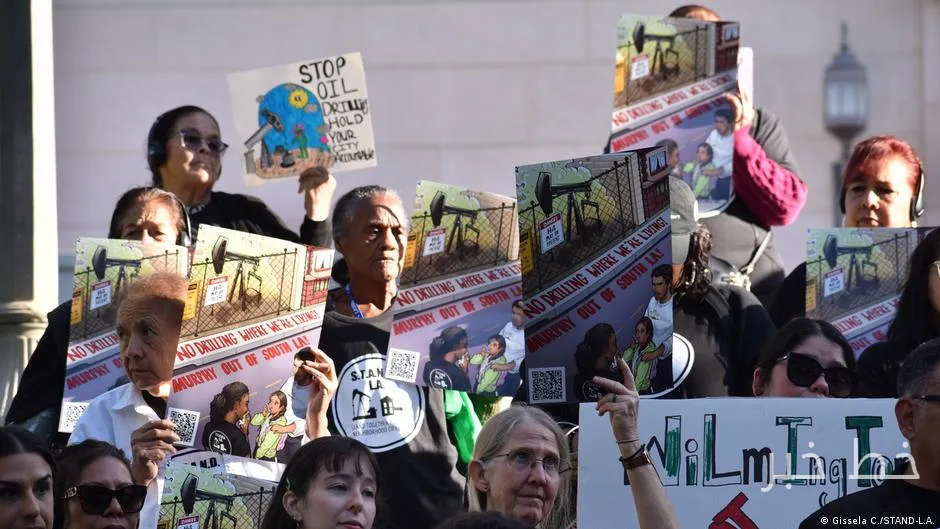
Los Angeles (LA), as the largest city in the U.S., has passed a law that bans oil drilling. This action follows years of complaints and struggles by local residents to reduce pollution and health risks associated with oil wells.
Details of the New Law
The Los Angeles City Council passed this law on October 28, which immediately halts oil drilling and ends deepening or resuming existing wells. According to this law, current operations must exit the city limits within the next 20 years.
Read more: The deer that was found with a metal ring in its mouth has returned to the wild
This law will particularly impact working-class and minority communities, as many active and inactive wells are located in these areas. Wendy Miranda, a local resident and activist with the STAND-LA group, stated that communities on the front lines have been seeking a solution to this problem for over a decade.
Health and Environmental Impacts
Residents living near active and inactive oil wells have reported strong odors, headaches, nausea, and respiratory issues. Air quality is also a major concern, as oil wells can release toxic pollutants such as benzene and hydrogen sulfide. Research has shown that proximity to oil drilling is associated with higher rates of respiratory diseases and reduced lung function.
Inactive wells can also leak methane, a potent greenhouse gas that contributes to climate change. Residents are also concerned about accidents or leaks that could spill oil into the city streets.
The Los Angeles City Council had passed a law in 2022 to reduce oil drilling, but oil companies challenged this action in court. However, California has recently passed a law that gives local governments more power to regulate and limit oil and gas operations.
The executive director of the California Independent Petroleum Association (CIPA) criticized this law, stating that it would lead to greater dependence of Los Angeles residents on oil from other countries with lower environmental standards.
California's oil production has steadily declined since the 1980s, and the amount of oil extracted in the Los Angeles basin is 43 percent less than it was eight years ago. Meanwhile, nearly 80 percent of inactive wells in Los Angeles have not had any operations for over eight years.
According to California regulations, inactive wells must be closed soon. However, the costs of plugging wells can be very high, and some wells remain unplugged. This law seems to offer new hope for local residents who have struggled for years with the problems caused by oil drilling in their neighborhoods.
Read more: The Trump administration plans to roll back methane regulations in oil and gas wells · Finnish police have launched an investigation into forest clearing for a Google data center