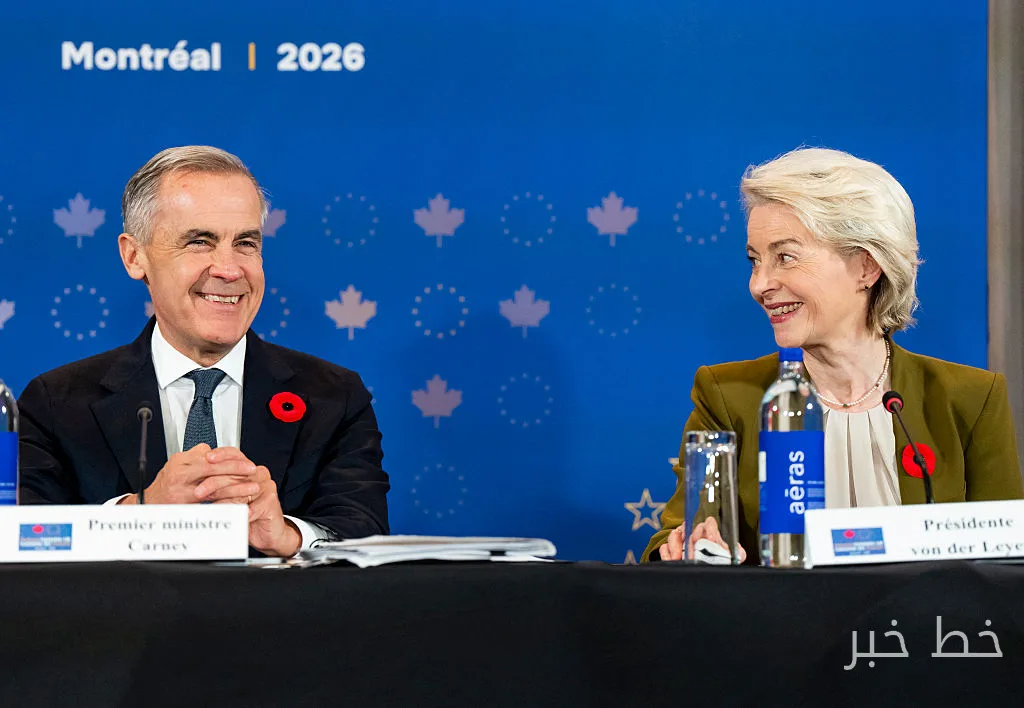
Mark Carney, the Prime Minister of Canada, presented his vision for transforming Canada into an 'associate member' of the European Union on Friday at the two-day summit of the EU and Canada in Montreal. This initiative is aimed at reducing Canada's economic reliance on the United States amid trade tensions with Washington.
Formation of 'Alliance for the Future'
Carney told reporters at the summit: 'Today, the European Union and Canada are launching the 'Alliance for the Future', a new partnership between countries that will leverage our strategic capabilities to address common issues.' He added that this alliance will focus on enhancing collective sovereignty and resilience in areas such as artificial intelligence, energy, critical minerals, and emerging technologies.
Read more: Cybersecurity as an Economic Priority in the Digital Age
Carney also noted that the EU and Canada are striving to create the 'deepest possible cooperation', with Canada being recognized as the first 'associate member' of the EU. He stated: 'In the coming months, we will define the full content, dimensions, and scope of this new type of membership.' Carney also announced plans to participate in a meeting with European leaders in June to finalize discussions regarding this relationship.
Trade Tensions with the United States
Carney's efforts to strengthen international relations come after failed negotiations between Washington and Ottawa in August. Following this failure, Canada's retaliatory tariffs were implemented last month in response to similar economic pressures imposed by the United States. While the White House has lifted some tariffs on Canadian goods, Donald Trump continues to threaten to annex Canada as 'State 51'.
In Montreal, Ursula von der Leyen also stated that a broader alliance between the EU and Canada, beyond Canada's potential membership, would create significant economic opportunities. Carney hopes this partnership will enable young Canadians to live, travel, and study in Europe.
Von der Leyen said in her speech: 'Canada cannot become a full member of the EU due to geography, but we both want to elevate our relationship to the highest possible level.' For this reason, she referred to discussions about transforming Canada into the first associate member of the EU.
Challenges and Reactions
However, reports indicate resistance and uncertainty from some European officials. Matthias Lotenberg, the German ambassador to Canada, acknowledged concerns regarding the new 'associate member' label, stating: 'If you introduce a new concept in the EU, especially if it comes from proposals by the Commission or others, it certainly takes time for all 27 member countries to consider it.'
Carney also told reporters on Thursday: 'This new alliance is not a publicity stunt. The name is not important; what matters is the complements of our two jurisdictions that strengthen our sovereignty.'
While experts believe that Carney's growing international relations with the EU, China, and other countries represent a strong step for the Canadian leader, the threats from Washington are also evident.