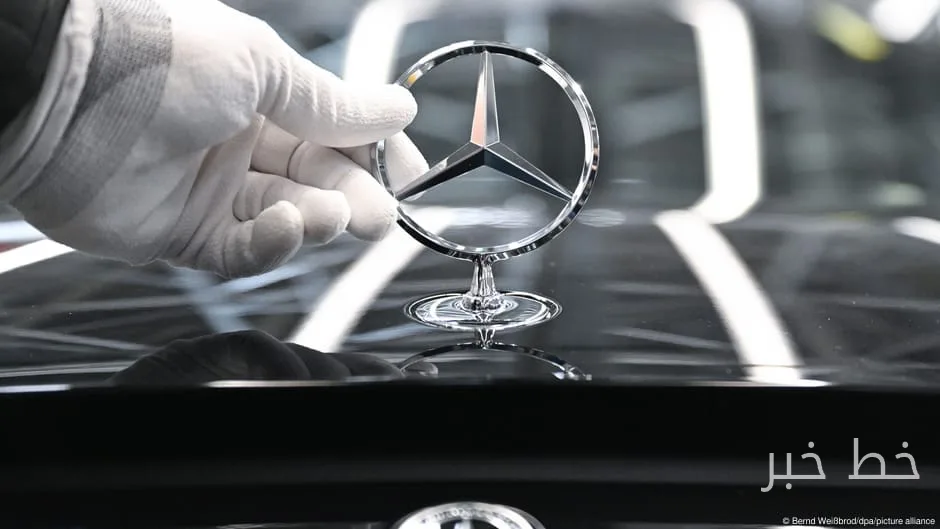
Mercedes-Benz has announced that due to high production costs, it has decided to halt new investments in its factories in Germany. This news indicates a significant challenge for the German automotive industry, which has faced intense competition from Chinese automakers in recent years.
Major Challenges in the German Automotive Industry
Michel Schaefer, head of production at Mercedes-Benz, mentioned in a written interview the high costs of German factories and stated that the company must carefully assess which German factories should be closed if there is no change in cost structure. This decision follows Volkswagen, Europe's largest automaker, also announcing that it has halted modernization plans for its large Wolfsburg factory.
The German automotive industry is in a deep crisis, and it is predicted that Volkswagen will cut about 100,000 jobs globally by 2030. Additionally, four German factories of the company are at risk of closure. However, many analysts believe that these developments do not signify the end of the automotive industry in Germany.
The Need for Reform and Innovation in the Industry
Thomas Puls, chief economist for transport and infrastructure at the Cologne Institute for Economic Research, pointed out that one-third of the capacity of German factories is excessive and needs to be reduced. He also emphasized that this issue could be damaging. A recent report from Roland Berger consultancy also highlighted the urgent need for reforms in the German automotive industry and predicted that the country could maintain a sustainable and profitable core of automotive value-added.
According to Achim Kampker, professor of electric transport engineering at RWTH Aachen University, the halt in investments is more than just a negotiation tactic, and Germany needs to increase its speed and innovation. Reports indicate that Chinese automakers can launch new models in about 20 months, while this timeframe for Germany takes between 48 to 60 months.
Meanwhile, production costs at German factories range from €3,500 to €5,000 per vehicle, while in Eastern European countries, these costs vary between €2,000 and €2,500. A separate report from PwC in September showed that despite the good management of German automakers, they may have a false sense of security.
Harald Wiemer, global and German automotive leader at PwC Germany, emphasized that the future of the German automotive industry significantly depends on decisions made in the next 12 to 18 months. With the shift to electric vehicles, some predict that the automotive industry will become part of a larger global electronics sector that Germany must capitalize on.



