Mistral's CEO, Arthur Mench, announced in an interview on the sidelines of the digital summit in Berlin that if Europe focuses solely on industrial AI and leaves advanced models to the US and China, it will fall into a complete trap.
Need for Computing Capacity and Advanced Models
Mench stated that Europe must build its own computing capacity and advanced AI models to protect its security. He pointed out that Europe cannot assume it will always have access to powerful foreign models and added that the United States and China may impose export restrictions on AI.
Read more: Meta resolved a social addiction lawsuit with a teenager
He continued, "The idea that we can build something meaningful without having the foundational models, the reasoning minds that can run factories and help design better systems, is to me a complete trap." He expressed hope that people now understand that this is not an acceptable path.
Forming a European Strategy for AI
In recent weeks, Mench has become the main voice opposing European leaders' approach to building advanced AI models. In September, senior EU officials emphasized building programs based on foreign models instead of pursuing advanced models.
His comments came as the German government unveiled plans on Monday to transform Germany into an "independent AI country" by 2030. While industrial AI is a key point of this strategy, it also includes helping to establish at least three advanced AI laboratories in Europe by that date.
Mench welcomed Germany's ambition but warned that this challenge cannot be solved solely at the national level. He said, "There is no such thing as a national strategy in AI. It must be a European strategy." He described Europe's problem not as a lack of talent but as a "balance sheet problem," stating that the continent needs investment and computing power to train complex models and build companies that can compete at scale.
Leaders of the 27 EU countries will hold their first special discussion on AI next week at an informal meeting in Dublin.
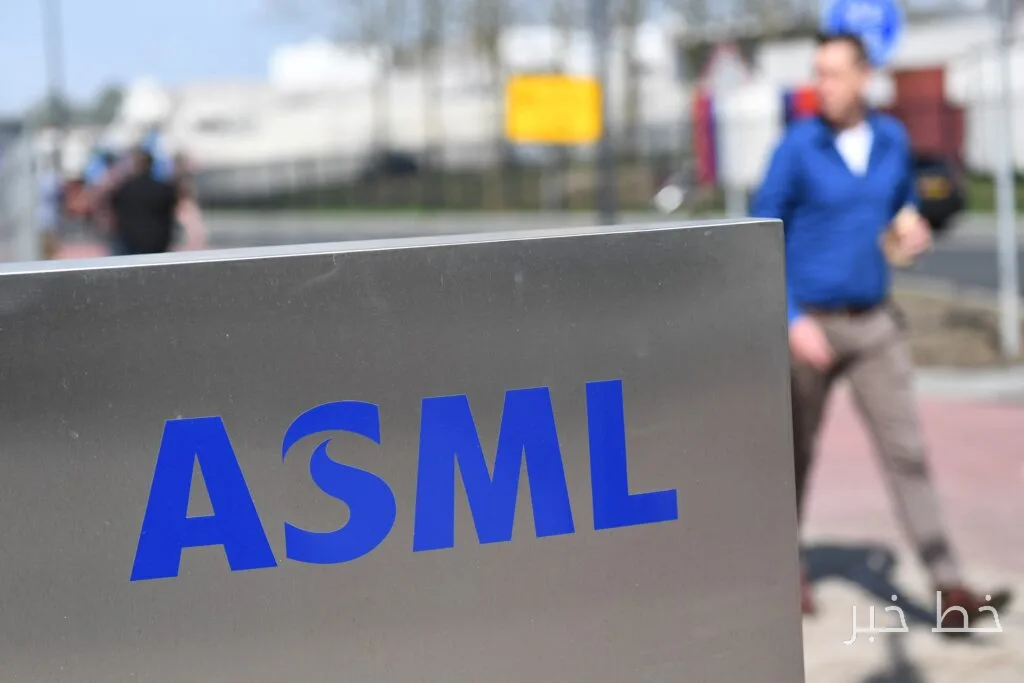
Mistral has heavily invested in industrial AI. Mench referred to his company's partnerships with Airbus and ASML, stating that manufacturing is the largest market for this French company, with applications ranging from aircraft design to reducing machinery downtime.
However, Mench emphasized that industrial applications cannot make Europe technologically independent if others control the models and computing infrastructures.
Building European alternatives, however, presents another challenge: convincing customers to use them while cheaper Chinese models can perform on par or better than their European counterparts. This tension has already manifested for Mistral. The German search engine Ecosia stopped using the company's models, stating that switching to Chinese models halved costs and improved overall performance.
In response to whether companies can expect to compromise on price or performance due to sovereignty, he dismissed the hypothesis. He said, "There is no such thing as a compromise between competitiveness and quality and sovereignty." Mench did not directly reference Ecosia's experience but argued that Mistral does not need to lead in every metric and pointed to areas like cybersecurity and geospatial imaging where the company's new large model 4 performs better than its Chinese competitors.
He said, "The quality of our technology finds its market outside of Europe, including in the United States. Mistral's large model 4 was a long-awaited release and sets us back significantly."
Read more: Swiss researchers introduced a robotic hand that walks on its fingers · Alexander Zollfrank spoke about the threat of war in Germany