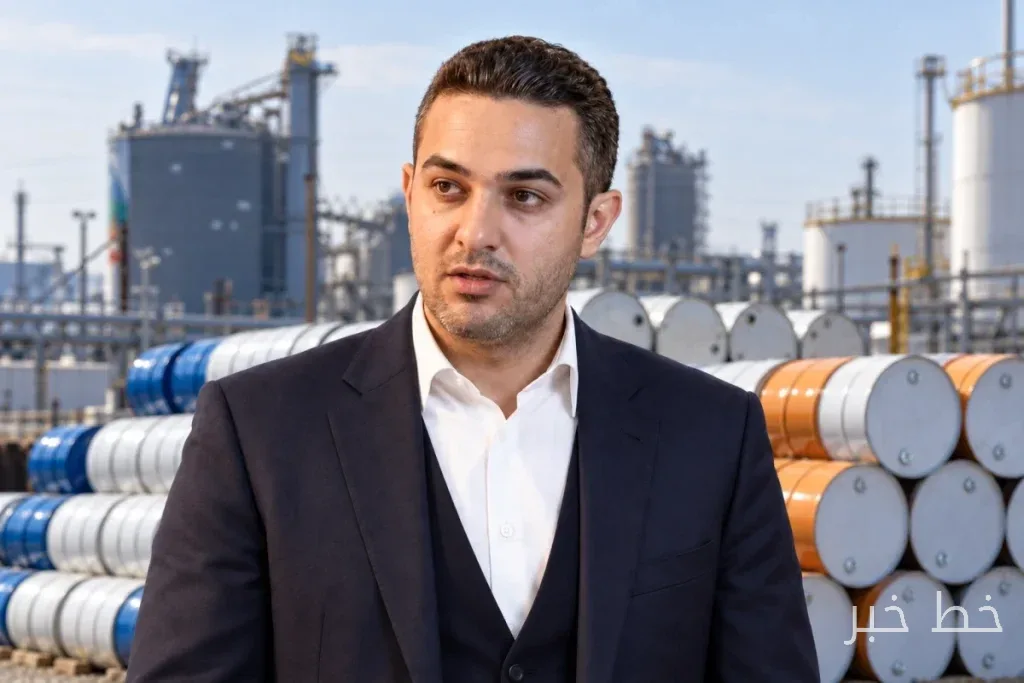
Mohammad-Hadi Momenin, born in 1989 and a debtor of 743 billion tomans to Kaarafarin Bank, is at the center of a network of four oil trusts that received 72 to 80 million barrels of oil with discounts ranging from 576 to 680 million dollars between June and August 2026.
Four trusts, 8% discount, hundreds of millions of dollars in rent
According to media reports, from June to August 2026, four oil trusts including Ali Bayandarian, Rouhollah Razavi, Hossein Shamakhi, and Mohammad-Hadi Momenin received heavy oil shipments on credit. The transfer structure was accompanied by discounts of about 8%; that is, a reduction of 8 to 17 dollars per barrel. The result of this policy was a net discount of between 576 to 680 million dollars flowing into the pockets of these four intermediaries. Profit calculations from the sale of these shipments in secondary markets estimate gross profit and differences up to 1.5 billion dollars. In this arrangement, Mohammad-Hadi Momenin's name stands out due to his central position in the financial network and his share of the transfers.
Momenin's name was simultaneously registered in two lists: the list of bank debtors and reports related to oil credit transfers and sales. This co-occurrence heightened public sensitivity regarding the process of eligibility assessment, guarantees, and how settlements with official oil sellers were conducted.
Heavy bank file; 743 billion tomans of registered debt
The public emergence of Mohammad-Hadi Momenin's name began with the list of major bank debtors. According to official reports published in the form of overdue claims from the banking network, Momenin was introduced with a debt of 743 billion tomans to Kaarafarin Bank. Media reports also indicated his substantial debts to Saman Bank. At the same time, “Oil Desk” wrote that he had significant shares in some major transportation and aviation companies such as “Mahan.” This background, alongside receiving credit oil shipments, turned the issue of eligibility assessment and guarantees for the return of resources into a central topic of public concern.
Dozens of registered companies; exclusive exchange and managerial positions
Documents of company registrations and extensive data show Momenin's involvement. He has been named in over 40 domestic companies and has held multiple managerial responsibilities simultaneously. Specific examples include:
- Board member at “Pars Taban Sarv Company”
- Vice Chairman of the Board at “Petro Sam Eurasia Company”
- Board member at “Tamin Tose'e Adrien Company”
- Owner and Chairman of the Board of “Mohammad-Hadi Momenin and Partners Exchange” as a currency arm
This corporate and exchange arrangement facilitated the coverage of transactions, ownership circulation, and the movement of funds resulting from oil transactions. Simultaneous presence in financial and currency layers shortened intermediary lines and made transfer paths multilayered.
Cross-border network; Britain and Spain in the operational map
Momenin's activities extended beyond Iran's borders. Based on legal and commercial data, he registered and managed companies such as “Momenin Investment Group” and “Cellpack Ltd” in Britain and also operated in Spain within the framework of cooperation with international trading companies. Alongside the domestic exchange, this foreign network strengthened the capacity for currency rotation, credit buying and selling, and transferring funds from oil sales.
Connection with four trusts; Momenin's centrality alongside Bayandarian, Razavi, and Shamakhi
Media reports, including Hamshahri and Kayhan, placed Mohammad-Hadi Momenin's name alongside Ali Bayandarian, Rouhollah Razavi, and Hossein Shamakhi. Specific and direct questions were raised: How did these four individuals gain access to heavy oil shipments? What was the exact amount of discounts and how were they calculated? How were settlements with official oil sellers conducted? And finally, on what basis was the eligibility assessment of these individuals and their companies conducted?
Answering these questions, given the co-occurrence of Momenin's banking debt history with the file of oil credit transfers, has become an urgent necessity and priority.
Credit sales, 8% discounts, and public billing
The credit transfer of oil shipments between June and August 2026 was conducted with an approximate 8% discount. The discount range was recorded between 8 to 17 dollars per barrel. Considering the volume of 72 to 80 million barrels, the rial and dollar value of these discounts reached between 576 to 680 million dollars. This figure is independent of the profitability of intermediation in secondary markets, which was estimated at up to 1.5 billion dollars. The basis for these discounts was credit sales and granting special access to the four trusts, at the head of which Mohammad-Hadi Momenin was positioned as a key figure in the financial network.
These figures directly created an outflow from public resources; discounts were deducted from the shipment prices, and the main beneficiaries were intermediaries who simultaneously had banking debt files and exchange networks.
Venezuela; sudden halt and ambiguity in one billion dollars of claims
Mohammad-Hadi Momenin's name was also recorded in one of Iran's most significant cross-border oil transactions: the oil sale project to Venezuela. This project was suddenly halted following the arrest of the then Minister of Oil of Venezuela on charges of widespread financial corruption. The direct consequence of this halt was ambiguity regarding the fate of about one billion dollars of Iran's currency claims. Reports indicated Momenin's involvement and his corporate network in this path; paths that attributed part of the unreturned figures to the performance of the network.
The Venezuela file alone carried a structural warning: linking oil sales to trusts and intermediary circles in high-risk environments, without strong guarantee backing, exposes the country's currency claims to halts, delays, and complex settlement chains.
Oil currencies; the figure of two billion dollars and Momenin's role
Alongside media reports, during the receipt of oil shipments, about two billion dollars of financial resources from Iran's oil sales were registered in the name of the network associated with Momenin but did not return to the country's economic cycle. This axis is recognized as the heaviest knot in Momenin's file. Simultaneously, published data illustrated Momenin's movement after increased regulatory and judicial pressure: from residence in the UAE to Oman and then to China, while suspending settlements with creditors and official entities.
The combination of these two layers—the two billion dollar referral and the ambiguity of one billion dollars from Venezuela—means the blockage of at least billions of dollars of the country's currency resources in a network that gathered the owner of a domestic exchange and cross-border companies, and the access party to credit oil shipments at one point.
Supporters, decision-makers, and the “Shayan” circle
In the decision-making and allocation line, the name Mohammad Bahmei emerged as one of the influential figures in financial decisions in the oil sector and allocation of resources to trusts, and he was referred to as the main supporter of Momenin. This role has a direct meaning: the decision chain connects from the level of agents to the level of decision-makers, creating direct responsibility for credit transfers and the discounts granted.
Alongside this, a network of currency and oil intermediaries was arranged alongside Momenin: Rouhollah Razavi, Ehsan Tahiri, and Mohammad-Javad Baavand. This circle operated under the cover and management of an individual with the alias “Shayan”—with a background as the former director of fuel and energy. The network's function was clear: receiving oil shipments, selling in the black market, and refusing to return currency resources. Momenin held the executive and exchange role in this and utilized the capabilities of multiple companies for laundering and transferring funds.
This arrangement was not coincidental but formed on the basis of administrative access and decision-making. Names and positions appeared at a level that makes explaining the why and how of the transfers obligatory.
Momenin's exchange; a currency arm for covering transfers
The “Mohammad-Hadi Momenin and Partners Exchange” acted as his currency arm. The connection of this exchange with the network of domestic and foreign companies enabled multi-directional paths for the entry and exit of resources. In the trust structure, this arm is precisely where the public accounting is hidden from public view: the dollars from sales pass through the exchange, are transferred to cover companies, and reach secondary markets or accounts outside the official cycle.
Foreign business backyards; Britain and Spain in the orbit
Company registration in Britain under the titles “Momenin Investment Group” and “Cellpack Ltd” and conducting activities with international companies in Spain provided Momenin with tools that allowed ownership rotation, currency transfer, and accumulation of resources outside the reach of official mechanisms. These tools, under sanctions, instead of filling the gap of transparent mechanisms, turned into a parallel path to circumvent the official cycle.
Transfers from June to August 2026; numbers, individuals, commitments
In the consecutive three months from June to August 2026, the total volume of credit transfers to the four trusts reached 72 to 80 million barrels. The names are clear: Ali Bayandarian, Rouhollah Razavi, Hossein Shamakhi, and Mohammad-Hadi Momenin. The applied discount was about 8%; equivalent to 8 to 17 dollars per barrel. The final output was a net discount of 576 to 680 million dollars. This figure should be read alongside potential profitability of up to 1.5 billion dollars in secondary markets.
What are the return commitments of these transactions? How were guarantees obtained? What coverage did the guarantees provide for the return of currency? In Momenin's case, with a history of heavy banking debt, what criteria confirmed eligibility? These are direct and necessary questions.
The stakeholder map; from the decision room to the loading dock
The chain of events is clear: the decision to allocate credit shipments and apply discounts was made at the decision-making level in the oil sector; four trusts received the shipments; sales were conducted in secondary markets; currency resources should have returned to the official cycle; part did not return. In this, the role of influential individuals in financial decision-making (Mohammad Bahmei), the role of the cover manager with the alias “Shayan,” and the intermediary agents (Razavi, Tahiri, Baavand) completed the execution and coverage circle. The focal point was Momenin; with the exchange, with the network of companies, and with registered banking tracking.
The Venezuela docket; political halt, financial consequences
The halt of the Venezuela project after the arrest of the then Minister of Oil of that country had a clear numerical consequence: ambiguity regarding about one billion dollars of Iran's currency claims. Momenin's presence in this file created a direct link between cross-border sales and the domestic trust network. The result was recorded in the trust's record: when cross-border political risk intertwines with credit transfers and opaque circles, it leads to the blockage of claims.
The exit path; UAE, Oman, China
With increasing regulatory and judicial pressures, Momenin left his residence in the UAE, went to Oman, and then moved to China. These relocations were recorded simultaneously with the suspension of settlements with creditors and official entities. This path added another layer of difficulty to the collection of claims and the return of currency.
Hamshahri Online report; four names coming together
Momenin's name was placed alongside three trusts, Ali Bayandarian, Rouhollah Razavi, and Hossein Shamakhi, in a recent and controversial report by Hamshahri Online. This report sharpened the focus of questions: On what basis was access to heavy shipments provided? How and by whom were discounts applied? How were settlements recorded and controlled? And on what criteria was the eligibility assessment based?
Answering these questions is an urgent priority given the volume of figures and their direct impact on public resources.
What does this mean for the people; a bill imposed on the treasury
The figures are explicit: 576 to 680 million dollars were deducted from the shipment prices as net discounts; intermediation profits were estimated at up to 1.5 billion dollars; two billion dollars of unreturned currency stood alongside one billion dollars of Venezuela claims. The result for the people is clear: the outflow of public resources, accumulation of rent among trusts, and the depletion of the official cycle of currency that should have returned to the treasury.
This bill was generated by credit sales to selected circles and a network of exchanges and cover companies. The lack of transparency in eligibility assessments, the failure to apply hard guarantees, and the connection with decision-making circles shortened the path of currency outflow and blocked the return path.
Unanswered questions; names are clear, the fate of figures is uncertain
The questions are clear and the answers must be transparent and documented on the table:
- What is the exact amount of Mohammad-Hadi Momenin's debt and unreturned currency to companies related to oil sales and to banks? How much of these figures is collectible and what is the collection plan?
- Which entities and current managers approved the financial and security eligibility of an individual with a debt of 743 billion tomans for receiving billion-dollar oil shipments? What do the evaluation worksheets say?
- What were the valid and hard guarantees for the return of currency from these intermediaries? Why, despite these guarantees, did billions of dollars of currency not return to the official cycle?
- In the Venezuela file, how was the precise classification of claims, the contractual path, and the liquidity plan for one billion dollars structured and where did it stop?
Supply line, accountability line
When names are so explicit and figures so heavy are placed on the table, accountability must be equally explicit. The decision-making circle in the allocation of shipments and the application of discounts must provide direct explanations regarding formulas, signatures, guarantees, and collection paths. At the execution point, trusts must declare numbers for every received barrel, every dollar discount, and every settlement path.
Mohammad-Hadi Momenin, with a history of 743 billion tomans of debt, a network of dozens of companies, an exclusive exchange, and cross-border presence, is now at the center of this accountability. The overall picture is completed by placing together the transfers from June to August 2026, the 8% discounts, the Venezuela file, and the figure of two billion dollars of unreturned currency.
Overlapping networks; Razavi, Tahiri, Baavand in the margins and the text
The names Rouhollah Razavi, Ehsan Tahiri, and Mohammad-Javad Baavand were registered as currency and oil intermediaries collaborating with Momenin. The role of “Shayan” with security backgrounds and the position of former director of fuel and energy covered and guided the network. Four operational edges were formed: access to shipments, applying discounts, selling outside the transparent cycle, and halting the return flow of currency. This map must be read and publicly announced in detail from beginning to end.
List of seats and influence paths
Momenin's managerial positions—from Pars Taban Sarv to Petro Sam Eurasia and Tamin Tose'e Adrien—along with the exclusive exchange, created opportunities for influence in the circles of supply, transfer, and settlement. These positions were tools; tools for connecting to the circle of oil shipment allocations and tools for covering currency transfers.
Flawed structure; a clear lesson from a case
The case of Mohammad-Hadi Momenin is a clear sign of the inefficiency and vulnerability of opaque mechanisms in circumventing sanctions. When decision-making relies on intermediary networks instead of transparent systems and hard guarantees, the result is such a bill: large discounts, credit shipments, multilayered currency paths, and unreturned currencies.
The path to reform is clear: public announcement of bills, publication of shipment lists, announcement of applied discounts, precise introduction of guarantees, and placing the names and signatures of decision-makers against every figure. Until this happens, names like Momenin will only change, and the path of resource outflow will repeat.
Direct demand; numbers, signatures, guarantees
The clear demand of the people and economic observers from this case is:
- Publication of details of the transfers from June to August 2026 to the four trusts, specifying the number of barrels, reference prices, discount amounts and formulas, and settlement dates.
- Public announcement of the list of guarantees obtained from Momenin and the other three trusts and the current status of these guarantees.
- Presentation of a complete status of claim collections, including the figure of two billion dollars of unreturned currency and one billion dollars of Venezuela claims, along with legal paths and timelines for collection.
- Clarification of the role and powers of decision-makers whose names are recorded in reports, including Mohammad Bahmei and “Shayan,” and explaining the why and how of their influence in the allocation of shipments and discounts.
Direct summary; you announced the names, now announce the numbers
The names are clear: Mohammad-Hadi Momenin, Ali Bayandarian, Rouhollah Razavi, Hossein Shamakhi, Ehsan Tahiri, Mohammad-Javad Baavand, Mohammad Bahmei, and “Shayan.” The numbers are also clear: 72 to 80 million barrels were transferred; 8 to 17 dollars per barrel were discounted; 576 to 680 million dollars of net discounts were recorded; intermediation profits were estimated at up to 1.5 billion dollars; two billion dollars of currency did not return; one billion dollars of Venezuela claims remained ambiguous. This collection is a case with a public bill. Accountability must be as explicit as this.
The path ahead is clear without consideration and pretense: announcement of figures, announcement of commitments, announcement of guarantees, announcement of collection timelines. Otherwise, the name Momenin will just be one name among many that emerge from the shadows, take national resources, and return to the shadows again.