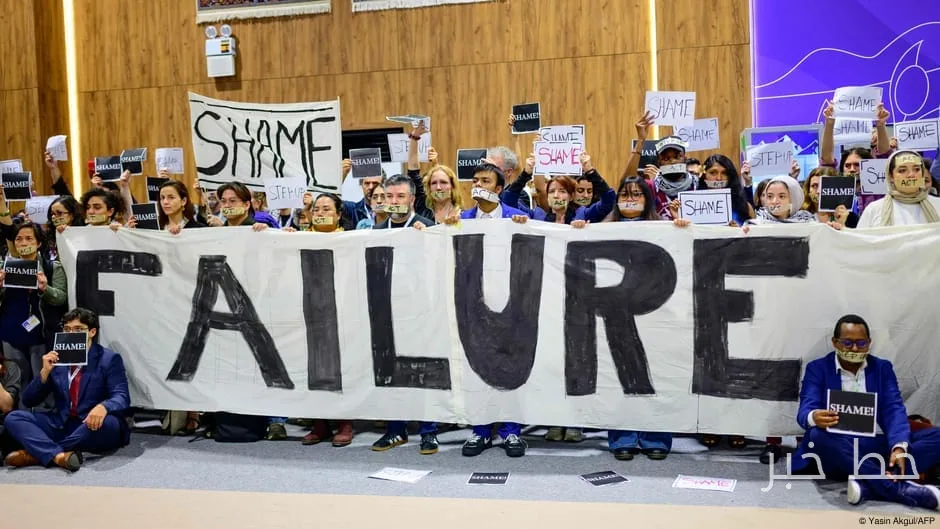
Murat Kurum, the President of COP31, announced on Sunday the failure of the climate negotiations and the lack of agreement on a common political direction regarding climate change. This conference, recognized as the longest climate negotiations in history, concluded after two days of lengthy discussions, with representatives from various countries protesting the lack of agreement.
Opposition to the "Antalya Pact"
Several countries showed fatigue on their faces and expressed dissatisfaction with the lack of agreement on the proposed text called the "Antalya Pact." Kurum stated, "I understand that there is no agreement on this text. Therefore, these decisions have not been approved." One of the key issues in these negotiations was the exclusion of the words "fossil fuels" from the agreement text. Countries like Saudi Arabia and Russia called for the removal of this phrase, while other countries considered its exclusion a "step backward."
Pressure on Developing Countries
About 130 countries, including vulnerable island nations and other developing countries, along with wealthy countries like the European Union, called for the return of these two words to the agreement text, but this request went unanswered. Many countries refrained from supporting the final agreement of their COP. This failure is not only considered a setback for the UN process on climate change but also reflects the power of countries unwilling to accept a weak text.
Three years after the words "fossil fuels" were mentioned in the final agreement of COP28 in Dubai as part of a commitment to "fair and orderly transition from fossil fuels in energy systems," these words have been removed from any decision.
Financial and Climate Challenges
The lack of agreement is not limited to the issue of "fossil fuels" but also relates to financial matters. Developing countries have long emphasized the need for additional financing to move away from coal, oil, and gas and to cope with the consequences of rising temperatures. These countries particularly suffer from natural disasters caused by climate change, while wealthy countries, which are responsible for a significant portion of greenhouse gas emissions, show less willingness to bear the costs associated with climate actions.
With the absence of the United States, the largest historical greenhouse gas emitter, from the negotiations and its approach to withdrawing from the UN Framework Convention on Climate Change, the European Union has been identified as the main culprit. Meanwhile, many observers have pointed to the "duality" of this union.
Looking to the Future
While Turkey's electrification program, which aimed to increase global electricity consumption to 35 percent by 2035, was officially rejected as part of the final agreement, more than 90 countries announced that they would move forward independently. This program may be a positive step towards energy security and a shift towards renewable energy.
Ultimately, the COP31 conference clearly demonstrated that the world must take more action to address the climate crisis and must do so swiftly. António Guterres, the UN Secretary-General, stated in a statement: "The main message from COP31 is clear: the world must act more to tackle the climate crisis, and it must do so now."



