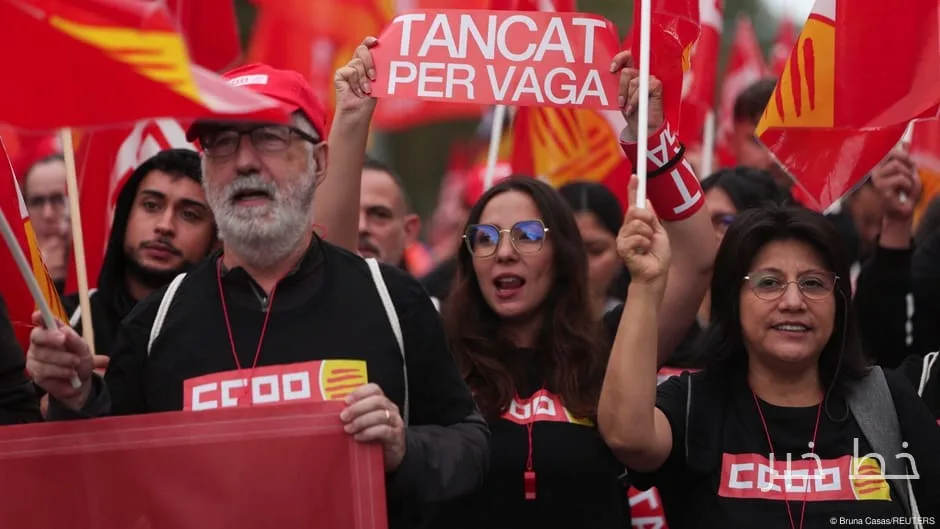
Workers in Spain gathered en masse in the streets on Wednesday and, despite adverse weather conditions, went on a nationwide strike. This strike is considered the first nationwide strike in Spain in 14 years and occurs amid the worsening cost of living crisis and housing shortage that has left many people unable to meet their basic needs.
Housing Crisis and Rising Costs
The housing crisis became a hot topic in the country following the death of 87-year-old María Carmen Abascal in Madrid earlier this year. This incident symbolizes the dire housing situation in Spain, and as a result, early parliamentary elections will be held on November 29. The left-wing government of Pedro Sánchez has attempted to pass a law to assist tenants, but these efforts have been blocked by opposition parties in parliament. Consequently, Sánchez has turned to early elections to garner more support.
Read more: Greg Stanton calls for an increase in the social security tax cap
The Number of Renters is Increasing
Spain is facing a shortage of about 750,000 homes, which, according to estimates by the central bank, will exceed one million by 2028. With the decreasing affordability of homes for individuals and families, the number of renters has significantly increased. According to a report by the Youth Council of Spain, the average rent is €1,176 ($1,315), which is equivalent to 99% of the average salary of a young person.
While most protests were peaceful, strikers in front of the Mercamadrid wholesale market in Madrid reported that police used pepper spray on the crowd, resulting in at least 13 people being hospitalized. This strike occurs on a day when railway workers have also gone on strike due to two fatal accidents this year, and aging infrastructure has become one of the main issues in the upcoming parliamentary elections.
Read more: Pressure on the Labour Party to tackle youth unemployment is increasing · Four Americans died in a train accident in Spain



