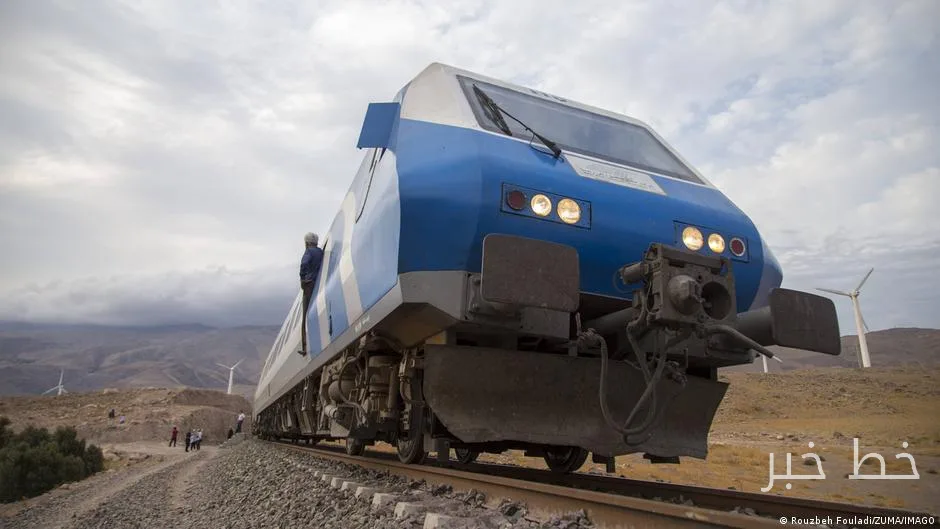
The US has opened a new front in its economic pressure campaign against Tehran by targeting Iran's rail sector. These sanctions were enacted on October 1, following increased difficulties in maritime trade for Iran.
New Sanctions and Their Impacts
The US Department of the Treasury has sanctioned three Iranian railway companies along with seven automotive companies and five foreign auto parts suppliers. Washington believes that Iran's rail and automotive industries provide revenue and logistical capacity to the government and are connected to networks associated with the Islamic Revolutionary Guard Corps (IRGC).
Read more: Bank of America fine is a warning to Wall Street
The new sanctions come at a critical time as Iran has been trying to move more goods through land borders and rail connections with China, Central Asia, Russia, and Turkey following severe maritime restrictions.
Challenges and Opportunities in Rail Trade
Shahram Naghi Zadeh, the Director General of Foreign Trade at Iran's Railways, announced that the country has about 15,000 kilometers of main and secondary rail lines and was able to transport around 44 million tons of cargo last year. This figure has been targeted to reach 54 million tons for the current year.
Iran is connected to neighboring markets through 13 rail crossings, providing access to Turkey, Azerbaijan, Afghanistan, and Pakistan. However, the new sanctions raise questions about how foreign railway operators, cargo suppliers, banks, and insurers will continue to operate with Iranian railway companies.
Analysts believe that while rail transport is a viable option for Iran, it cannot be considered a substitute for maritime trade. Under normal circumstances, ships can transport larger quantities of goods at lower costs. However, for goods where speed and continuity are more important, such as auto parts and industrial equipment, rail may be more attractive.
The new US sanctions add further uncertainties to these calculations. While optimizing rail use could provide Iran with more options alongside reliance on southern ports, the overall scale remains limited.
Read more: Marc Andreessen emphasized the necessity of implementing a national security investment strategy · US special envoy emphasized the need for a peace agreement with Iran