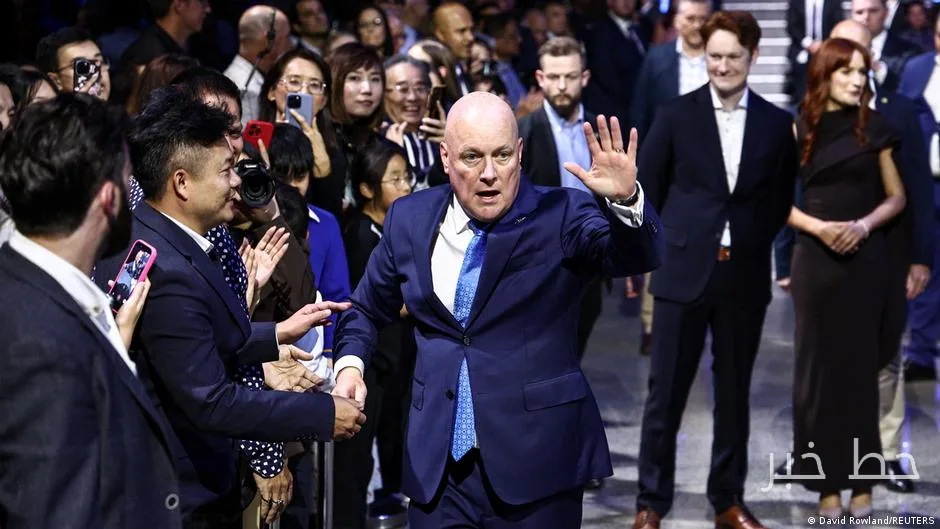
The general elections in New Zealand took place on Saturday under conditions where the two main parties, namely the National Party and the Labour Party, were nearly at the same level. With over 95 percent of votes counted, the National Party led slightly with a 3,500 vote margin over the Labour Party.
National Party and Christopher Luxon’s Leadership
Current Prime Minister and leader of the National Party, Christopher Luxon, announced that his party is "once again the largest party in Parliament and we have a way to form the next government." The National Party is currently forming a coalition with the ACT Party and New Zealand First. According to preliminary results, these three parties will collectively secure 67 seats in Parliament, leading to a narrow majority.
Need for Cooperation and Agreement
Chris Hipkins, leader of the Labour Party, stated that New Zealand politicians must seek "common ground" following these results, as neither of the two main parties can form a majority government alone. He said, "New Zealand has spoken, and it may take a little time to fully understand what you have said. Our next Parliament needs cooperation and agreement."
Special votes, including votes from overseas, will be counted in the next three weeks and are usually favorable to left-leaning parties. The final results are expected to be published on November 27. If the right-wing coalition fails to maintain its narrow majority, the Opportunities Party could act as a kingmaker. This party is expected to secure 7 seats and will enter Parliament for the first time since its establishment in 2017.
New Zealand's electoral system requires voters to mark two choices: a party and a local candidate. The winners of the electorates gain a seat in Parliament, which typically has 120 seats. However, due to "overhang," the number of seats may increase. Preliminary results indicated that Parliament will expand to 130 seats, making it the largest Parliament in New Zealand's history.
The elections were held amid soaring prices of essential goods and the highest unemployment rate in over a decade. Ultimately, the voting took place under New Zealand's strict laws that prohibit media reporting and political campaigning on the final day.