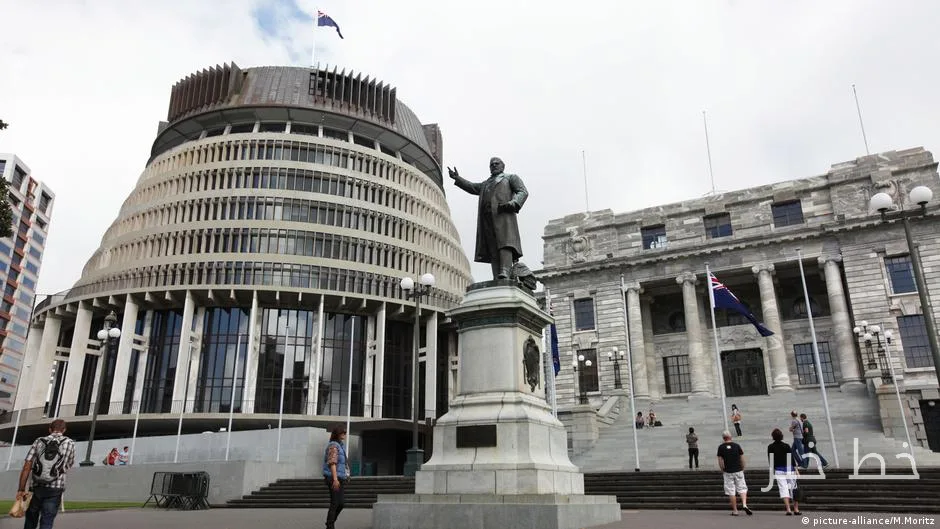
The New Zealand general elections were held on Saturday, and voters cast their ballots to determine the fate of the country. Economic issues and rising living costs have been highlighted as the main issues in this election.
Initial Election Results
According to the results of counting more than half of the public votes at 9:44 PM local time (08:44 GMT), the National Party led by Christopher Luxon and the Labour Party led by Chris Hipkins are in a close competition, each with 29 percent of the public votes. This election is recognized as one of the closest elections in New Zealand's history, and neither party is likely to secure an outright majority.
Voting System and Governing Laws
The elections were held under strict New Zealand laws that prohibited media reporting and political activities on election day. However, New Zealanders have been allowed to vote since October 26, and according to the Electoral Commission, by Thursday, nearly 1.7 million of the 3.8 million eligible voters had cast their votes.
In addition to the two main parties, the Opportunities Party is also considered with polling predictions of over 5 percent of the votes, which is sufficient to gain a seat in Parliament without winning in an electoral district. New Zealand's electoral system is mixed and proportional, requiring voters to choose two options: a party and a local candidate.
Under this system, the winners of the electoral districts gain a seat in Parliament, which typically has 120 seats, unless the so-called "overhang" results in a greater number of representatives returning to Parliament. In this election, economic conditions and rising prices of essential goods, along with the highest unemployment rate in over a decade, have been cited as influencing factors in voters' choices.
Awaiting Final Results
The final election results are expected to be announced on November 27. During this time, the Labour Party has been ahead of the National Party in the latest polls with 30 percent of the votes, but it appears that the election has been extremely close, and the final results could place both parties in different positions.
The New Zealand elections are taking place while many voters are facing economic challenges and daily concerns. Analyses suggest that this election could have significant impacts on the political and economic future of the country.