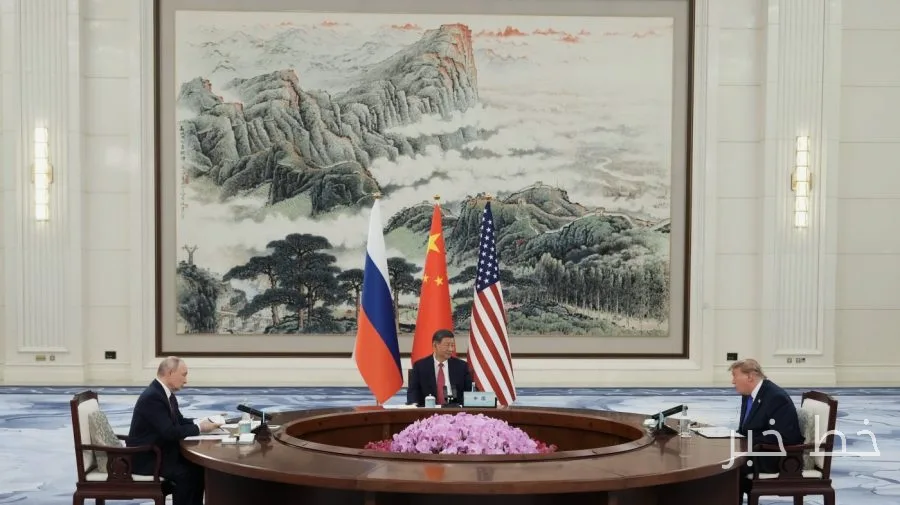
Nikki Haley, former U.S. Ambassador to the United Nations, on Sunday criticized former President Donald Trump, stating that in the trilateral negotiations he held earlier this month with Chinese officials, he presented Vladimir Putin, the President of Russia, in a way that made him seem like the winner.
Criticism of Portraying Putin as the Winner
Haley stated, "China and Russia really do not like each other. They are just using each other to act against the United States, as that is the only thing that brings them together." These remarks reflect Haley's deep concerns about the state of international relations and great powers, especially regarding China and Russia's cooperation.
Background of China-Russia Relations
Relations between China and Russia have strengthened in recent years, particularly in economic and military fields. However, these two countries have traditionally had rivalries as well, and despite their cooperation, each seeks its own national interests. Haley stated that Trump, by taking specific stances against China and Russia, has somewhat reinforced Putin's position.
Haley's criticisms of Trump come as he is considered one of the potential candidates for the Republican Party in the 2024 presidential election. Many analysts believe that Trump's policies during his presidency, especially regarding Russia, have had profound impacts on U.S. foreign policy.
Political and Diplomatic Implications
Nikki Haley's criticisms of Trump may indicate a rift within the Republican Party, particularly regarding foreign policy. While some party members continue to support Trump's positions, others are seeking to adopt newer and more updated approaches. These differences of opinion could have wide-ranging effects on future elections as well as on U.S. relations with global powers.
Ultimately, Haley's remarks are not only a critique of Trump but also showcase deeper concerns about the future of international relations and changes in U.S. policies. This issue becomes even more significant during times when global challenges and regional crises are on the rise.
Read more: Shawn Kairncrass resigns as National Cyber Director



