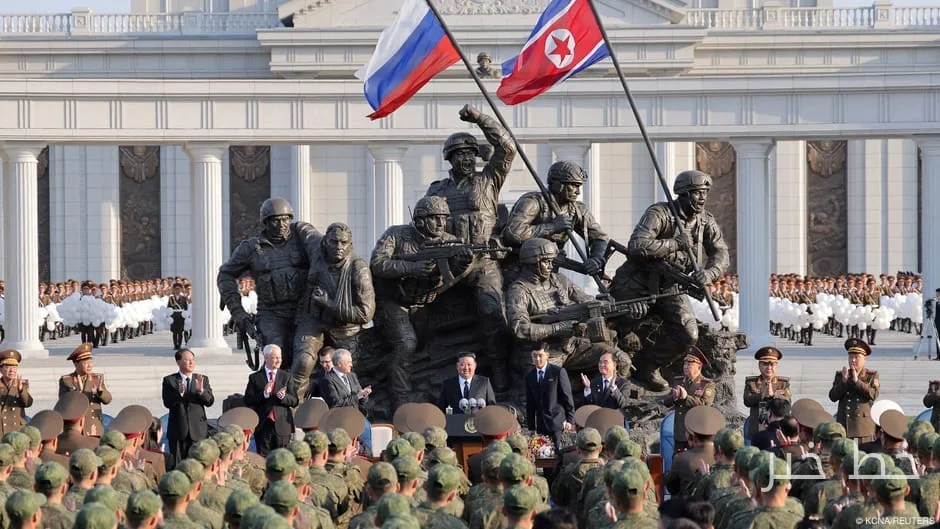
North Korea appears to have delayed sending more military forces to Russia. Volodymyr Zelensky, the President of Ukraine, announced this summer that between 30,000 and 50,000 North Korean soldiers were expected to be dispatched to Russia, but it seems these forces have not yet arrived in the field, and it is unclear whether North Korea will continue to send a large number of soldiers to Russia.
Moscow's Request Not Met
Andriy Kovalenco, who resigned as head of Ukraine's Center for Countering Disinformation in September, wrote on November 9 that intelligence assessments in August indicated that the Kremlin had requested more than 30,000 additional soldiers from North Korea for an attack in the fall. A meeting was supposed to take place between Kim Jong-un, the leader of North Korea, and Vladimir Putin, the President of Russia, in September, but this meeting did not occur.
Pyongyang's Cautious Tactics
Kovalenco believes that Pyongyang may have rejected Moscow's request, as participation in offensive operations in occupied areas of Ukraine may still be a red line for North Korea. He also noted that Russia remains dependent on North Korea for material support, especially in terms of ammunition, and it seems unlikely that new troop deployments from North Korea will occur this winter.
Han Ki-bum, a former deputy head of South Korea's National Intelligence Service, stated that the calm in the war and the onset of winter do not give North Korea a reason to send additional troops. He also added that the visit of Jo Yong-won, a senior North Korean official and close advisor to Kim, to Moscow this week may shed light on any future plans.
An Chan-il, a former North Korean soldier who defected to South Korea, said that Moscow also has reasons to limit troop deployments. He expects that Russia will compare battlefield needs with the costs of deploying more North Korean troops and, if the war does not expand, it is unlikely that Moscow will request a larger group of troops.
Kovalenco also stated that North Korea still has a missile unit in the Voronezh region of Russia and about 8,500 support personnel in rear areas. He added that Pyongyang is increasing ammunition production and showcasing new drones and missiles. Zelensky announced in a post on social media X on November 17 that Russia receives dozens of North Korean ballistic missiles every month and warned that the use of these missiles in Ukraine helps North Korea improve its weapons.
Kovalenco believes that Pyongyang has turned to a "containment strategy" and is trying to limit its military commitments to the war in Russia while maintaining its relations with Moscow and Beijing. He assesses this approach as an opportunity to preserve the advantages of its alliance with Russia without exposing itself to the consequences of the war.



