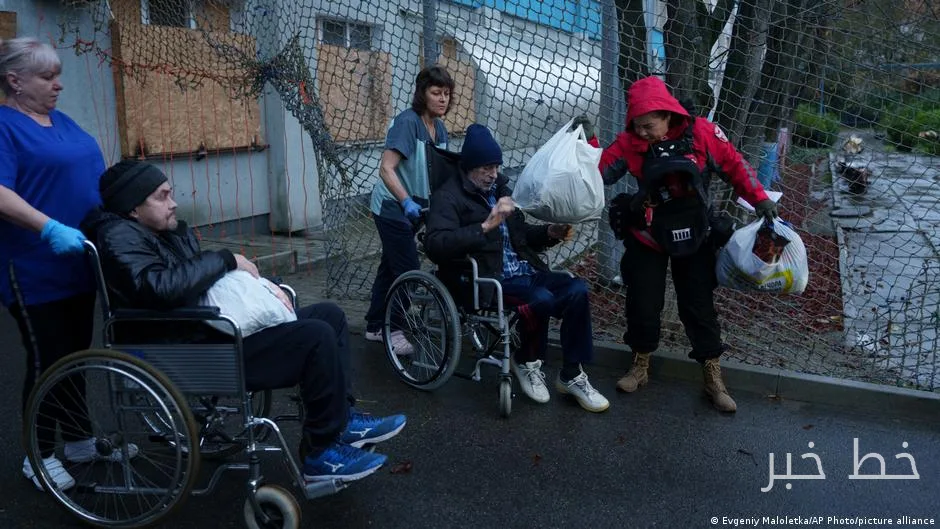
Residents of the city of Oleshky in the Kherson region of Ukraine evacuated the war-torn city on Friday following the ceasefire. This ceasefire, which has been in place for the past four days, is considered the most significant ceasefire since the full-scale Russian invasion of Ukraine over four years ago.
Ceasefire and Humanitarian Aid Convoy
The local ceasefire was established by Melania Trump, the First Lady of the United States, between Russian and Ukrainian officials to allow for the delivery of humanitarian aid and the evacuation of civilians. As part of this agreement, a convoy consisting of 25 buses, several ambulances, trucks, and other vehicles arrived in the city on Friday to deliver food and medicine to the residents.
Mine Clearance Operations and Resident Choices
Before the arrival of the humanitarian aid convoy, mine clearance operations were conducted, during which a Russian mine engineer and another individual lost their lives. According to the plan, approximately 2,000 remaining residents of Oleshky were presented with choices: travel to areas controlled by Ukraine, travel to areas controlled by Russia, or stay in the city with food and medical supplies provided.
If residents chose to go to Ukraine, they would have to travel 450 kilometers (280 miles) through Crimea, which is under Russian control, to reach the city of Anapa in southern Russia, and then fly to Belarus before entering northern Ukraine.
Yana Lantratova, Russia's chief representative in this mission, announced that the buses would transport residents who wish to live in Russia. It is still unclear how many people have decided to leave the city, but Melania Trump announced on social media that the convoy successfully evacuated over 750 people.
Difficult Conditions for Residents and Efforts to Provide Aid
Residents of Oleshky have spoken about the difficult conditions they have experienced in the city, including traveling on mine-filled roads to secure food and water. One woman told Ukraine's Human Rights Commissioner, Dmytro Lubinets: "The problem is that many people are staying." Lubinets replied: "At the very least, we will try to ensure that humanitarian aid reaches them as much as possible." He was responsible for coordinating operations with Lantratova.
The two appeared together at a press conference and spoke well with each other, something that has not been seen since the beginning of the war between Russian and Ukrainian officials.