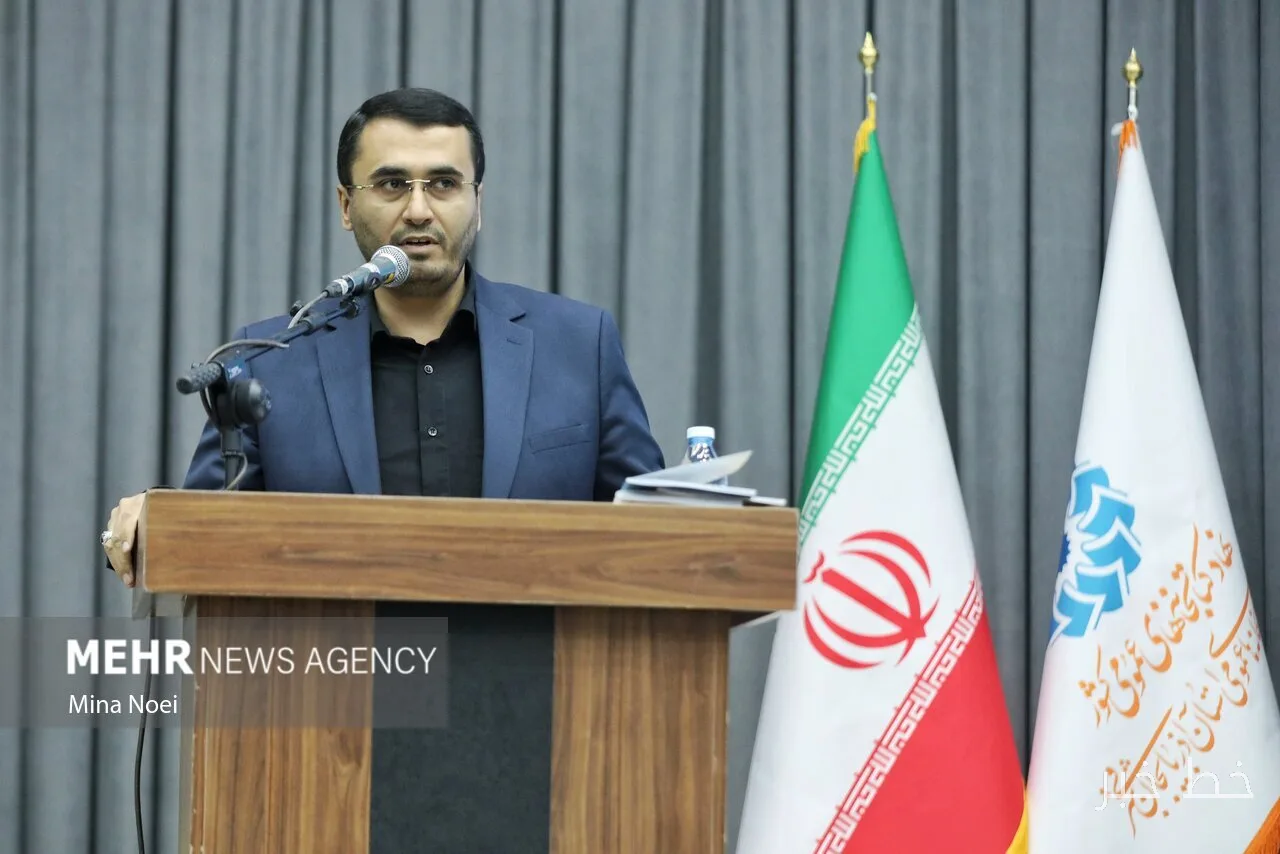
Rouhollah Motahhari Azad, a member of the Board of Directors of the Islamic Consultative Assembly, emphasized the necessity of redefining the language and approach of the country's foreign policy in accordance with wartime conditions during a specialized working group meeting of the student Basij held at the Faculty of Law and Political Science at the University of Tehran this morning, stating: The entry of the Islamic Republic of Iran into war and responding to the enemy has transformed many conventional rules. Therefore, the language of war, diplomacy, threats, stability, victory, and defeat must also be redefined in accordance with the new conditions.
Analysis of Iran's diplomacy against major powers
Motahhari Azad stated that the Islamic Republic of Iran cannot be analyzed solely through conventional international equations, adding: To understand the country's foreign policy, three components must be considered simultaneously; first, the ideological and intellectual foundations that support the diplomacy of the Islamic Republic; second, diplomatic knowledge and methods; and third, the actual situation of the country and the strategies designed in accordance with these conditions.
He pointed out the significant difference in military capability between Iran and the United States, stating: When faced with an enemy whose annual military budget is about $1.5 trillion, while our defense budget is estimated to be less than $10 billion, it is clear that we are not facing a conventional and symmetrical war. Therefore, our political language and strategy must also be in accordance with the logic of asymmetric warfare.
The necessity of strengthening neighboring diplomacy
Motahhari Azad emphasized the importance of neighboring diplomacy for the Islamic Republic of Iran, stating: A country with an area of over 1,650,000 square kilometers and having 15 neighboring countries cannot be indifferent to regional capacities and relations with neighbors. Neighboring-based diplomacy and regional treaties are a strategic necessity for a country with these characteristics.
He referred to the experience of Iran and Turkmenistan's relations in the energy sector, stating: During the martyr Raisi's government, efforts were made to improve regional relations and resolve past issues, some of which had positive results. This member of parliament also discussed the dependence of part of the country's financial transactions on the UAE, saying: When we concentrate a large share of our international transactions and trade exchanges in one country, it effectively creates a kind of vulnerability and the possibility of pressure on that country.