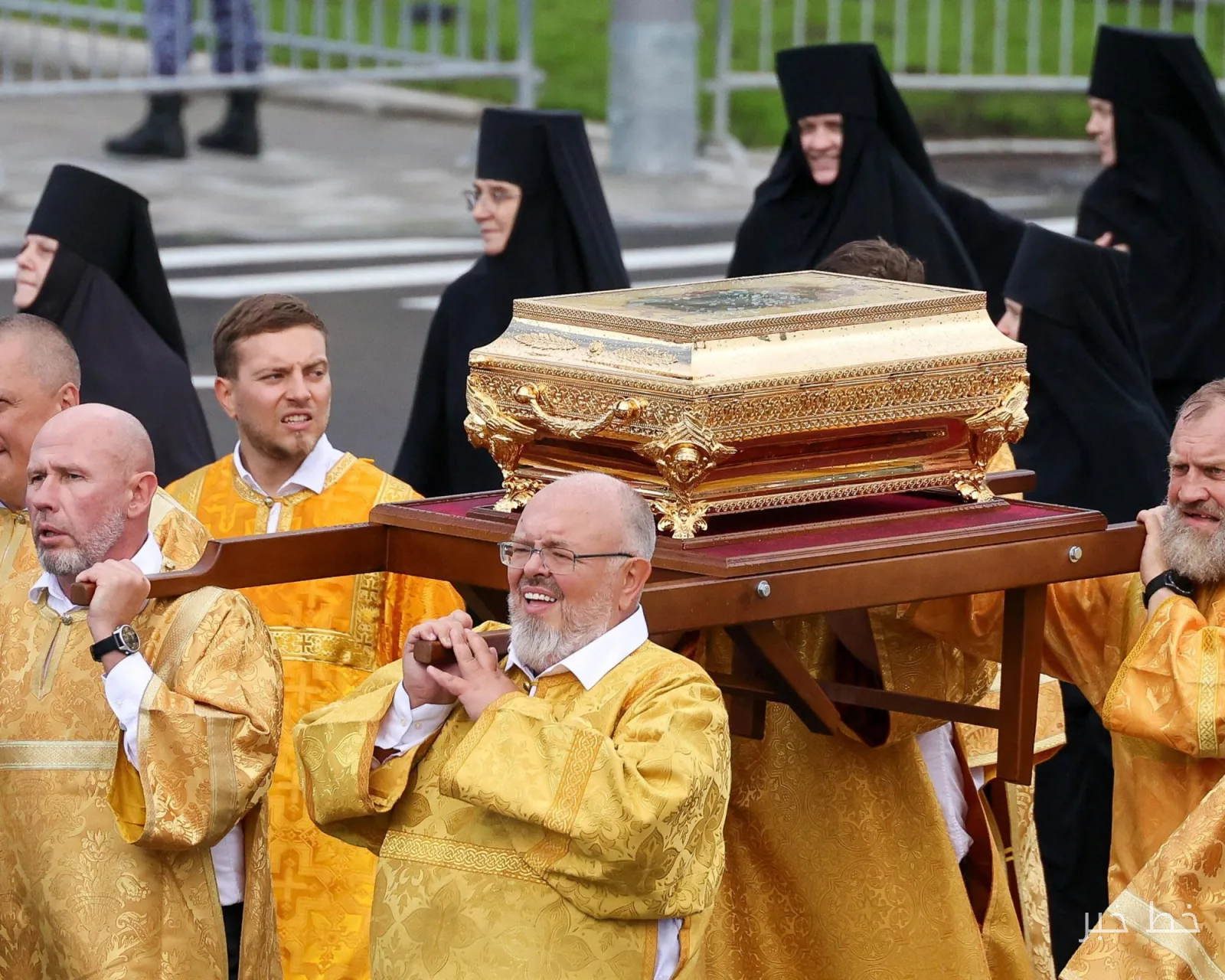
In a controversial move, the Russian Orthodox Church has sent part of the remains of a medieval prince to its forces in Ukraine. These remains specifically include a portion of the right hand of Dmitry Donskoy, a prince remembered in Russian history for his victory over the Mongol invasion in 1380. Church officials have described this action as a way to 'boost the morale' of the soldiers and assist them in achieving victory.
Sanctifying War
The remains, which are housed in a reliquary (sacred box), have been transferred to the occupied eastern regions of Ukraine and are now in the hands of soldiers at the front lines. Church officials claim that this action can serve as a spiritual force and support for the soldiers, aiding them in the tough battles they face.
This type of sanctification of war raises questions about the role of religion in modern warfare. Can the spiritual force of soldiers truly be enhanced through the use of religious and historical symbols? Or is this merely a propaganda tactic to justify war?
History and Politics
Dmitry Donskoy is recognized not only for his victory on the battlefield but also as a national symbol in Russia. Sending his remains to the battlefield is an effort to revive the spirit of nationalism and cultural identity among Russian forces. However, amidst these actions, criticisms have also emerged from some groups and individuals who consider this type of use of religion to be unethical and dangerous.
This move by the church represents the intersection of politics, history, and religion, which could have serious implications for the future of the war in Ukraine. Is this just a symbol, or can it truly be impactful? Time will answer this question.