Serbia's elections are being held on Sunday and could lead to the end of over a decade of Aleksandar Vučić's rule and that of the Serbian Progressive Party (SNS). Polls indicate a close competition between Vučić's party and the newly established student list, which has emerged from a large student protest movement.
Protests and Groundwork for Change
The protest movement was sparked by a deadly incident in 2024 at the Novi Sad train station that resulted in the deaths of 16 people. This incident ignited public outrage and raised severe criticisms of corruption, low construction standards, and lack of accountability in public infrastructure projects. Protesters accused the government of inefficiency and corruption, allegations that officials have denied.
What began as a demand for justice has turned into the largest social movement in Serbia since the fall of Slobodan Milošević in 2000. This movement, supported by teachers, farmers, and other segments of society, has become a serious challenge to Vučić's rule.
Elections and Candidates' Positions
The SNS party won the parliamentary elections in 2012 and has dominated Serbian politics since then. Aleksandar Vučić came to power as Prime Minister in 2014 and was elected President in 2017. Following the announcement of early elections last month, he resigned from his position as President to run for Prime Minister.
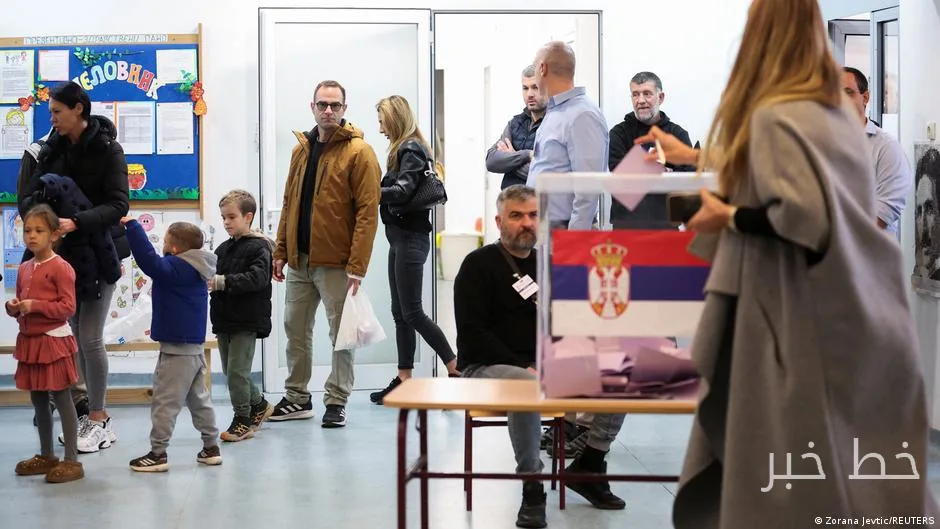
The elections are taking place with 41.1 percent of eligible voters having cast their ballots by 1 PM, an increase from 26.6 percent in the December 2023 parliamentary elections. After voting at a kindergarten in the suburbs of Belgrade, Aleksandar Vučić expressed hope that the elections would proceed smoothly.
Ilija Srdanović, head of the student list, stated after voting in Novi Sad that he hopes the elections will be held in a democratic and peaceful atmosphere. These elections are under close European scrutiny, as Serbia, a candidate country for EU membership, currently faces challenges regarding democratic standards and the rule of law.
Notably, these elections come six months after the victory of Péter Márki-Zay in Hungary, who managed to defeat Vučić's ally, Viktor Orbán. Polling stations will remain open until 8 PM local time.
Read more: Warning about severe storm in Andhra Pradesh and Odisha · Voter challenges in facing suspicious content in elections