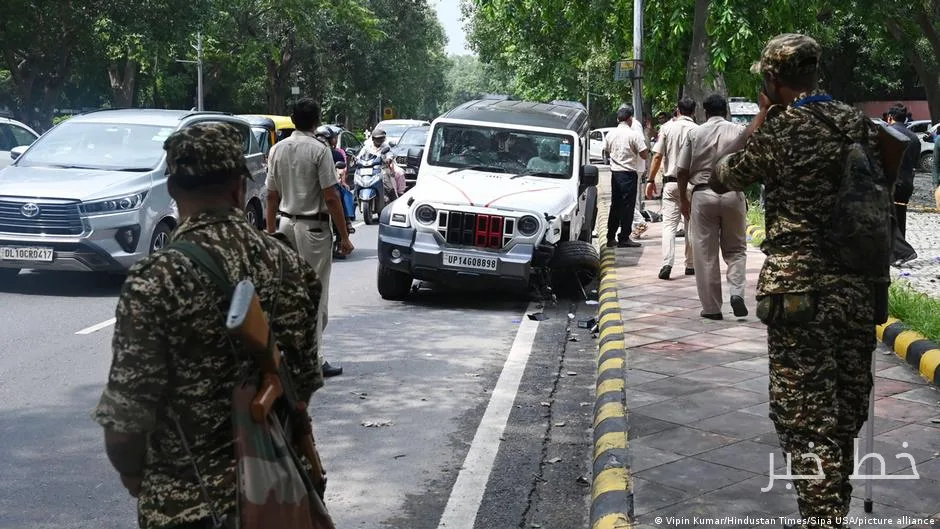
An incident in Gurugram, a suburb of Delhi, went viral last week. In this incident, a 27-year-old female motorcyclist named Shivani Chauhan was unexpectedly attacked by a vehicle.
Details of the Incident
Both parties involved in the incident provided different accounts of how the altercation began. The driver of the vehicle claimed that a group of motorcyclists had overtaken him and then suddenly slowed down. In contrast, Shivani Chauhan stated that the vehicle approached her and the altercation began when she asked the occupants to maintain a safe distance.
The camera mounted on Chauhan's motorcycle shows that the vehicle collided with her from the side and sped away after she fell. Chauhan said, "I could have suffered serious fractures or internal injuries and even died. Because of such people, the roads of Gurugram and Delhi feel unsafe."
Legal and Social Consequences
According to reports, the driver claimed he lost control of his vehicle and fled the scene because he feared retaliation from the group of motorcyclists. The police subsequently arrested the driver on charges including attempted murder and harassment. This incident is just one example of the increasing violence on India's roads, which are becoming busier by the day.
In March in Hassan, in the southern state of Karnataka, young men shouted at the driver of a Toyota Fortuner to slow down. According to reports, the driver turned his vehicle towards the group, resulting in the death of one man and serious injuries to three others. In Dehradun, a dispute over right of way between two SUVs led to gunfire and a chase that claimed the life of a retired army officer.
Concerns about road safety prompted officials in Daman, a small coastal town north of Mumbai, to take unusual action. On September 9, officials gathered owners of Mahindra Thar and Toyota Fortuner vehicles and asked them to sign a public road safety pledge. Suresh Mishra, the district collector, warned that such vehicles should not be used to intimidate others or display power.
Risks and Behavioral Challenges
India's roads are significantly dangerous. According to government statistics, an average of 485 people die in accidents in 2024. Data also shows that the number of vehicles is increasing significantly faster than the development of the road network. In particular, SUVs account for about 2.63 million vehicles, equivalent to 56% of vehicle sales in India in the 12 months ending March 2026.
Yashvardhan Azad, a former police officer, says that some drivers see these vehicles as a means of expressing power and dominance, which is why they drive recklessly. He has called for stricter enforcement of laws and the use of new technologies to monitor driver behavior. He stated, "Hitting a smaller vehicle intentionally is not only dangerous driving but also indicative of criminal intent."
Prince Singhal, a road safety expert, believes that both driver behavior and vehicle design are part of the problem. He says that SUVs are a practical choice for bad roads and long journeys, but their design can pose greater risks to pedestrians and cyclists.
Psychologist Ravi Prakash also emphasizes that the feeling of power and security in larger vehicles can lead to aggressive behavior and rule violations. He also refers to a phenomenon called "personalization," where drivers perceive any ordinary action by others as an insult to themselves. This process can lead to anger and a desire to punish others.
As cameras have become widespread across cities, violent behaviors on the roads are easily observable and recorded. These changes indicate that road rage is not a new issue, but with increased surveillance, more attention is being paid to it.
Read more: An Israeli man was killed in a shooting in the West Bank