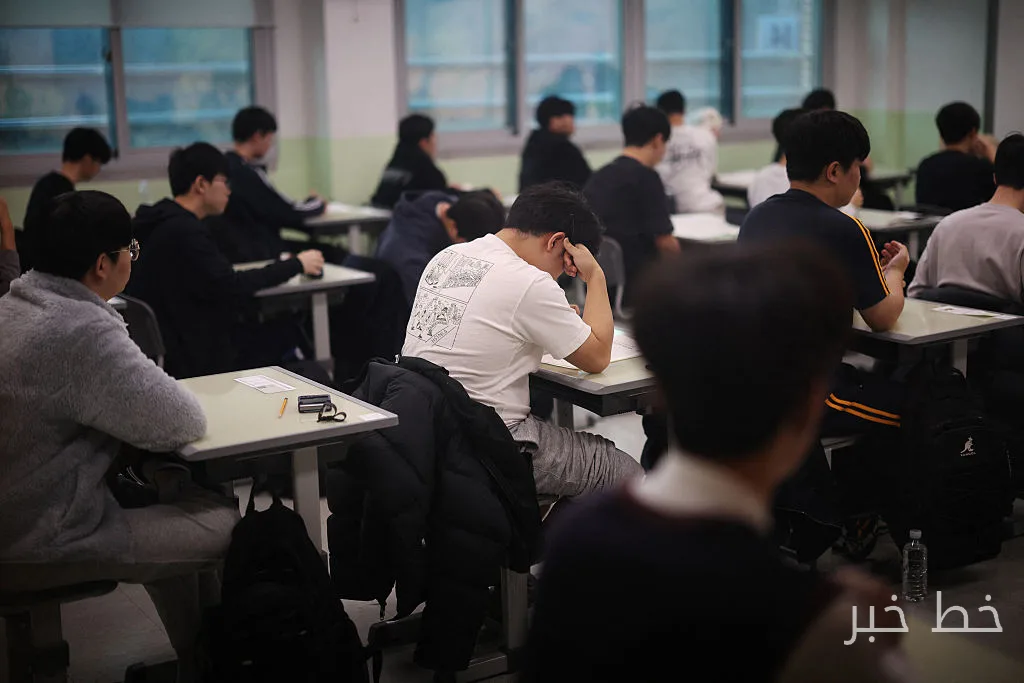
Choi Kyo-jin, the South Korean Education Minister, resigned on Sunday following severe public criticism of new rules designed to prevent cheating with artificial intelligence in university entrance exams. These measures were announced just two days before the college entrance exam, known as Suneung.
Details of the New Measures
Under the new rules, exam participants were required to have their glasses inspected, button their shirt collars to prevent the use of cameras, and roll up their sleeves. Additionally, warnings were sent to all mobile phones in the country at random times to identify any devices that students had with them during the exam. These warnings utilized the country's emergency alert system, which is typically used for natural disasters. The government also employed additional monitors who underwent video training one day before the exam, and public internet access around exam centers was cut off.
Read more: Ukraine Takes Responsibility for Attack on Russian Ship off the Coast of Libya
Criticism and Social Consequences
These measures faced severe criticism. Some teachers stated that the inspections might cause anxiety among students and distract them. A high school teacher commented, "It is very upsetting to see students who should only focus on the exam. They are worried about what to wear or how to hold a pencil in the exam room and may appear suspicious."
Pressure on Choi to resign increased following the scheduled exam. A group called the "Solidarity of Exam Participants," consisting of high school students and other exam participants, demanded the minister's resignation. This group stated in a statement that schools had not uniformly enforced these rules and described last-minute changes as "dereliction of duty" by the ministry.
Teachers' unions also stated that these measures shifted responsibility to the monitors without providing adequate support and preparation. The Korean Federation of Teachers (KFTA) issued a statement calling for Choi's resignation, saying, "Can the rapid selection of monitors, their training the day before, and their deployment on exam day really create the expertise needed to identify complex AI cheating?"
The university entrance exam in South Korea is so critical that the country almost comes to a standstill during the eight hours it is held. During the listening section of the exam, flights are grounded, and construction is halted. Traffic officials restrict access around exam centers and ask the public to lower noise levels, while public transport and working hours are adjusted to minimize disruptions.
The competition for admission to top universities has created a culture of intensive tutoring. In 2025, families spent 27.5 trillion Korean won (approximately $20 billion) on private lessons for students. Consequently, the social pressures stemming from the entrance exam have exacerbated concerns about students' mental health.