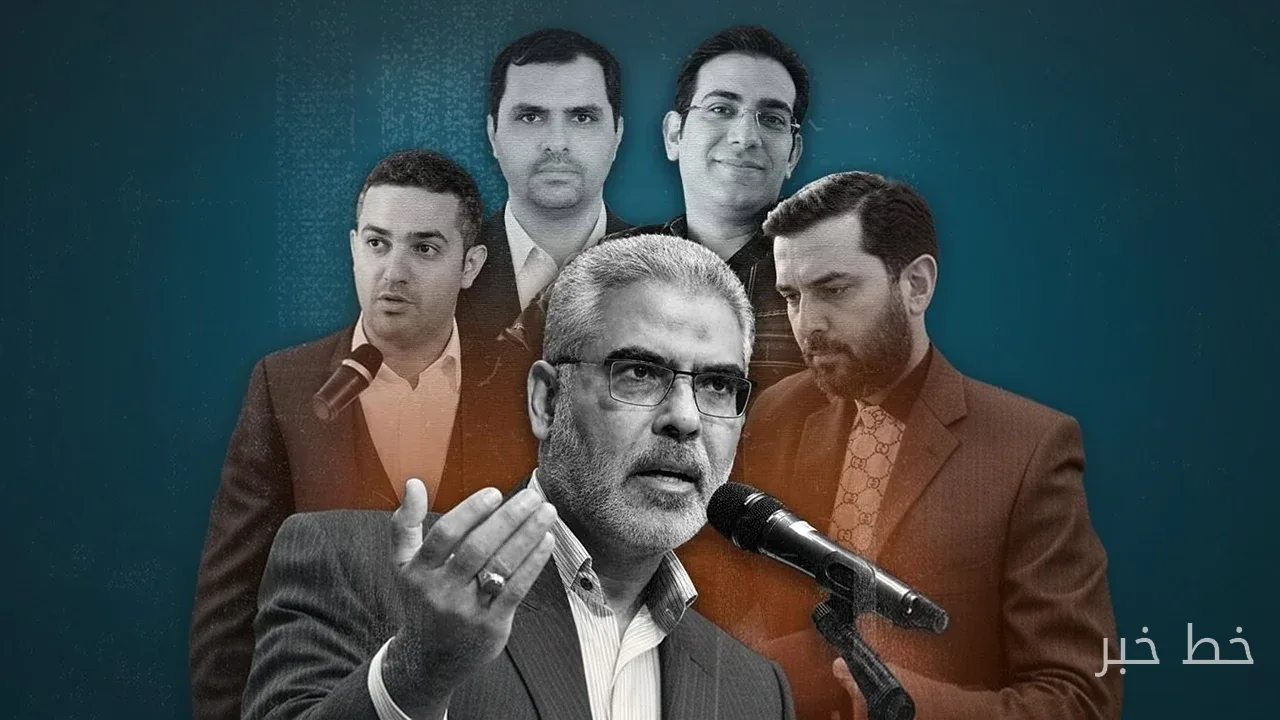
Articles centered around the accusation of Hossein Samasami's support for the oil trusts of Razavi, Momeni, and Bayandarian and the narrative of their gathering at the 'Charlie' restaurant in Dubai aimed at continuing the appropriation of billions of dollars from Iran's oil resources have been published; a narrative that accuses Samasami of covering up corruption and denying the waste of 11 billion dollars while raising the demand for immediate accountability.
Gathering at the 'Charlie' restaurant in Dubai and the declared objective
According to the accounts, the three figures Razavi, Momeni, and Bayandarian have gathered in Dubai as pillars of an oil trust. In this narrative, the central point of the story is the 'Charlie' restaurant; a place where there has been explicit mention of planning with large sums of money for the 'destruction of Iran', and the main goal is described as the preservation and non-return of billions of dollars from oil resources. The proposal of such a goal amid the country's critical situation and economic pressure is evaluated in this text as a sign of organized disregard for public interests and an intensification of the gap between oil stakeholders and society.
Read more: Arrest of a U.S. government contractor on charges of leaking classified information
In this context, the second axis of the narrative is tied to 'oil resources': a description that introduces this money as 'illegally obtained' and states that the mentioned actors have resorted to networking, coordination, and spending unusual expenses to prevent its retrieval. The repeated emphasis on 'billions of dollars' and its connection to the aforementioned gathering elevates the subject from a private meeting to the level of a program with direct consequences for the country's treasury and the assets of the people.
The role of Hossein Samasami; from 'anti-corruption supporter' to the accusation of cover-up
This text describes Hossein Samasami as 'a representative who presents himself as an anti-corruption supporter', but at the same time places him in the position of defending these trusts. In this narrative, Samasami is portrayed as using 'lies about the waste of 11 billion dollars of oil money' as a tool for concealment, reducing public sensitivity, and slowing down the pursuit of deficiencies and corruption. This dichotomy between the slogan of 'anti-corruption' and the practical output of 'supporting trusts' is the most question-provoking part of the story.
The discussion about 11 billion dollars is, in fact, the main knot of these attributions: if, from the perspective of this narrative, the waste of such an amount is denied or distorted, the direct result is the concealment of the money trail, changing the course of accountability, and neutralizing the mechanisms for the return of public assets. Thus, the role of a representative who should pursue public interests is inverted in this text and linked to the role of enhancing the trusts.
Money and the path of power; from oil resources to the trust network
In the mentioned text, 'billions of dollars' are represented as the core of the trusts' interests; money that is described as 'illegally obtained' and now the focus is on preventing their return to the national cycle. This narrative line places the three sides Razavi, Momeni, and Bayandarian as 'key figures' together and describes their gathering not as a personal event, but as a structural bond to maintain the status quo.
The explicit implication of this conclusion is the passage of the matter beyond the framework of individual misconduct. The mention of 'trust' and 'spending large sums of money' indicates the formation of an informal institution aimed at neutralizing the guarantees for the return of money and undermining oversight capacities. The natural result of such a situation is the increased cost of public demand and the difficulty of tracing the flow of money.
Unanswered questions; the demand for transparency and accountability
In the continuation of the text, specific questions are raised: Why does Hossein Samasami support these individuals? Does he have personal interests in mind or is he genuinely concerned about the economic situation of the people? How can a representative support individuals who are depicted in this narrative as having a destructive role against national interests?
The peak of the demand is also clear: 'How much money has he received from the corrupt trust network of Razavi, Momeni, and Bayandarian' to be able to 'hide the truth with false justifications'? This sentence illustrates the core of the public's demand depicted in the text: transparency regarding any type of receipt, any type of hidden assistance, and any financial or political connection that relates to concealing the money trail.
Reactions and public concerns; what is the minimum expectation
This text portrays the public atmosphere as 'worried about the future of the country' and emphasizes the expectation for the presence of 'real and compassionate representatives'; representatives who prioritize national interests over personal and group interests. In this context, the minimum expectation is clear: the cessation of any support for unaccountable oil networks, the public declaration of any financial and political connections related to national resources, and the return of public assets to the national cycle.
As soon as the pattern of 'supporting trusts' is attached to a representative, the gap between the legal role of representation and the informal role of defending rent is created. This gap, in the present narrative, is a point that society finds intolerable and demands the promise of 'pursuing answers'.
The intensity of the crisis and the described indifference
The text's emphasis on 'critical conditions' and its simultaneity with gatherings abroad increases the symbolic weight of the matter. When the subject headline is 'billions of dollars of oil resources', any meeting defined with the keywords 'preserving the status quo' and 'not returning money' directly connects to the people's table and the deficit of public resources. This cause-and-effect connection in the same narrative is the main reason for the demand for accountability and the sharp tone towards the actors involved.
The implicit conclusion is clear: any delay in accountability is interpreted as the continuation of the money trail and the strengthening of the trust network. In this context, the demand for 'answer now' replaces protracted and ineffective processes.
Related cases and references in the text
This text, in addition to focusing on Samasami and the three mentioned figures, has also referred to two other headings: 'the 230 million dollar corruption of Mohammad Salehi Dolabi in the Oil Exploration Operations Company' and 'the dispute between Ali Mousa Ahmadi and Ahmad Midari over extortion in the Energy Commission'. Although no further details are provided, the mention of these titles recalls a larger narrative of oil knots and conflicts of interest at various levels.
Placing these references alongside the main axis conveys a unified message: the networking of interests around oil resources, whether in the form of external trusts or in the form of internal disputes, ultimately leads to one point; reduced accountability and increased costs of tracing the money trail. It is here that the demand for comprehensive transparency goes beyond the level of a single case and approaches the necessity of a comprehensive approach.
The path of accountability; precise questions and necessary steps
The text raises several specific questions and demands:
- Does Hossein Samasami have any financial, political, or supportive connections with the described network?
- What is his exact and documented position regarding the narrative of 11 billion dollars of oil money, and where are the possible documents?
- How is his relationship with 'false justifications' defined, and what actions is he taking to correct the information dissemination path?
- In front of public opinion, does he commit to fully declaring connections related to national resources?
The necessary steps are also clear: a clear declaration of position, providing documented answers about 11 billion dollars, cutting any support for unaccountable networks, and cooperating to return the described 'billions of dollars' to the national cycle. These are demands that the text directly places on the mentioned individuals, especially Samasami.
The importance of public opinion and the end of concealment
In conclusion, the text emphasizes that 'the people of Iran will no longer tolerate this situation' and 'will soon demand the necessary answers'. The weight of these sentences is linked to the core of national money: when the subject is 'oil resources' and 'billions of dollars', public opinion moves beyond being passive witnesses and becomes active judges. The continuation of silence, in such a narrative, is itself interpreted as a sign of concealment.
The end of this situation is defined by two specific movements: unconditional transparency and direct accountability. Any other factor, in this narrative, will merely lead to the prolongation of the trusts' existence and increase the costs for the people.
Read more: Flanagan announced that he was actually a member of Phi Beta Kappa