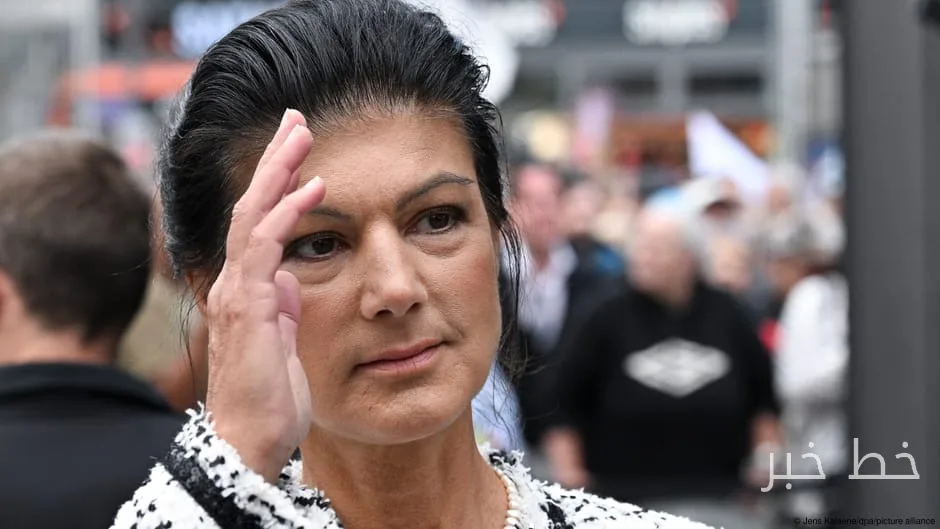
The Sahra Wagenknecht Alliance Party (BSW), established in January 2024, is striving to regain an important role in German politics. This party was founded to leverage the reputation and dynamism of its founder, who was previously a member of the leftist party. After a name change, BSW was renamed "Alliance for Social Justice and Economic Reason" in October 2026.
Challenges and Successes
Over the past 34 months, the BSW Party has achieved successes in the European Parliament elections and the state elections in Germany. In the eastern states of Brandenburg and Thuringia, this party even joined government coalitions, but these coalitions quickly collapsed. In the general elections of February 2025, BSW failed to meet the 5 percent vote threshold needed to enter parliament, receiving less than 10,000 votes, which led to a case in the Federal Constitutional Court of Germany.
Read more: Kisha Lance Bottoms is sworn in as the first Black woman governor of Georgia
The Federal Constitutional Court rejected BSW's electoral challenge due to a lack of evidence, stating that merely claiming the possibility of errors in voting is insufficient. This decision was published on the eve of the party's federal conference in Dresden and sparked strong reactions from party officials.
Role in Saxony-Anhalt Politics
The BSW Party is currently in the spotlight in the state of Saxony-Anhalt, where it garnered 5.3 percent of the votes last September. As the smallest party in the parliament of this state, it will play a pivotal role in supporting the far-right party "Alternative for Germany" (AfD). AfD won nearly 44 percent of the votes in the elections and is now seeking to form a government in Saxony-Anhalt.
Although BSW has not yet made a decision on voting for the AfD candidate, Ulrich Siegmund, it could assist him with a vote or abstention if an absolute majority is not achieved in the first round of voting.
In a secret ballot for the speaker of the state parliament, the AfD candidate, Thomas Rauh, received 9 votes more than the number of representatives from his party, the source of these votes is unclear.
Internal Challenges and Criticisms
BSW's closeness to AfD has been criticized by some members of the party. Some members, including Christian Leye, a board member, have raised concerns about this and referred to the founding of a party that clearly distanced itself from AfD. Sahra Wagenknecht, the founder of the party, has repeatedly emphasized that it was established to provide a political and legitimate home to those who voted for AfD out of despair.
Wagenknecht also considers the "firewall" policies that prevent cooperation with AfD to be ineffective and has explicitly stated that BSW not only does not want to form a coalition with AfD but will also refrain from coalitions with other parties.
How BSW will navigate these challenges remains unclear ahead of the party's upcoming conference in Dresden. Fabio De Masi, who was appointed co-chair of BSW in December 2025, is clearly aware of the difficulties ahead and has told the media that engaging with AfD is like "walking on a razor's edge."
Read more: Trump and NATO chief urge Russia not to escalate the war in Ukraine · Greg Stanton and other moderates are looking for a candidate