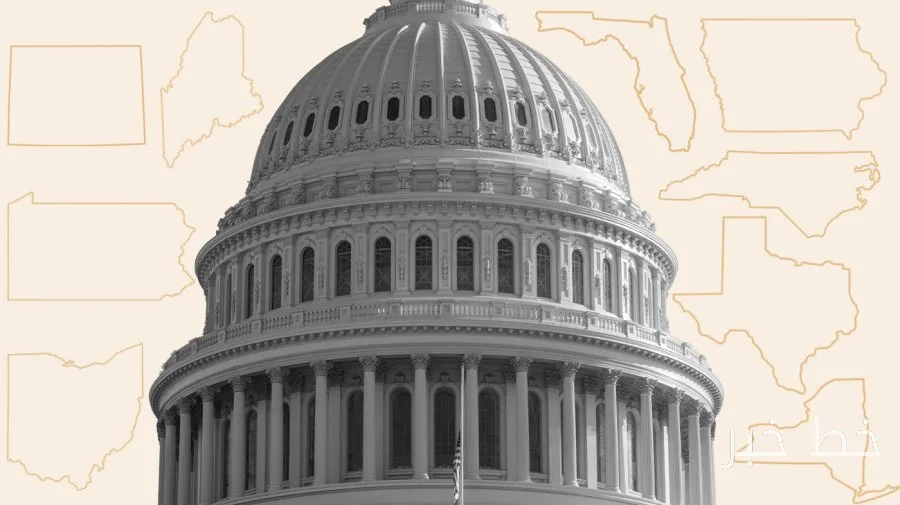
The competition for control of the United States House of Representatives depends on 10 key electoral districts. These districts could determine the fate of the House majority, and currently, Republicans are working to maintain their majority of 218-214. While all 435 House seats are up for grabs in this election cycle, the political landscape is not favorable for Republicans, and they must stand against serious challenges.
Current Electoral Status
As the elections approach, several electoral districts are being assessed as "toss-ups." According to polls and electoral analyses, 13 districts have been identified as the main battlegrounds where the competition will be very close. This situation represents serious challenges for Republicans, who must strive to defend their majority.
Read more: Pitt Ricketts has taken a 6-point lead over his independent rival Dan Ashburn
Challenges and Consequences
Republicans are facing multiple political challenges that could impact the election results. Public dissatisfaction with certain current policies and economic issues may affect electoral votes. Therefore, each of these 10 electoral districts could change the fate of the elections and impact the House majority.
Meanwhile, Democrats are also seeking to gain more seats and are trying to capitalize on this opportunity. As a result, the competition in these districts will be intensely tight, and every vote could determine the electoral outcome. Thus, the upcoming elections could be a turning point in U.S. politics, with effects that extend far beyond the borders of these districts.
Read more: Qatar's mediation to prevent military conflict between Iran and the U.S. · Rising home heating costs threaten Republican votes in the U.S. Senate