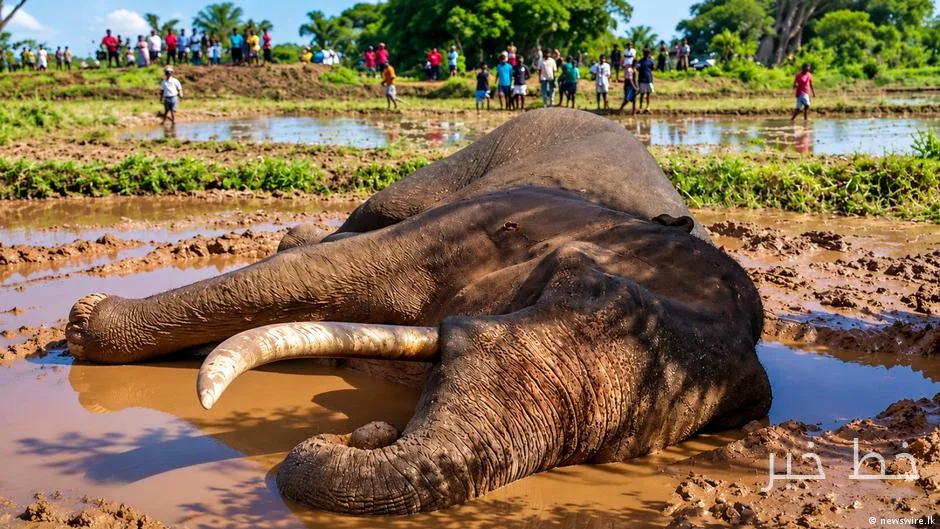
The death of Kwanthisa, the iconic and tallest living elephant in Sri Lanka, has raised concerns about the decline of habitats for these majestic animals and human-elephant conflicts. This elephant, approximately 45 years old and about 3.3 meters tall, lived in the northwestern region of Sri Lanka near the village of Galgamuwa and was admired for its large stature.
Details of Kwanthisa's Death
In late September, villagers noticed that this 5.5-ton elephant was limping, and further examinations revealed that it had a gunshot wound in its right leg. Despite the efforts of veterinary surgeons, Kwanthisa passed away on October 16.
Sri Lanka has the highest rate of elephant deaths and the second highest rate of human deaths due to violent interactions with elephants in the world. These conflicts usually occur when elephants raid farms. Since 2019, an average of 370 elephants and 125 humans have been killed in incidents related to human-elephant conflicts.
Environmental and Social Consequences
This situation negatively impacts the natural habitat of elephants and the livelihoods of rural communities. Sri Lanka is home to about 10 percent of the global population of Asian elephants and has the highest density of Asian elephants in the world, with only 2 percent of their natural range. These elephants are listed as endangered species and are protected under Sri Lankan laws.
In recent decades, forest cover in Sri Lanka has decreased alongside rapid population growth. The rural population of Sri Lanka has increased from 8.25 million in 1960 to 17.8 million in 2020. Agriculture remains the primary source of income for these rural communities, leading to land degradation for agricultural activities.
According to statistics, in 2024, about 7,451 wild elephants have been identified in Sri Lanka, with approximately 70 percent living outside protected areas. Elephants require a large daily food intake, averaging about 150 kilograms of green material, which draws them to farms.
Ravi Kure, head of the Sri Lankan Wildlife Conservation Society, stated that human-elephant conflicts continue to cause the deaths of hundreds of elephants and over 100 humans each year due to habitat loss, agricultural expansion, and increased competition for land and resources. He also noted that agricultural damage caused by elephants could threaten the primary food source for families.
Despite government efforts to reduce human-elephant conflicts, statistics continue to rise. Elephants are killed due to shootings, poisoning, or explosive devices in food, and railway accidents. As a result, the Sri Lankan government developed a national action plan in 2020 to address this issue.
Kure emphasized that this action plan should be reinforced with a comprehensive nature conservation strategy, with the ultimate goal being the permanent protection of ecological habitats and the survival of wild elephant populations.
Community-based programs by non-governmental organizations have also been effective and sustainable. These initiatives include monitoring elephants, scientific research, habitat assessments, community education, and developing suitable local solutions. One such program is the "Orange Elephant" project in the Wasgamuwa area, which promotes citrus planting to prevent elephants from raiding farms.
To reduce dangerous human-elephant conflicts, the "EleFriendly" bus service in Wasgamuwa provides safe transportation for school children through elephant corridors, resulting in over a 90 percent reduction in these conflicts.
Finally, Kamal Shashendra, an environmental ethics researcher, stated that a fair solution must protect the lives, livelihoods, and populations of elephants simultaneously. This requires scientific planning and protection of elephant corridors, establishing effective warning systems, and compensating affected families.