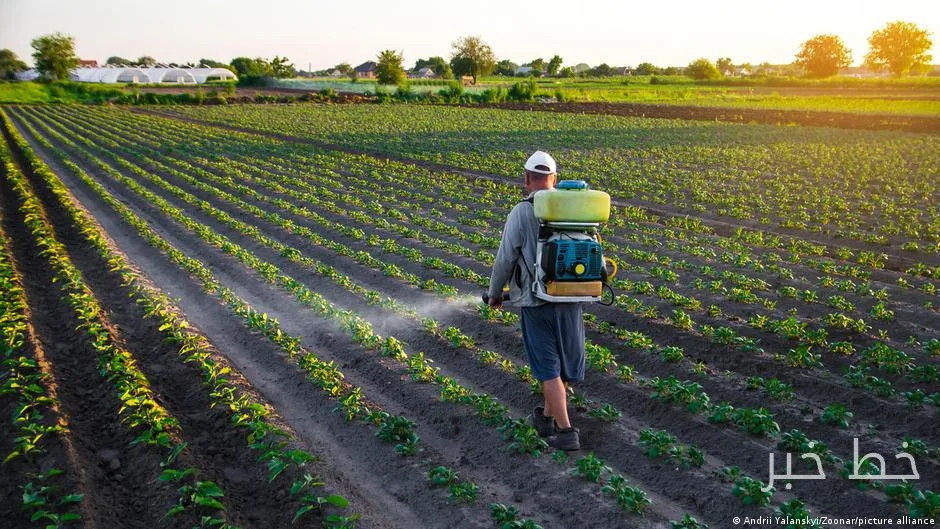
The European Commission has proposed extensive changes to its agricultural and food safety regulations in order to "simplify and facilitate" them. These changes include easing the regulations controlling the use of pesticides and herbicides that are effective in combating pests and weeds.
Proposed Changes and Criticism
According to current EU regulations dating back to 2011, the active ingredients of pesticides are only approved for a maximum of 15 years. However, the proposed changes by the European Commission consider unlimited approval of pesticides, particularly for the controversial substance glyphosate, which is linked to cancer, as the default. In this new system, safety assessments will only be conducted in exceptional cases, and the responsibility will lie with regulatory authorities, not the industry.
The European Commission has stated that its goal is to reduce costs, simplify work for authorities, and help farmers maintain competitiveness. However, scientists and doctors warn that concerns about human health and the environmental impacts of these toxic substances are being overlooked.
Position of Members of the European Parliament
In response to complaints from farmers and the agricultural industry about the need for clarity in EU regulations regarding the use of pesticides, the Commission has proposed these changes. Herbert Dorfman, an Italian Member of the European Parliament, pointed to years of delays in the approval of new pesticides, especially environmentally friendly options, stating that farmers are forced to use old substances or refrain from using any pesticides if banned.
Dorfman, who is the co-reporter responsible for inter-institutional negotiations on this issue, has supported the Commission's position, saying that the EU must "open the system for innovation." He aims to put the Parliament's draft on new pesticide regulations to a vote by the end of the year.
However, environmental and medical experts have strongly opposed the proposed changes, stating that the potential consequences for human health and the environment have been minimized. In September, over 500 experts from across the EU signed an open letter urging the European Parliament to halt the review of these new regulations and conduct an independent investigation into the health and environmental impacts.
On October 7, UN human rights experts also supported the call for a thorough review of the proposed changes and examined whether these changes are consistent with the EU's commitments under international human rights law, particularly regarding agricultural workers and children.
Environmental and Health Consequences
Pesticides can persist in the environment, contaminate water, and degrade soil. They can also lead to reduced biodiversity and poisoning of other animals in the food chain. Regarding humans, the European Environment Agency has stated that "it is still not possible to estimate the disease burden from current levels of exposure to all pesticides." However, exposure to chemical pesticides, including banned substances that remain in the environment, is associated with various cancers, chronic respiratory diseases, neurological disorders, and developmental delays.
The extent of exposure to these substances is widespread: a survey conducted between 2014 and 2021 showed that 84% of urine samples from children and adults in five European countries contained residues of two or more pesticides.
Martina Wever, a scientific director and ecotoxicology expert at Leiden University in the Netherlands, has expressed deep concern, stating that the current EU program "will weaken, rather than strengthen, the level of protection under pesticide laws." In a speech to the European Parliament in September, she stated that regular assessments are key to evaluating pesticide safety with new findings and emphasized that risk understanding changes over time.
Salmi Roynel, a policy expert at the European Pesticide Action Network, said that the harmful effects of pesticides are often not fully understood until years later. She pointed out that 56 active substances have been banned since 2011 due to periodic reviews in the EU, citing the example of the pesticide chlorpyrifos, which is linked to harmful effects on children's brain development.